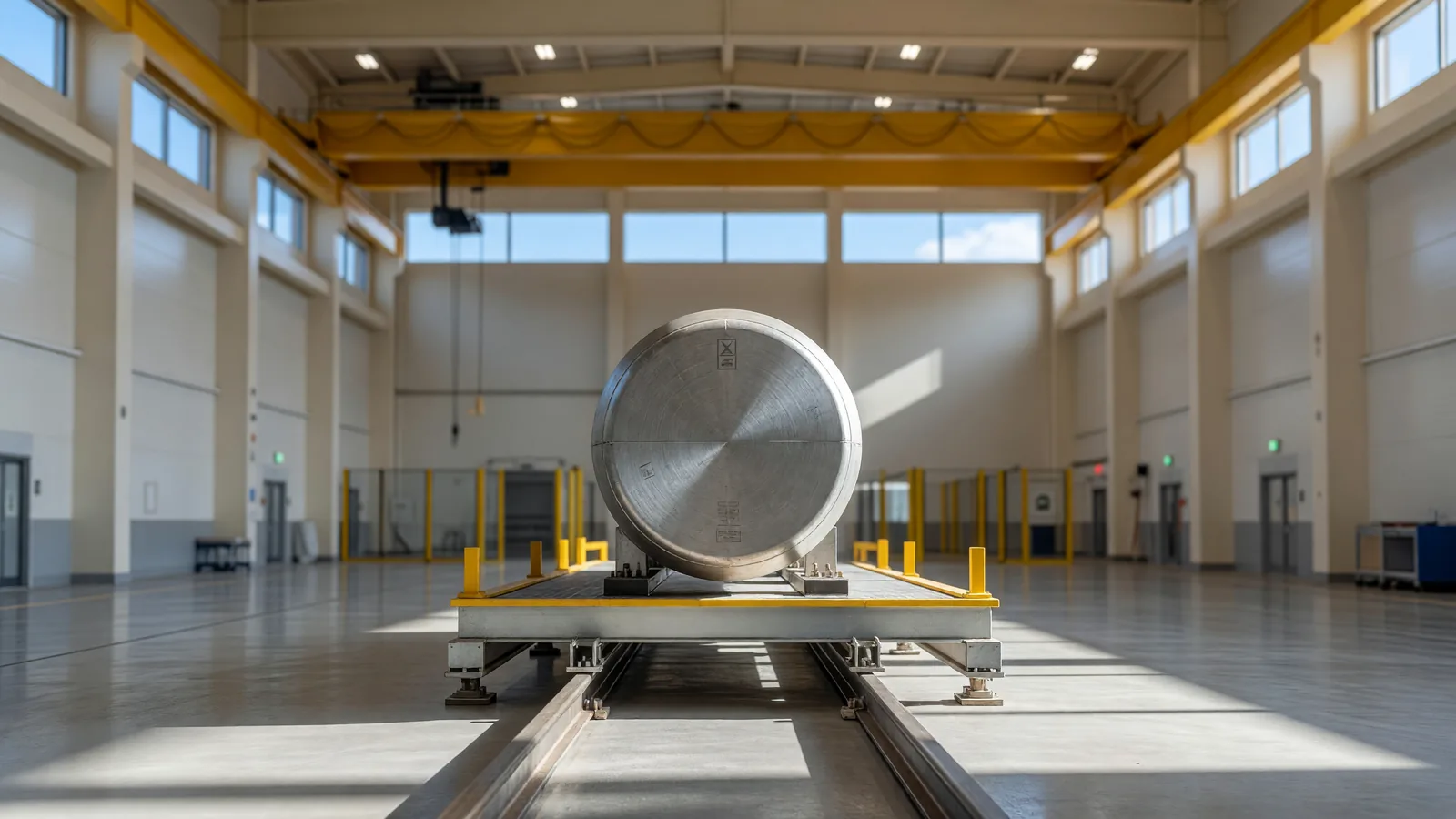
Norwegian Nuclear Decommissioning (NND) has agreed to send spent fuel from the Halden and Kjeller research reactors to Swedish nuclear services company Studsvik for treatment and temporary storage, before returning it to Norway for final disposal. The frame agreement runs to 2055 and addresses a difficult legacy inventory: Norway holds about 16.5 tonnes of spent fuel from six decades of research-reactor operation.
Key facts
- Norway holds about 16.5 tonnes of spent research-reactor fuel, including metallic uranium, aluminium-clad and experimental fuels.
- The frame agreement runs until 2055; its pre-study starts immediately.
- Norwegian Nuclear Decommissioning estimates its minimum contractual commitment at about SEK 875 million, assuming all fuel reaches Sweden by 2035.
- Studsvik estimates a total potential contract value of SEK 3 billion to SEK 4 billion, dependent on work orders, budgets and regulatory permits.
What happened
NND, Norway's state agency responsible for decommissioning the country's nuclear facilities, signed the frame agreement with Studsvik on October 16 in Halden. The work begins with a pre-study to set out how the fuel will be collected, transported, handled in Sweden and ultimately sent back. The parties will then develop a detailed plan and budget. NND will issue separate work orders for stages of the project, subject to approvals and permits in both countries.
The fuel comes from research reactors at Halden and Kjeller, not commercial power stations. Their operation produced an assortment of fuel types. Studsvik says much of Norway's inventory cannot be placed in long-term storage or disposed of in its current form. Some of the metallic uranium fuel will need treatment, including oxidation, before it can be prepared for storage and eventual disposal.
Under the proposed sequence, Studsvik will transport the fuel to its licensed facilities outside Nyköping, inspect it and treat it where required. It will remain there in interim storage until it is returned to Norway. The agreement does not transfer final-disposal responsibility to Sweden.
The financial figures describe different measures, not a single fixed purchase price. NND's estimated minimum commitment is about SEK 875 million if all fuel is transported by 2035. Studsvik's estimate of SEK 3 billion to SEK 4 billion includes expected work orders for transport, treatment and storage through 2055. The final value depends on the detailed scope and budget, and on the work NND orders. Studsvik says the deal is not expected to have a material effect on its 2026 or 2027 results.
Why it matters
The agreement gives Norway access to treatment capability and licensed interim storage across the border while preserving the stated plan to return the fuel for final disposal at home. That distinction matters: a treatment and storage contract can address near-term handling problems without resolving where or how a permanent disposal facility will operate.
The inventory's varied composition complicates the job. Fuel used for research and isotope production can differ from standard power-reactor fuel, and some of Norway's material needs processing before it meets long-term storage requirements. The parties have not yet published the detailed project plan, transport schedule or treatment quantities. The 2035 assumption in NND's minimum-value estimate is a contractual condition, not a confirmed completion date.
Background
Norway's nuclear history is built around research rather than commercial electricity generation. The Halden reactor operated from 1958 to 2018, while the Kjeller research site hosted reactor operations beginning in 1951. Both sites are now part of a decommissioning programme, alongside the long-term task of managing fuel and radioactive waste accumulated over decades.
The agreement follows more than ten years of cooperation between Studsvik and Norway's nuclear sector. Studsvik cites a 2021 contract with the Institute for Energy Technology to treat metallic uranium fuel from the JEEP I reactor at Kjeller. That earlier work provides a precedent for handling at least part of the material category in the new agreement, though the current inventory covers several fuel types and a larger programme.
NNN has covered the wider fuel-cycle challenge in its nuclear fuel supply chain explainer and reported on the management of spent fuel at Ukraine's Zaporizhzhia plant. Those cases differ sharply in scale and circumstances, but each shows how spent fuel remains an operational and policy responsibility long after its initial use. The fuel supply chain hub tracks related coverage.
What's next
The immediate step is the pre-study, which will define handling, transport and project costs. NND's work orders and the necessary regulatory permits will determine when shipments can begin and which treatment steps apply to each fuel type. Readers should watch for the completed project plan, permit decisions in Norway and Sweden, and confirmation of the transport timetable. Until those steps are complete, the 2055 end date describes the frame agreement, not a fixed schedule for every shipment or treatment campaign.
Questions
- What will Studsvik do with Norway's spent research-reactor fuel?
- Studsvik plans to transport it to its licensed Swedish site, inspect and treat fuel where needed, then store it temporarily before returning it to Norway for final disposal.
- How much fuel is covered by the agreement?
- Norway has about 16.5 tonnes of spent fuel from the Halden and Kjeller research reactors, according to Studsvik.
- Does the agreement mean Norway's fuel is being disposed of in Sweden?
- No. The stated plan is interim storage in Sweden followed by return to Norway for final disposal.
Sources
About Nuclear News Network
Nuclear News Network (NNN) is an independent publication covering the global nuclear energy sector — reactor construction, SMRs, fuel supply, policy, operations and fusion. NNN publishes a daily brief, same-day analysis of major developments, and reference guides used across the industry. Articles are produced by the NNN Newsroom, an editorial automation system with human oversight, under the publication's editorial standards. Ruben Seoane is the founder and main editor of NNN.