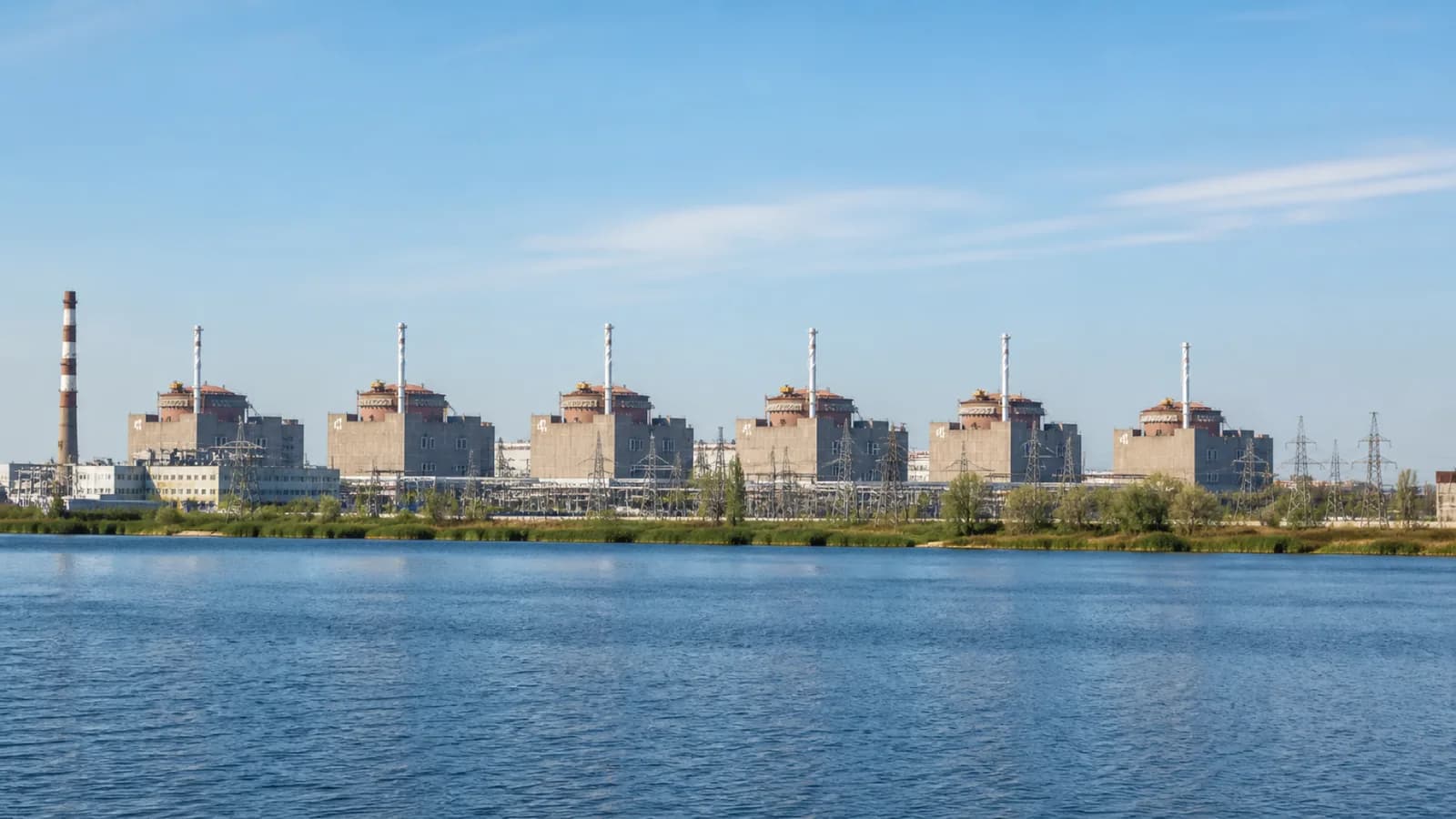
Operators at the Zaporizhzhia Nuclear Power Plant are raising water levels in the spent-fuel pools at all six units, the International Atomic Energy Agency said, to extend cooling time if the site loses off-site power for longer than its diesel supplies can cover. The measure responds to a plant that has lost external power 24 times since the conflict began, not to a reported loss of pool cooling or a radioactive release.
Key facts
- Water levels are being raised in the spent-fuel pools at all six reactor units.
- The plant has lost external power 24 times since the war began, including twice in the previous week.
- The sole remaining off-site line, 330 kV Ferosplavna-1, briefly disconnected on 1 and 4 August.
- The main 750 kV Dniprovska line has been unavailable since March 2026.
- All six reactors have been shut down since 2022, with the last unit entering cold shutdown in April 2024.
What happened
The IAEA team at the plant was told late last week that operators had decided to raise the water level in each unit's spent-fuel pool. Work began during the week of 3 August, with the agency's inspectors present to observe it. The decision followed continued trouble with the plant's external electrical supply and the difficulty of replenishing diesel fuel stocks amid military activity near the site.
The purpose is time, not a change in the fuel itself. Spent nuclear fuel sits underwater so the water can remove residual heat and shield radiation. If a prolonged power failure stopped the pumps, a higher starting water level would delay the point at which the water could begin to boil. That extra margin would matter if emergency generators ran out of fuel before outside power or new diesel deliveries became available.
The IAEA said the plant lost its only available off-site line twice in the week before its 6 August statement. The 330 kilovolt Ferosplavna-1 line disconnected on 1 August and again on 4 August. In both cases, emergency diesel generators started automatically and powered vital safety systems, including reactor cooling. The outages lasted about two hours and one hour, respectively.
The direct causes of those two interruptions were not known when the IAEA issued its update. The agency said the plant's main 750 kV Dniprovska line has been unavailable since March. Although the line itself was repaired in early June under an IAEA-brokered local ceasefire, a substation that supplies it was heavily damaged by military strikes in May and remains unavailable.
Why it matters
The water-level decision shows how a nuclear plant can remain in a defensive operating posture even when every reactor is shut down. The six units are not producing electricity, but the site still has fuel in storage, cooling systems to maintain and electrical equipment that must remain available. The spent-fuel pools are therefore part of the plant's safety case long after the chain reaction has stopped.
This is also why the IAEA counts off-site power as a nuclear-safety issue rather than a routine grid problem. The plant's emergency generators are a backup, not a replacement for a stable connection to the grid. Diesel can keep safety systems running, but it must be stored, delivered and moved through a war zone. A damaged substation can turn a repaired transmission line into a line that is still unusable.
The pattern has worsened recently. Half of the plant's 24 external-power losses occurred in the four months before the IAEA's 6 August update. Director General Rafael Mariano Grossi called the trend "deeply concerning" and "clearly not sustainable." The agency has also been inspecting substations that support nuclear sites, including a mission that visited 13 substations across Ukraine.
Background
Zaporizhzhia has been under Russian military control since March 2022 and sits close to the front line. The site's six reactors have remained shut down since the start of the war, with the last unit moved to cold shutdown in April 2024. Cold shutdown reduces the heat produced by the reactor core, but it does not remove the need for cooling and electrical power across the wider site.
The incident belongs in NNN's operations and safety coverage, where the practical question is often less about a reactor's nominal output than about the systems that keep a plant safe when normal support is interrupted. Readers can also use the baseload power explainer for grid context and the SMR explainer for a primer on how reactor designs handle safety functions and power loss.
The IAEA's seven indispensable pillars provide the framework for that assessment. One pillar requires reliable off-site power; the agency's substation inspections follow directly from that requirement. At Zaporizhzhia, the problem is not a single broken component. It is the combination of damaged grid infrastructure, repeated interruptions, constrained fuel logistics and military activity near the site.
What's next
The immediate watchpoint is whether the 750 kV Dniprovska line and its damaged substation can return to service. Until then, the plant remains dependent on its 330 kV connection and emergency diesel systems, while operators continue work on the spent-fuel pools. The IAEA team will keep observing the site and reporting power losses, military activity and the condition of the supporting electrical network.
The clean reading of this week's decision is precautionary: operators are buying more time in a system already short of margin. The IAEA has not reported a failure of spent-fuel cooling or a release of radiation. It has reported a power problem that keeps getting harder to manage.
Questions
- Why are water levels being raised in the spent-fuel pools?
- The higher water level would give operators more time before water could boil away if the plant lost off-site power for a prolonged period and exhausted its diesel fuel supplies.
- Does the decision mean spent-fuel cooling has failed?
- No. The International Atomic Energy Agency described the work as a precaution tied to power and diesel resupply risks. The pools remain cooled, and the plant's six reactors are shut down.
- How many times has Zaporizhzhia lost external power?
- The IAEA said the plant had lost external power 24 times since the conflict began, including twice in the week before its 6 August 2026 update.
- What power lines remain available to the plant?
- The plant's main 750 kV Dniprovska line has been unavailable since March 2026. The site was relying on the 330 kV Ferosplavna-1 line, which was briefly disconnected twice in early August.
Sources
- Update 361 – IAEA Director General Statement on Situation in Ukraine — International Atomic Energy Agency
- Water levels to be increased in Zaporizhzhia's used fuel pools — World Nuclear News
About Nuclear News Network
Nuclear News Network (NNN) is an independent publication covering the global nuclear energy sector — reactor construction, SMRs, fuel supply, policy, operations and fusion. NNN publishes a daily brief, same-day analysis of major developments, and reference guides used across the industry. Articles are produced by the NNN Newsroom, an editorial automation system with human oversight, under the publication's editorial standards. Ruben Seoane is the founder and main editor of NNN.