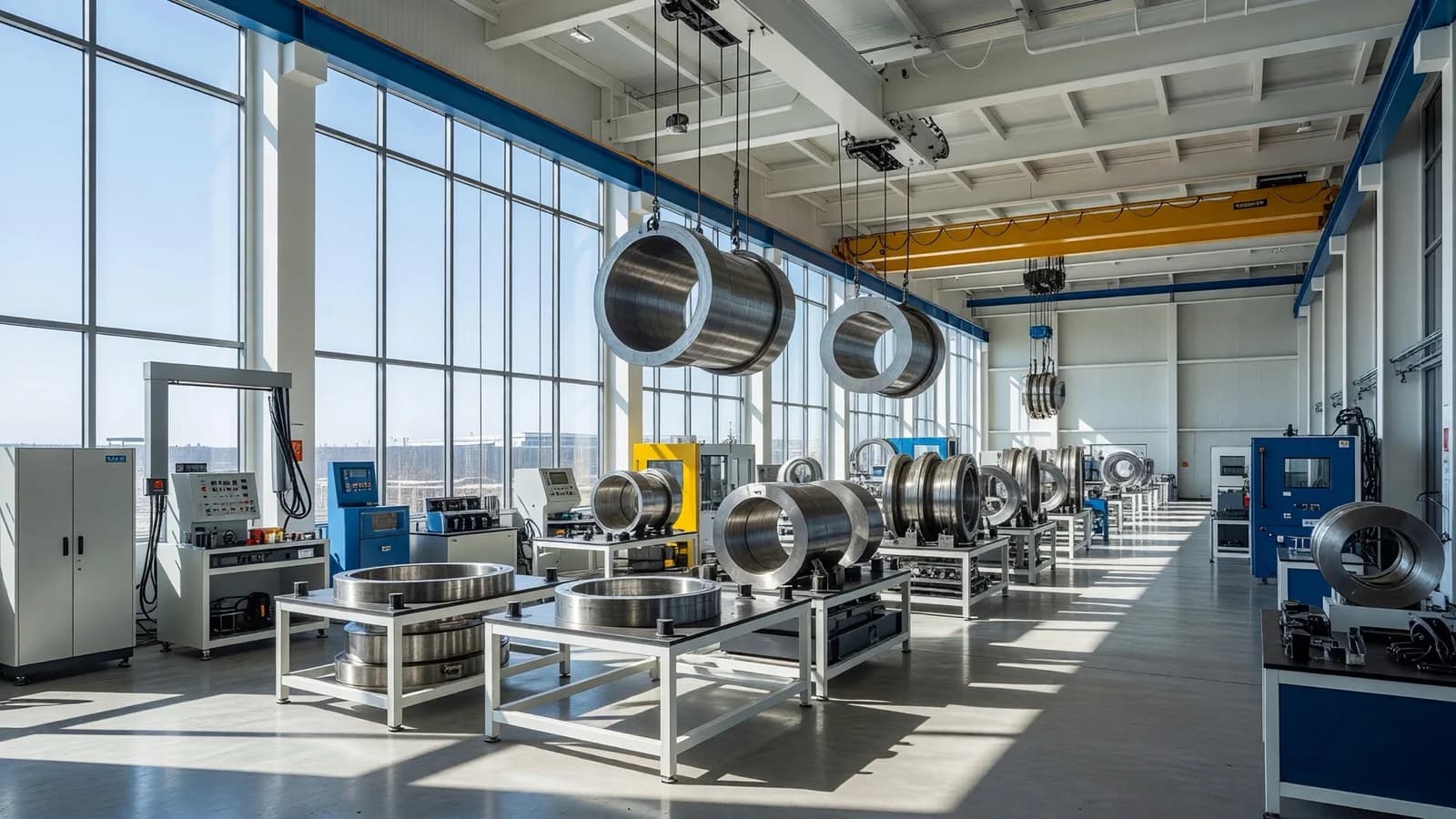
The U.S. Nuclear Regulatory Commission has approved a Framatome licence amendment that lets the company's Richland, Washington, fuel plant handle uranium enriched to under 10% U-235 and manufacture TRISO fuel. Reported by World Nuclear News, the decision lands alongside a separate Lightbridge–QNI memorandum on long-term HALEU supply — a one-two on the fuel side of the advanced-reactor buildout.
Key facts
- NRC staff granted Framatome's amendment to raise materials licence SNM-1227 from 6.5 wt% to less than 10.0 wt% U-235 and authorize TRISO fabrication.
- Framatome filed the licence amendment request in September 2024; NRC's decision letter is dated 26 June 2026.
- The approval covers Richland's dry conversion of UF6 to uranium oxide powders for higher-enrichment advanced fuels, including TRISO.
- Standard Nuclear–Framatome aims to begin at roughly 2 tonnes of TRISO fuel a year, with powder and particle production targeted for 2027.
- Separately, Lightbridge and QNI signed an MoU on HALEU offtake tied to QNI's planned Vanguard facility at INL, designed for up to 18 tonnes of HALEU a year at full capacity.
What happened
Framatome asked the NRC for permission to push Richland beyond the enrichment band used for today's light-water fuel. The company wanted headroom up to just under 10% U-235 so the plant could support advanced fuels, especially TRISO, without standing up an entirely new licensed facility from scratch. According to WNN's account of the June 26 NRC letter, staff said yes on both the enrichment limit and TRISO fabrication authority.
Framatome framed the amendment as a milestone for its joint venture with Standard Nuclear. The near-term industrial plan is concrete: start making UO2 powder and TRISO particles in 2027, and ramp an initial commercial TRISO line measured in tonnes per year rather than laboratory batches. The company also said the under-10% approval positions later work toward HALEU fuel types up to 20%, with equipment already designed for a follow-on amendment and a DOE HALEU availability funding application in play.
On the same news cycle, Lightbridge and Quadrant Nuclear Industries announced a non-binding MoU to work on long-term HALEU supply. QNI is developing integrated HALEU production with a planned Vanguard facility at Idaho National Laboratory. Lightbridge wants feedstock certainty for its metallic fuel designs in existing reactors and future SMRs; QNI wants offtake pathways for a domestic HALEU plant that does not yet exist at commercial scale.
Why it matters
Reactors do not commercialize without fuel factories and enrichment rights. The Richland decision is important because it attaches TRISO manufacturing to an already operating U.S. fuel plant and an NRC licence family, instead of waiting for a greenfield facility to clear every first-time hurdle. That is how capacity actually appears on a calendar.
The HALEU MoU is the matching half of the problem. NNN has already tracked Centrus's $900 million DOE task order on the production side. Lightbridge–QNI is an offtake-side breadcrumb: fuel developers are no longer only lobbying for HALEU in the abstract; they are signing paper around who might buy it. For a primer on the particle fuel itself, see NNN's TRISO fuel explainer.
Background
TRISO fabrication has been a strategic gap in the U.S. advanced-reactor story. Designs from high-temperature gas reactors to microreactors assume coated-particle fuel, but domestic commercial manufacturing has lagged the reactor announcements. Framatome's Richland plant already converts and fabricates nuclear fuel; the amendment is an attempt to stretch that industrial base into the advanced-fuel band rather than rebuild the entire stack.
The Standard Nuclear joint venture is the commercial vehicle for scale. A 2-tonne starting target is modest against a future fleet, but it is the right kind of modest: a number attached to a licensed site and a year. Likewise, QNI's 18-tonne HALEU ambition at INL is still a plan, not a pouring slab — yet pairing it with Lightbridge offtake talks is how those plans get stress-tested.
What's next
Three watches from here. First, when Richland actually starts TRISO powder and particle production in 2027, and whether the 2-tonne joint-venture target firms into contracts. Second, whether Framatome's next enrichment amendment toward higher HALEU bands moves as quickly as the company claims the equipment already allows. Third, whether Lightbridge–QNI and similar MoUs harden into binding offtake before DOE's HALEU allocations and Centrus expansion become the only real supply path in town.
Questions
- What did the NRC approve at Framatome Richland?
- According to World Nuclear News, a June 26 NRC letter granted a licence amendment raising Richland's enrichment limit from 6.5 wt% to less than 10 wt% U-235 and authorizing TRISO fuel fabrication.
- Why does the enrichment change matter?
- TRISO and other advanced fuels often need higher enrichment than today's LWR fuel. Moving from 6.5% to under 10% lets Richland use its dry conversion process for those fuel forms.
- How much TRISO does the Framatome joint venture plan to make?
- Framatome said Standard Nuclear–Framatome aims to start by producing about 2 tonnes of TRISO fuel a year, with UO2 powder and TRISO particle manufacturing targeted to begin in 2027.
- What is the Lightbridge–QNI agreement?
- Lightbridge and Quadrant Nuclear Industries signed a memorandum of understanding to collaborate on long-term HALEU supply from QNI's planned Vanguard capability at Idaho National Laboratory.
Sources
- TRISO approval, HALEU pact advance US nuclear fuel — World Nuclear News
- NASA and Radiant selected to receive HALEU — ANS Nuclear Newswire
- TRISO fuel, explained — Nuclear News Network
About Nuclear News Network
Nuclear News Network (NNN) is an independent publication covering the global nuclear energy sector — reactor construction, SMRs, fuel supply, policy, operations and fusion. NNN publishes a daily brief, same-day analysis of major developments, and reference guides used across the industry. Articles are produced by the NNN Newsroom, an editorial automation system with human oversight, under the publication's editorial standards. Ruben Seoane is the founder and main editor of NNN.