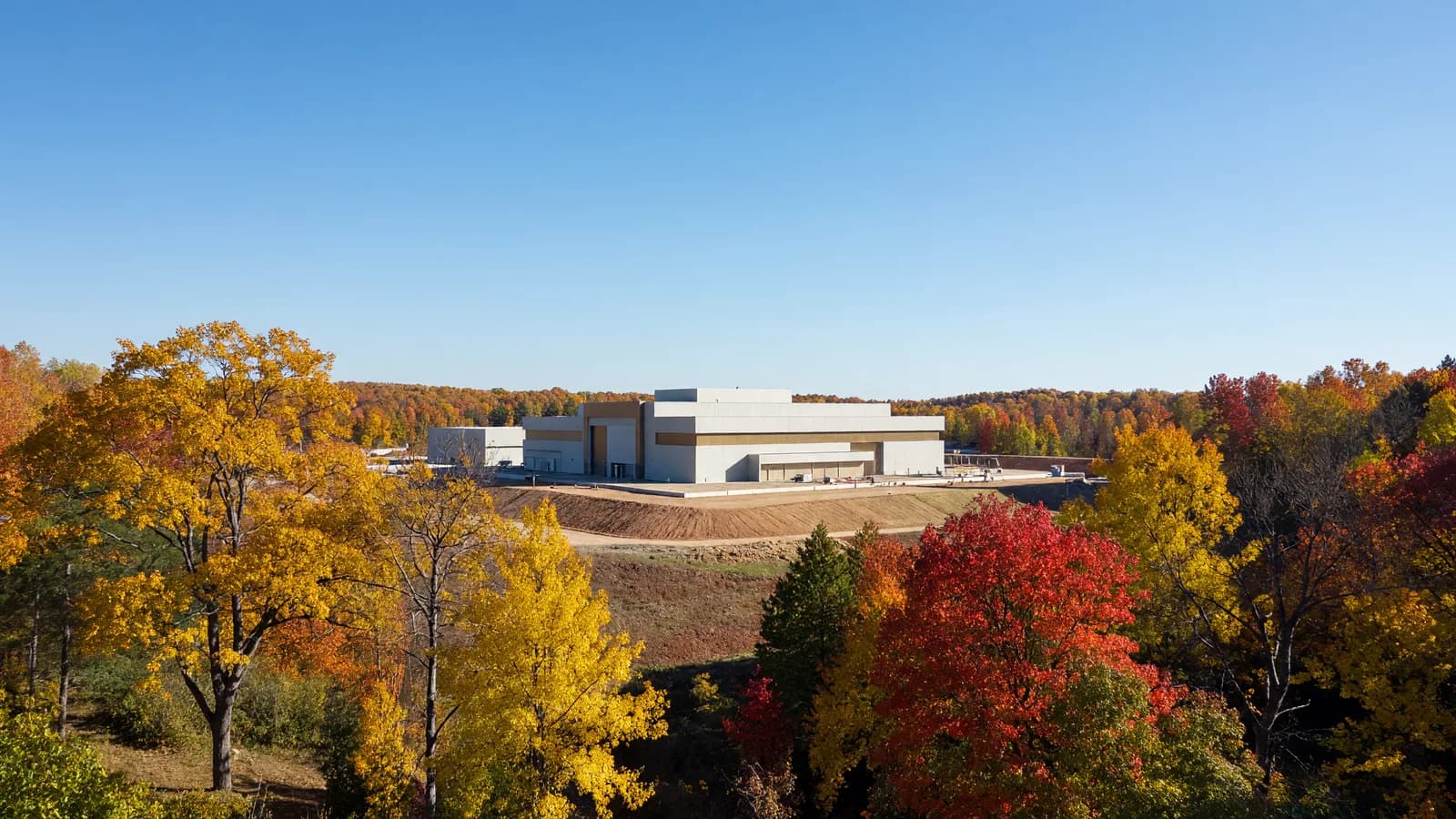
The U.S. Nuclear Regulatory Commission (NRC) has approved the Tennessee Valley Authority’s (TVA) construction permit for a 300-megawatt GE Vernova Hitachi BWRX-300 at Clinch River in Oak Ridge, Tennessee. The decision clears TVA to begin construction, but it does not authorize fuel loading or operation; TVA must obtain a separate operating license.
Key facts
- The NRC completed its review in 14 months, starting in July 2025 and finishing with the September 29, 2026 decision.
- The permit covers one 300-megawatt-electric BWRX-300 unit at TVA’s Clinch River site in Oak Ridge, Tennessee.
- TVA received the permit through NRC docket 50-615, Clinch River Nuclear Unit 1.
- TVA will need a separate operating license before it can load fuel and start the reactor.
What happened
The NRC announced its decision on September 29 and placed the signed construction permit and related documents in its public document system. The authorization covers Clinch River Nuclear Unit 1, a planned boiling-water reactor designed by GE Vernova Hitachi Nuclear Energy. It is the first construction permit issued in the United States for a BWRX-300 design.
The decision followed a review that the agency formally began in July 2025. NRC staff completed the safety evaluation in June 2026 and found the application met regulatory requirements; the commission also held a public hearing in Oak Ridge in August. The NRC said it finished the licensing decision four months ahead of its schedule. Its decision notice describes this as the country’s first commercial small modular reactor to receive construction authorization.
That authorization has a defined boundary. A construction permit allows TVA to build the unit under NRC oversight. It does not let the utility load nuclear fuel, conduct startup testing that requires an operating license, or sell electricity from the reactor. Those steps require a later application and a separate NRC decision. The project therefore moved through an important gate, not to the end of its licensing process.
TVA plans a single 300-MW unit at the site near Oak Ridge National Laboratory. The BWRX-300 is a boiling-water design that uses water both to cool the reactor and to produce steam for a turbine. TVA’s project is the first U.S. application for the model to reach a construction permit; the NRC docket record contains the formal permit materials and record of decision.
Why it matters
For the BWRX-300, a U.S. construction permit creates a licensing precedent that prospective buyers and suppliers can examine. It is not a generic approval of every future BWRX-300 site: each project must establish its own site conditions, environmental impacts, design details and safety case. But TVA’s docket gives the design team and regulators a concrete body of reviewed material to draw on, subject to project-specific review.
The milestone also arrives while TVA is assessing how to meet future electricity demand across its seven-state service region. The utility’s 2026 integrated resource plan includes advanced nuclear among the options it is studying. A construction permit does not settle which technologies TVA will build or how much capacity it will need; it turns one proposed unit from a licensing application into a project that can be constructed.
For the wider U.S. market, the decision adds another large-reactor construction authorization after decades in which few new commercial units advanced. The BWRX-300 comparison lays out how its boiling-water approach differs from other designs now seeking deployment. What happens at Clinch River will test project delivery as well as reactor design: construction cost, schedule, supply-chain readiness and commissioning will matter more than the permit alone when utilities weigh repeat orders.
Background
The Clinch River site has a longer regulatory history than the current project. TVA received an NRC early site permit in 2019, which addressed the suitability of the site and certain emergency-planning and environmental matters before a specific construction permit application was decided. TVA’s own project timeline traces the site’s planning to an early site permit application filed in 2016.
TVA submitted the construction permit application for Unit 1 in 2025. The agency’s record includes a supplemental environmental impact statement and the safety review; the construction permit is issued under the NRC’s domestic production and utilization facility licensing rules. The earlier site approval helped establish the site’s regulatory record, but it did not pre-approve a reactor design or replace the technical reviews required for this permit.
NNN has previously covered the design’s licensing and commercial context in its BWRX-300 explainer and its comparison of the BWRX-300 with the AP300 and Natrium. Those pieces explain why vendors pursue a repeatable standard design, while Clinch River now provides a U.S. project against which that ambition can be measured.
What’s next
TVA can proceed with construction subject to the permit’s conditions and other approvals that apply at the site. The next nuclear licensing gate is an operating-license application. The NRC will have to review that application before TVA can load fuel and begin operation; the agency has not announced an operating date in its permit release.
Watch for construction progress, further NRC docket filings, and TVA’s schedule for the operating-license application. The evidence that will matter most is not another milestone announcement but whether TVA can build the unit to an approved design and present the documentation needed for the NRC’s later operating decision.
Background
The BWRX-300 is GE Vernova Hitachi's 300 MWe boiling-water small modular reactor, derived from the NRC-licensed ESBWR and fueled with GNF2 fuel already in commercial use. Unit 1 at Ontario Power Generation's Darlington site — the first Western SMR to reach construction — is being built with four units approved there totalling about 1,200 MW, and Poland's Orlen Synthos Green Energy is seeking state financing for 14 units across three sites. (As of August 2026.) Read the BWRX-300 explainer.
Questions
- What did the NRC approve at Clinch River?
- The NRC issued TVA a construction permit for one 300-MW GE Vernova Hitachi BWRX-300 unit at the Clinch River site in Tennessee.
- Can TVA operate the reactor now?
- No. TVA needs a separate NRC operating license before fuel loading and operation.
- How long did the NRC review take?
- The NRC said it completed the construction-permit review in 14 months after formally beginning the review in July 2025.
Sources
- NRC Approves Construction of Nation’s First Small Modular Reactor — U.S. Nuclear Regulatory Commission
- Tennessee Valley Authority, Clinch River Nuclear Unit 1, Construction Permit CPAR-2 — U.S. Nuclear Regulatory Commission
- Clinch River Nuclear (CRN) Site — Tennessee Valley Authority
- NRC issues first U.S. construction permit for a BWRX-300 small modular reactor at Tennessee Valley Authority’s Clinch River site — GE Vernova Hitachi Nuclear Energy
About Nuclear News Network
Nuclear News Network (NNN) is an independent publication covering the global nuclear energy sector — reactor construction, SMRs, fuel supply, policy, operations and fusion. NNN publishes a daily brief, same-day analysis of major developments, and reference guides used across the industry. Articles are produced by the NNN Newsroom, an editorial automation system with human oversight, under the publication's editorial standards. Ruben Seoane is the founder and main editor of NNN.