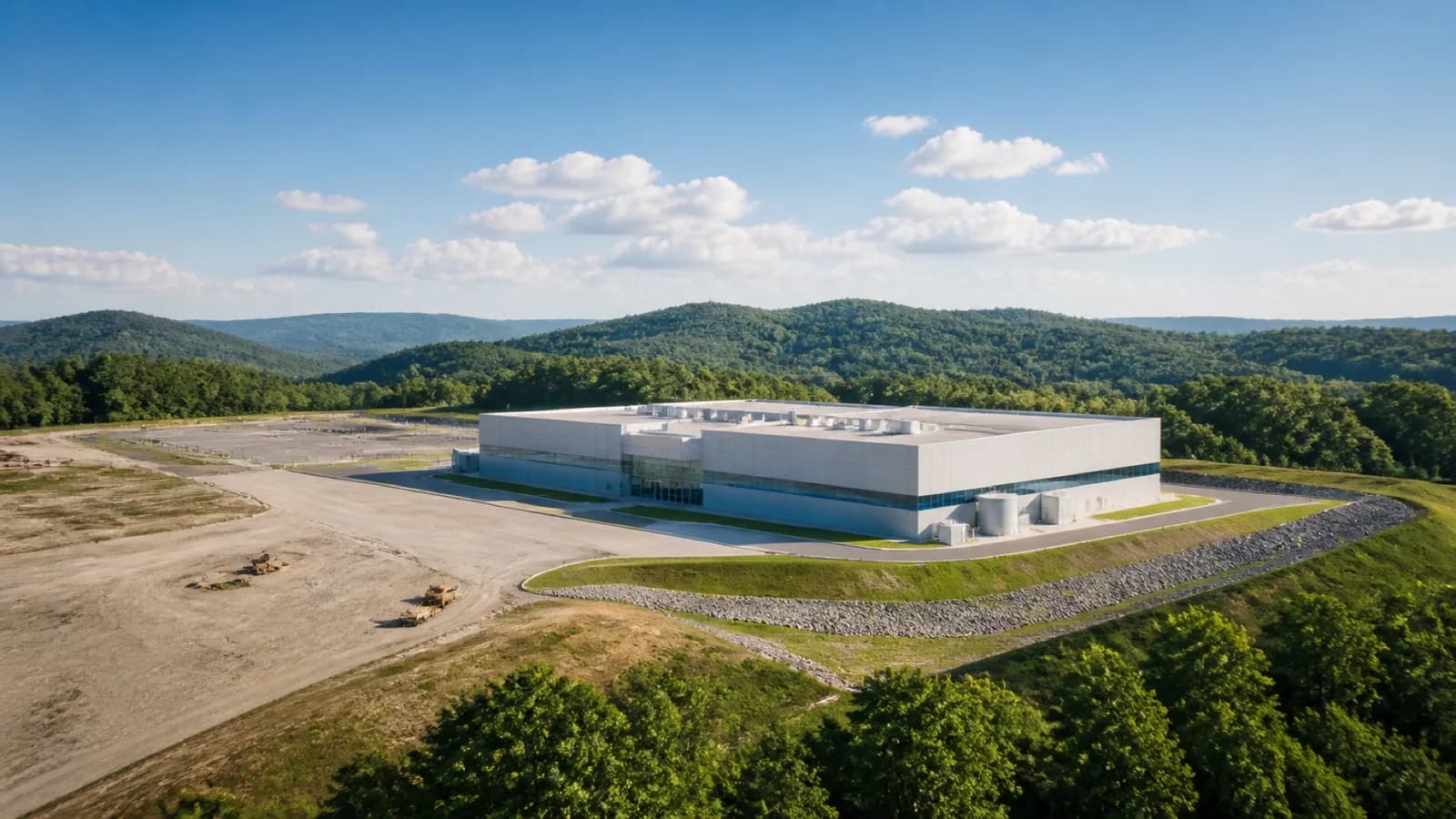
The US Nuclear Regulatory Commission has opened a 60-day window for members of the public to request a contested hearing on Orano Enrichment USA’s proposed Project Ike facility in Oak Ridge, Tennessee. The $5 billion centrifuge project matters because the agency is pairing a public licensing opportunity with a target to complete its review in 12 months.
Key facts
- The Federal Register notice created a 60-day period for hearing requests.
- Project Ike is described as a $5 billion enrichment facility.
- Orano proposes enrichment up to 8 weight percent uranium-235.
- The NRC intends to complete the application review in 12 months, versus 18–20 months for similar reviews in the past.
- If a contested hearing occurs, the licensing board is directed to manage it within 315 days of the Federal Register notice.
What happened
The NRC is reviewing Orano Enrichment USA’s application for a license to build and operate a centrifuge enrichment facility near Oak Ridge. The agency published a commission order and hearing announcement in the Federal Register on August 12. That publication started the period in which a member of the public can submit a request for a contested hearing.
Project Ike would reenrich depleted uranium hexafluoride tails and enrich natural-grade uranium. The proposed maximum enrichment is 8 weight percent uranium-235, above the concentration used in most conventional reactor fuel but within the low-enriched uranium range used by some advanced fuel strategies. The exact licensing outcome will depend on the technical, environmental and adjudicatory record rather than on the announcement alone.
The NRC’s procedural choice is unusual enough to be part of the story. If a contested hearing is held, the agency does not intend to hold a second uncontested hearing before issuing the license. The commission’s order says the contested proceeding would fulfill the relevant hearing requirement, while Commissioner Matthew J. Marzano objected that the approach reads Section 193 of the Atomic Energy Act too broadly.
The Federal Register notice says that, should a contested hearing proceed, the licensing board should manage the overall hearing process so it is completed within 315 days of the notice. ANS reported that this timeline fits the NRC’s goal of completing its broader application review in 12 months.
Why it matters
Project Ike sits at the intersection of fuel security and regulatory capacity. The United States is trying to expand domestic enrichment while reactor developers and utilities seek more secure supplies of enriched uranium. NNN’s Centrus coverage describes a separate effort to scale high-assay low-enriched uranium; Orano’s project is a much larger proposed enrichment facility aimed at a broader fuel market.
The hearing window is also a test of accelerated licensing. Faster review can reduce the time between an application and a commercial decision, but the public hearing must still produce a defensible record. The NRC’s plan therefore has two obligations that can pull in opposite directions: complete the review quickly and preserve a process that can withstand challenge.
Marzano’s objection makes that legal tension explicit. ANS reported that he supported timely adjudication but argued the order did not meet the Atomic Energy Act’s current requirements. The disagreement is not the same as a rejection of Project Ike. It is a warning that speed cannot be treated as a substitute for statutory compliance.
Background
Orano submitted the application in March. On May 21, the NRC told the company that the application contained sufficient information to proceed with detailed technical review and formally accepted it for consideration. The agency is preparing a safety evaluation report and a final environmental impact statement.
The environmental review matters because the facility is not licensed solely on the safety of the centrifuges. The NRC must consider environmental effects, safeguards, security and the plant’s management controls. The Federal Register notice links the licensing process to the environmental impact statement, and ANS reported that the statement must be completed before an adjudicated hearing on license issuance is completed.
NNN’s NRC licensing explainer covers the staged nature of nuclear licensing more generally. Project Ike is an enrichment-facility case rather than a reactor case, but the underlying lesson is similar: an application moves through technical review, environmental analysis and public participation before construction and operation can be authorized.
What’s next
The first deadline is the end of the 60-day hearing-request period. If requests are filed, the NRC’s licensing board will decide which contentions are admissible and manage the adjudicatory schedule. In parallel, the agency will continue the technical review and environmental impact statement.
The cleanest milestones to watch are the hearing decision, publication of the safety evaluation and completion of the environmental record. Project Ike is still a proposal under review. The significance of this week’s action is that the review has entered its public, time-bounded and legally contested phase.
Questions
- What is the Project Ike hearing window?
- The Federal Register notice published August 12, 2026, started a 60-day period in which members of the public may request a contested hearing on Orano’s enrichment application.
- What would Project Ike do?
- Orano plans to use centrifuges to reenrich depleted uranium hexafluoride tails and enrich natural-grade uranium to a maximum of 8 weight percent uranium-235.
- How fast does the NRC plan to review the application?
- The NRC plans to complete its technical review in 12 months, compared with the 18–20 months similar reviews have historically taken, according to ANS.
Sources
- Orano Enrichment USA, LLC, Project Ike Enrichment Facility: Notice of Receipt of Application for a License — Federal Register
- NRC opens, defines hearing opportunity for Orano’s Project Ike — ANS Nuclear Newswire
- 10 CFR Part 52 — Licenses, Certifications, and Approvals for Nuclear Power Plants — Electronic Code of Federal Regulations
About Nuclear News Network
Nuclear News Network (NNN) is an independent publication covering the global nuclear energy sector — reactor construction, SMRs, fuel supply, policy, operations and fusion. NNN publishes a daily brief, same-day analysis of major developments, and reference guides used across the industry. Articles are produced by the NNN Newsroom, an editorial automation system with human oversight, under the publication's editorial standards. Ruben Seoane is the founder and main editor of NNN.