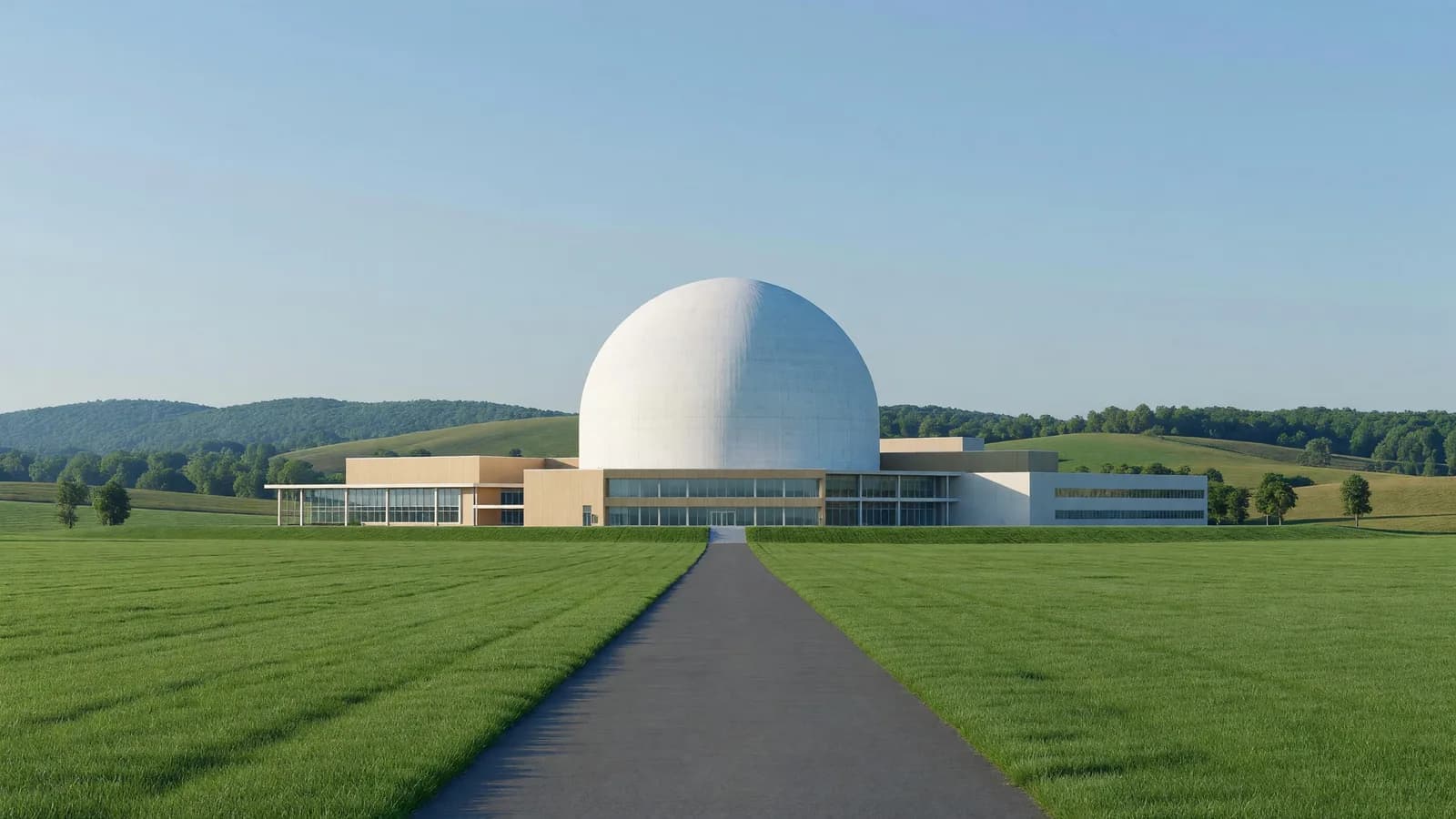
The U.S. Nuclear Regulatory Commission (NRC) licenses a new reactor through staged safety, environmental and public reviews, not a single approval. Developers generally choose the two-step 10 CFR Part 50 route or the combined-license process in 10 CFR Part 52. The technology-inclusive Part 53 framework is still being developed.
Key facts
- Part 50 uses a construction permit followed by an operating license, while Part 52 offers a combined license for construction and operation subject to conditions.
- Part 52 also covers early site permits, standard design certifications, standard design approvals and manufacturing licenses.
- The NRC's process includes safety review, environmental review, public involvement and hearings.
- The NRC's advanced-reactor program status paper says the agency issued its first construction permit for a non-light-water technology since the NRC was established in 1975.
- The proposed Part 53 framework is intended as an optional, technology-inclusive path for commercial advanced reactors, rather than a replacement already in force.
How it works
A reactor licensing case starts before the formal application. The NRC encourages applicants to engage early so staff can identify missing information, clarify the intended licensing basis and determine which technical questions need formal review. That pre-application work is especially important for advanced reactors, whose safety cases may not fit the assumptions built around the existing light-water fleet.
The applicant then assembles a package covering the plant design, site, safety analysis, environmental effects, emergency planning, security and quality assurance. The NRC's public description of the process lists safety and environmental documents alongside public meetings, comments, hearings and a final safety evaluation. The agency makes the licensing record public through its document system, which lets regulators, local communities and intervenors follow the case.
The review has two tracks. Safety reviewers test whether the design and operating program provide reasonable assurance of adequate protection of public health and safety. Environmental reviewers examine the effects associated with the licensing decision under the NRC's Part 51 rules. The tracks interact, but they answer different questions: can the plant be operated safely, and what environmental effects must the federal government disclose before deciding?
The two main routes
Part 50 is the traditional two-step route. The applicant first seeks a construction permit. If the NRC grants it, the applicant can build within the limits of that permit. The applicant later applies for an operating license, and the NRC reviews whether the completed plant, procedures and operating organization meet the required conditions.
That structure gives the regulator a distinct decision point between construction and operation. It can also mean that design, construction and licensing work continue across separate applications. Part 50 remains available for advanced reactors, and the NRC's advanced-reactor guidance has been written to support non-light-water applications under both Part 50 and Part 52.
Part 52 was created to make the licensing basis more predictable by resolving some issues earlier and combining construction and operation into a single license. A combined license does not mean the applicant receives permission to operate on day one. The plant must satisfy inspections, tests, analyses and acceptance criteria, commonly known as ITAAC, before the NRC authorizes operation under the license conditions.
Part 52 also lets developers separate pieces of the work. An early site permit can resolve site-related issues before a reactor design is selected. A standard design certification can approve a design for use in multiple projects. A standard design approval can provide a regulatory decision on a design without the same certification framework. These tools can reduce repetition when a project uses an already reviewed site or design, but they do not remove the need for a complete plant-specific application.
Advanced reactors and Part 53
Advanced-reactor developers often describe Part 53 as the future licensing option because it is intended to be risk-informed and technology-inclusive. The NRC's program status paper says the rulemaking responds to direction in the Nuclear Energy Innovation and Modernization Act and is meant to support commercial advanced reactors, including non-light-water designs and small modular reactors.
The important word is optional. Until the rule is final and available for use, applicants must work through the pathways that exist. That is why early engagement, topical reports and application-content guidance matter. They help a developer translate a novel design into terms the regulator can review under Part 50 or Part 52.
NNN's coverage of Newcleo's U.S. licensing path shows what that looks like before a formal application: a Regulatory Engagement Plan, technical interactions and a proposed sequence of submissions. Our report on the NRC's NEPA streamlining proposal covers a separate effort to change the environmental-review rules. The license-path analysis explains why the regulatory route is part of the commercial product for an advanced-reactor company.
Common misconceptions
A design certification is not a plant license. It resolves generic design questions, but a project still needs a site, a licensee, a construction and operating plan, and plant-specific environmental and safety information.
A construction permit is not permission to generate electricity. It authorizes construction under defined conditions. Operation requires a later Part 50 operating license or the satisfaction of the conditions attached to a Part 52 combined license.
NRC approval is not the same as state and local approval. Federal licensing may be the central nuclear decision, but projects still face land, water, transmission, building, environmental and public-process requirements outside the NRC's authority.
Current state in August 2026
The existing rules can handle more than the conventional large reactor model. The NRC has used them for small modular reactors, advanced test reactors and non-light-water designs while developing new guidance and rulemaking. The agency's 2024 status paper recorded continued reviews of non-light-water construction-permit applications, an SMR standard-design approval application and technical submissions supporting pre-application engagement.
For developers, the practical test is not whether a concept has entered an NRC meeting. It is whether the company can turn its safety claims into a complete application, answer staff questions, maintain a credible schedule and show how construction and operation will be controlled. For communities and investors, the public docket is the place to watch: docketing, review milestones, environmental documents, hearing opportunities and the final safety evaluation tell a more useful story than a launch announcement.
What to watch next
The next meaningful milestones are formal application acceptance, docketing, public scoping and the NRC's safety and environmental review products. For advanced reactors, watch the agency's Part 53 rulemaking, application-content guidance and construction-oversight work alongside project-specific filings.
The short version is simple: Part 50 separates construction from operation, Part 52 combines them subject to later conditions, and Part 53 remains a developing option. A reactor is not licensed because its design is persuasive. It is licensed when the applicant's evidence survives the NRC's technical, environmental and public process.
Questions
- How does the NRC license a new nuclear reactor?
- The NRC reviews the design, site, safety analysis, environmental report and operating plans. An applicant can use a two-step Part 50 process or seek a combined license under Part 52 that covers construction and operation subject to conditions.
- What is the difference between a construction permit and a combined license?
- A Part 50 construction permit authorizes construction before a later operating-license decision. A Part 52 combined license covers construction and operation in one licensing process, with inspections and acceptance criteria before operation.
- Are advanced reactors licensed under a separate NRC rule today?
- Not generally. Advanced reactors can use existing Part 50 or Part 52 pathways while the NRC develops a technology-inclusive Part 53 framework for optional use by commercial advanced-reactor applicants.
- Does NRC licensing include environmental review?
- Yes. The NRC evaluates environmental effects under its Part 51 rules and provides public opportunities through meetings, comments and hearings tied to licensing actions.
Sources
- How We Regulate New Reactors — U.S. Nuclear Regulatory Commission
- 10 CFR Part 50 — Domestic Licensing of Production and Utilization Facilities — Electronic Code of Federal Regulations
- 10 CFR Part 52 — Licenses, Certifications, and Approvals for Nuclear Power Plants — Electronic Code of Federal Regulations
- SECY-24-0020: Advanced Reactor Program Status — U.S. Nuclear Regulatory Commission
About Nuclear News Network
Nuclear News Network (NNN) is an independent publication covering the global nuclear energy sector — reactor construction, SMRs, fuel supply, policy, operations and fusion. NNN publishes a daily brief, same-day analysis of major developments, and reference guides used across the industry. Articles are produced by the NNN Newsroom, an editorial automation system with human oversight, under the publication's editorial standards. Ruben Seoane is the founder and main editor of NNN.