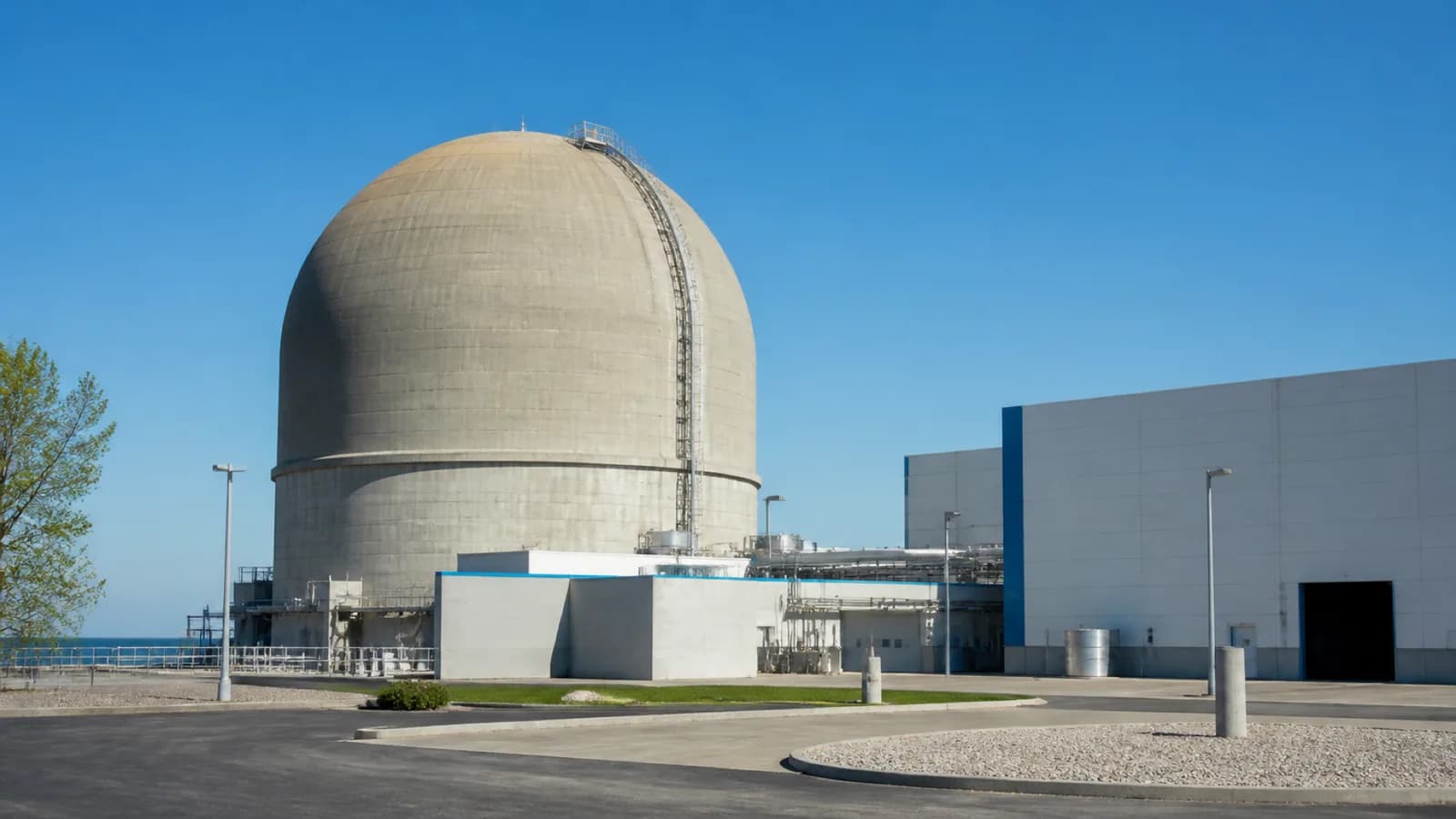
Holtec International has begun loading fuel into the Palisades Nuclear Plant's reactor vessel in Michigan, moving the shuttered unit into the Mode 6 refueling stage. The milestone puts the 805-megawatt electric reactor on the road to a planned restart, but inspections, testing, authorization and startup work still stand between fuel loading and commercial generation.
Key facts
- Fuel loading began at Palisades on Aug. 30, 2026, according to owner and operator Holtec International.
- The reactor core contains 204 fuel assemblies, including new and partially used fuel from recent operating cycles.
- Holtec says the unit is designed to produce 805 megawatts electric; the American Nuclear Society describes the operating unit as 777 MWe.
- The restart effort has involved more than two years of inspections, maintenance, refurbishment, testing and equipment upgrades.
- Fuel loading is not criticality, grid connection or commercial operation. The plant must still complete testing, inspections and startup activities.
What happened
Palisades staff began moving fuel into the reactor vessel on the morning of Aug. 30, Holtec said. The work places the plant in Mode 6 under its Technical Specifications. In plain terms, that is the refueling condition for a reactor whose vessel is open for fuel-handling work. It is a controlled operating state, not a claim that the reactor is producing power.
The core will contain 204 fuel assemblies. Holtec says the load includes new fuel and partially used fuel from the plant's most recent operating cycles. The company describes the reactor's planned output as 805 megawatts electric. The American Nuclear Society, using the plant's operating rating, lists the one-unit facility at 777 MWe. Either way, this is a large commercial reactor moving through a restart sequence, not a small test installation.
The announcement did not set a firm date for commercial operation. It said the plant will move through required testing, inspections and startup activities after fuel loading is complete. Those checks are intended to confirm that plant systems are fit for operation before the reactor is taken toward power operation.
That distinction is easy to lose in a headline. Fuel in the vessel does not mean a reactor has reached criticality. It does not mean the generator is synchronized to the grid. It does not mean customers are receiving electricity. Palisades has crossed a physical and procedural gate, but several consequential gates remain.
Why it matters
Palisades is part of a small group of US reactor restart projects that aim to return a permanently shut commercial plant to service. Holtec's announcement describes the Michigan site as the first US nuclear power plant to begin this kind of step-by-step return after shutdown and planned decommissioning. The American Nuclear Society likewise reported that the plant could become the first US nuclear power plant to restart after being slated for decommissioning.
That makes the next phase more revealing than the announcement itself. Restart work is not simply a matter of putting fuel back into a vessel. The operator must demonstrate that systems, components, procedures and staff are ready for licensed operation after years away from the grid. A successful restart would give utilities and regulators a concrete example of how a retired plant can be inspected, refurbished and brought back under operating controls.
The financial and commercial structure behind Palisades also matters. Holtec credits support from the State of Michigan, a loan from the US Department of Energy, and long-term power purchase agreements with Wolverine Power Cooperative and Hoosier Energy. The fuel-loading announcement does not state the value of those arrangements, so the restart's economics should not be reduced to an unverified dollar figure.
NNN has been following the site from the licensing side as well. Earlier coverage of the NRC's environmental review of Holtec's Palisades new-build concerns proposed SMR-300 units, not the restarted large reactor. The two projects share a site, but they are separate regulatory and engineering stories.
Background
Holtec says the restart program has involved more than two years of work. The listed projects include reinforcement of tubes in the two steam generators, removal of accumulated corrosive species from the steam-generation space, replacement of control-rod-drive-mechanism nozzles, chemical decontamination and passivation of the primary system, reactor-vessel inspections, and equipment modernization.
Those details explain why fuel loading is a meaningful milestone without making it the finish line. A reactor vessel can be ready to receive fuel while other systems still require verification. Restart work also has to be conducted within the plant's procedures and Technical Specifications, with the operator's decisions subject to the oversight arrangements that apply to the facility.
The broader restart trend is covered in NNN's nuclear decommissioning market analysis. That coverage tracks how renewed demand for firm electricity has changed the value of some shuttered plants. Palisades is the clearest test of whether that interest can translate into safe, licensed generation rather than another announcement about a possible restart. Readers can also follow NNN's operations and safety coverage for the practical systems questions that determine whether a reactor can run reliably.
What's next
The immediate watch points are the completion of fuel loading, system inspections, testing and startup activities. Holtec says those steps will determine whether plant systems are fit for operation. The company has not announced a firm commercial-operation date in its Aug. 30 release.
The clean description for now is simple: Palisades has started loading fuel and entered Mode 6. The reactor has not yet restarted. The next hard evidence will be a completed startup sequence, followed by a verified return to power and commercial generation.
Questions
- What happened at Palisades?
- Holtec International began loading fuel into the Palisades reactor vessel on Aug. 30, 2026. The plant entered Mode 6, the refueling stage under its Technical Specifications.
- Does fuel loading mean Palisades has restarted?
- No. Fuel loading comes before testing and startup activities. It does not mean the reactor has reached criticality, connected to the grid, or begun commercial generation.
- How much power is Palisades designed to produce?
- Holtec says the Palisades reactor is designed for 805 megawatts electric. The American Nuclear Society describes the unit's operating output as 777 MWe.
- What work remains before commercial operation?
- After fuel loading, plant systems must undergo inspections, testing, and startup activities. Holtec has not given a firm commercial-operation date in its fuel-loading announcement.
Sources
- Palisades Begins the Process for Loading Fuel in its Reactor Vessel — Holtec International
- Fuel loading process begins at Palisades — American Nuclear Society
About Nuclear News Network
Nuclear News Network (NNN) is an independent publication covering the global nuclear energy sector — reactor construction, SMRs, fuel supply, policy, operations and fusion. NNN publishes a daily brief, same-day analysis of major developments, and reference guides used across the industry. Articles are produced by the NNN Newsroom, an editorial automation system with human oversight, under the publication's editorial standards. Ruben Seoane is the founder and main editor of NNN.