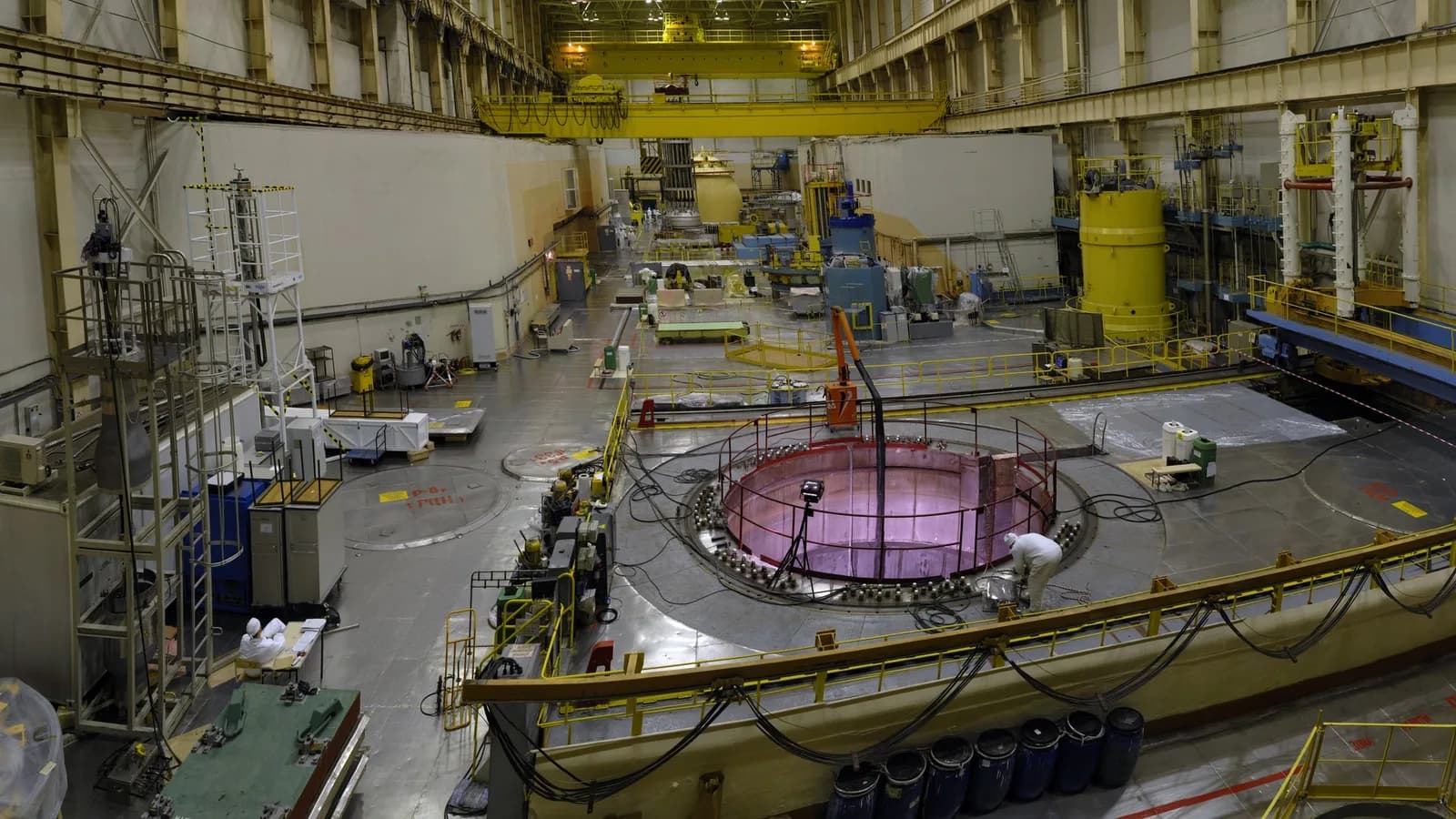
Russia grants site licences for first two Kola units means Russia has cleared an early permitting gate for the first two proposed units at the new Kola nuclear power plant. The licence step matters because it tells readers the project is no longer just a concept on paper — the site itself has passed an initial regulatory hurdle before any broader build sequence can advance.
Key facts
- Russia's nuclear regulator, Rostekhnadzor, has granted site licences for the first two proposed units at the new Kola nuclear power plant.
- The decision applies to the new Kola project, which is now moving through an early stage of the permitting chain rather than the final construction phase.
- Rosatom says projects for 18 nuclear units are being implemented across Russia in various stages, showing that Kola sits inside a broader national build-out.
- NNN's recent coverage of newcleo's NRC licensing path and the NEPA streamlining proposal shows how regulatory gates shape timelines long before concrete is poured.
What happened
World Nuclear News reported that Russia's nuclear regulatory Rostekhnadzor issued site licences for the first two proposed units at the new Kola nuclear power plant. In plain English, that is an early approval that says the site is acceptable for the next phase of development. It is not the same thing as full construction authorisation, but it is an important step because projects like this tend to move in layers: site approval first, then the more detailed engineering and build work that follows.
For a nuclear programme, site licensing is where the abstract becomes more concrete. It narrows the list of things still waiting to be solved. Once a site licence is in hand, the project can be discussed less as a far-off ambition and more as a programme with a location, a legal footing, and a visible regulatory record. That does not mean the hard part is over; it means the hard part has shifted from proving the idea to proving the execution path.
The broader Russia context matters too. Another World Nuclear News report this week said Rosatom has projects for 18 nuclear units being implemented in Russia in various stages. That headline does not tell the whole story of any one plant, but it does show that Kola is not a one-off announcement. It sits inside a larger build-and-renewal picture where Russia is signaling that multiple nuclear projects are moving, even if they are moving at different speeds and through different gates.
Why it matters
This kind of licensing news matters because nuclear timelines are often won or lost long before construction starts. A project can have a site, a concept, a supply chain, and a political narrative — but until it clears the early regulatory gates, it is still vulnerable to schedule drift. Site licences do not solve financing, construction sequencing, or equipment procurement, yet they remove one source of uncertainty and make the next step easier to argue for.
That is why this story fits the broader NNN pattern that keeps showing up across the industry. On the U.S. side, our coverage of newcleo's NRC licensing path and the NRC's NEPA streamlining proposal shows a similar reality: the business of nuclear is increasingly the business of process management. The companies and governments that can turn process into momentum are the ones that make their projects legible to investors, regulators, and the public.
Kola is also a reminder that reactor news is not only about new designs. Sometimes the more consequential update is a permitting decision on an older or more traditional build path. In those cases, the signal is not novelty; it is durability. If a programme can keep moving through the paper trail, it has a better chance of becoming a real asset rather than another long-range promise.
Background
Kola is not the kind of story that grabs attention because of a flashy prototype or a dramatic technology claim. It matters because it shows how a national nuclear build-out advances in stages. First comes the policy signal, then the site work, then the project documentation, then the deeper engineering and commercial commitments. Each layer can be slowed or accelerated, and each layer tells a different audience something different about whether the programme is alive.
That is also why the site licence detail is worth dwelling on. A lot of public discussion collapses nuclear progress into a single binary: built or not built. The real process is more granular. A site can be greenlit before the whole project is ready, and that gap between "site accepted" and "plant operating" is where a lot of the industry’s risk lives. Readers who follow the sector closely know that the hard questions are usually buried in those gaps.
Rosatom's broader 18-unit claim helps put Kola in context. If multiple projects are in flight, then the real challenge is not just whether any single plant can obtain a licence. It is whether the programme can convert a stack of approvals into an orderly pipeline. That is a different kind of accomplishment — less headline-friendly than a reactor debut, but often more important in the long run because it determines whether the industry can replicate success.
NNN's recent licensing coverage has pointed in the same direction. Whether the story is a newcleo pre-application plan or an NRC proposal to streamline environmental review, the underlying question is the same: how do projects move from aspiration to executable process? Kola gives us another data point in that answer.
What's next
The immediate next step is not a full-scale construction rush. It is the slower, less glamorous work of translating a site licence into the next batch of project decisions, procurement actions, and engineering milestones. If those pieces line up, Kola will keep moving. If they do not, the licence will simply become another date in a long record of nuclear paperwork.
For now, the important takeaway is straightforward: the Kola project has cleared an early gate, and the permitting story is still advancing. In nuclear, that is often the difference between a project that remains theoretical and a project that can plausibly reach the next phase of reality.
Questions
- What did Russia approve for Kola?
- Rostekhnadzor granted site licences for the first two proposed units at the new Kola nuclear power plant.
- Why does a site licence matter?
- It is an early regulatory gate that clears the site for the next stage of the project, even though full construction still has to follow.
- How does this fit the bigger picture?
- Rosatom says projects for 18 nuclear units are being implemented in Russia in various stages, so Kola sits inside a larger national build-out.
Sources
- Siting licence granted for new Kola nuclear power plant units — World Nuclear News
- Rosatom says projects for 18 nuclear units being implemented — World Nuclear News
About Nuclear News Network
Nuclear News Network (NNN) is an independent publication covering the global nuclear energy sector — reactor construction, SMRs, fuel supply, policy, operations and fusion. NNN publishes a daily brief, same-day analysis of major developments, and reference guides used across the industry. Articles are produced by the NNN Newsroom, an editorial automation system with human oversight, under the publication's editorial standards. Ruben Seoane is the founder and main editor of NNN.