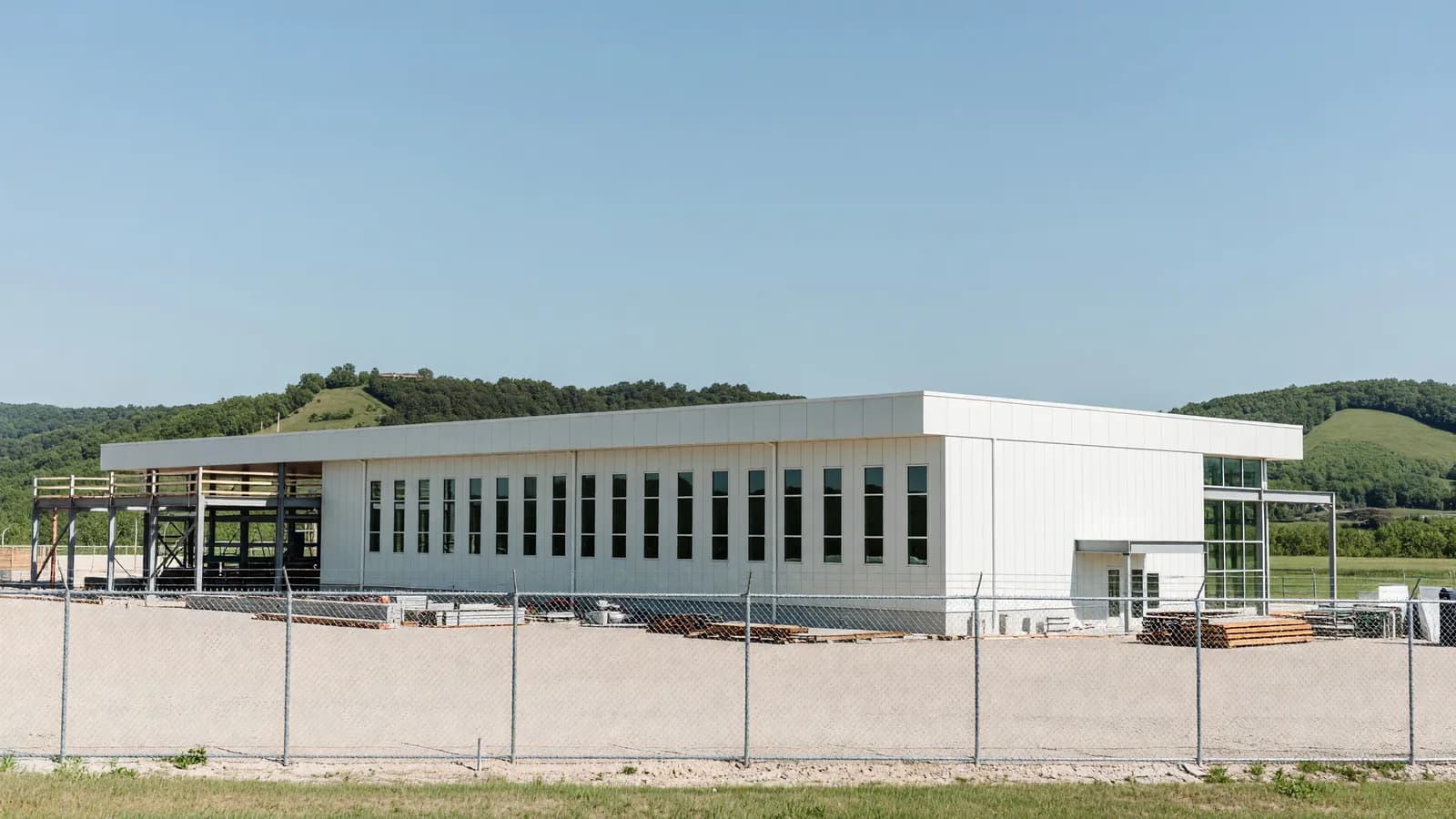
Centrus Energy and Antares Nuclear signed a definitive multi-year contract on September 17 for Centrus to supply high-assay low-enriched uranium (HALEU), with deliveries starting before 2030. Antares' prepayments will help fund Centrus' centrifuge expansion at Piketon, Ohio — the first time customer money, not just government contracts, is backing new western HALEU capacity.
Key facts
- The definitive multi-year contract covers HALEU deliveries to Antares commencing before the end of the decade.
- Antares is making prepayments to Centrus to support expanded HALEU capacity — a financing structure now appearing across Centrus' customer book.
- Centrus' American Centrifuge Plant in Piketon, Ohio is the only licensed HALEU production facility in the western world.
- Centrus' AC100 centrifuge design is the only deployment-ready enrichment technology capable of "unobligated" enrichment for U.S. national security missions.
- Antares, founded in 2023 and backed by over $600 million, achieved initial criticality of its Mark-0 microreactor in 2026 and targets electricity production in 2027.
- It is Centrus' third HALEU customer announcement in six weeks, after Radiant on September 10 and X-energy on August 7.
What happened
Centrus Energy (NYSE: LEU) and Antares Nuclear announced the deal in a joint release on September 17. Centrus will supply HALEU from its American Centrifuge Plant in Piketon, Ohio, with deliveries starting before 2030 to support Antares' advanced reactor projects, including space and national security missions. The contract includes prepayments from Antares that will directly support the expanded HALEU capacity.
The structure mirrors the deal Centrus signed with Radiant a week earlier. There, Radiant's prepayments also fund the company's domestic commercial enrichment buildout — a pattern suggesting Centrus has settled on customer prepayments as the financing mechanism for its Piketon expansion, on top of the roughly $1.07 billion DOE task order it signed in July.
Executives at both companies framed the contract as demand validation. "This contract is another sign that demand for HALEU is real and it is accelerating," said Centrus President and CEO Amir Vexler. "Binding orders from Antares and others are supporting our expansion to commercial-scale production."
Antares CEO and co-founder Jordan Bramble put the deal in the practical terms reactor developers usually avoid in press releases: "Fuel supply is one of the practical questions every advanced reactor developer has to answer." The contract, he said, gives Antares "a reliable, U.S.-origin source of HALEU for the reactors we're deploying for a wide variety of defense and space customers."
Antares is building compact microreactors for critical missions on Earth and in space. The company was recently selected for the U.S. Army's Janus Program at Fort Bragg, North Carolina; the Air Force's Advanced Nuclear Power for Installations program at Joint Base San Antonio, Texas; and a Space Force Strategic Breakthrough award to demonstrate a space reactor. Its Mark-0 microreactor reached initial criticality in 2026 under the DOE Reactor Pilot Program, with power production expected in 2027 and initial production deployments to U.S. military installations from 2028.
Why it matters
The prepayment structure is the story. Until now, western HALEU capacity has been built on government money — DOE demonstration contracts and task orders. This is the first supply contract in the current buildout cycle where a reactor developer's own money helps fund the enrichment plant that will fuel it, and the second such deal in a week after Radiant. Customer-prepayment financing means the Piketon expansion is being underwritten by the demand side, not only by appropriations that shift with each budget cycle.
The national security dimension sharpens the deal's significance. Because Centrus' enrichment technology and manufacturing supply chain are entirely U.S.-origin, the HALEU it produces carries no foreign obligations — "unobligated" in industry terms. Centrus says its AC100 centrifuge is the only deployment-ready enrichment technology capable of this. For Antares, whose customer list runs from the Army to the Space Force, that clearance is not a marketing point; it is a procurement requirement.
The deal also tightens the feedback loop between defense microreactor programs and the fuel cycle. Antares' military selections give it named installations — Fort Bragg, Joint Base San Antonio — while Centrus' Piketon expansion gives those reactors a licensed fuel source. Neither side can deliver its half of the timeline without the other, which is precisely what a long-term supply contract is supposed to fix.
Background
HALEU — uranium enriched above 5% and below 20% U-235 — is the fuel most advanced reactor designs need and today's fleet does not use. The supply picture has been thin: Russia's Tenex dominates the commercial market, and western production so far amounts to Centrus' demonstration cascade in Ohio plus research-scale output. NNN's HALEU explainer tracks the gap between reactor demand and licensed fuel supply.
Centrus has been converting that gap into orders. In July it signed a $900 million DOE task order — $1.07 billion if all options are exercised — to move its HALEU cascade from demonstration to commercial operation, with first new capacity expected by 2029 and an initial build-out of 12 metric tons per year. The company had already produced more than 1,900 kilograms of HALEU under its demonstration contract, finishing the final 900 kilograms two weeks early in June.
Commercial customers followed. X-energy signed a phased LEU and HALEU agreement with Centrus on August 7 covering part of the fuel needs for its 11.5 GW reactor pipeline, feeding X-energy's TRISO-X fuel fabrication facility in Tennessee. On September 10, Centrus signed a multi-year HALEU deal with Radiant covering multiple Kaleidos microreactors, again with customer prepayments funding the Piketon buildout. The Antares contract completes a six-week run in which Centrus added a government anchor order, a commercial pipeline customer, and two defense-focused microreactor developers.
The physical buildout sits on a multi-billion-dollar expansion Centrus launched last year at Piketon, covering both HALEU and conventional LEU capacity, alongside a centrifuge manufacturing plant in Oak Ridge, Tennessee. The DOE task order alone is projected to support 1,000 construction jobs and 300 operating jobs in Ohio.
What's next
Watch three dates. Centrus expects first new HALEU capacity online by 2029, ahead of this contract's before-2030 delivery window. Antares says it will produce electricity from an advanced reactor in 2027, with initial production deployments to military installations from 2028. And the long-term lease extension for the Piketon plant — flagged by Centrus as in progress when the DOE task order signed — remains the permitting item that gates the whole expansion.
The other signal to watch is commercial: whether more developers follow Radiant and Antares into prepayment-backed contracts. Each one converts HALEU from a government-funded pilot into a demand-financed industry, and gives Centrus a stronger case for expanding beyond the initial 12 metric tons per year.
Questions
- What did Centrus and Antares sign on September 17, 2026?
- A definitive multi-year contract for Centrus to supply Antares with high-assay low-enriched uranium (HALEU), with deliveries commencing before the end of the decade. Antares is making prepayments that support Centrus' expanded HALEU production capacity.
- Why is the fuel called 'unobligated' and why does that matter?
- Centrus' AC100 centrifuge design is U.S.-origin, so its HALEU carries no foreign technology obligations. That makes it the only deployment-ready enrichment technology cleared to fuel U.S. national security missions, including Antares' defense and space reactors.
- Where will the HALEU be produced?
- At Centrus' American Centrifuge Plant in Piketon, Ohio, the only licensed HALEU production facility in the western world. Centrus launched a multi-billion-dollar expansion there last year covering HALEU and LEU production.
- What reactors will use this fuel?
- Antares' compact microreactors for defense and space customers. Antares was selected for the U.S. Army's Janus Program at Fort Bragg, the Air Force's Advanced Nuclear Power for Installations program at Joint Base San Antonio, and a Space Force space-reactor award.
Sources
- Centrus and Antares Sign Multi-Year HALEU Supply Contract — Centrus Energy
- Centrus and Antares Sign Multi-Year HALEU Supply Contract — PRNewswire
About Nuclear News Network
Nuclear News Network (NNN) is an independent publication covering the global nuclear energy sector — reactor construction, SMRs, fuel supply, policy, operations and fusion. NNN publishes a daily brief, same-day analysis of major developments, and reference guides used across the industry. Articles are produced by the NNN Newsroom, an editorial automation system with human oversight, under the publication's editorial standards. Ruben Seoane is the founder and main editor of NNN.