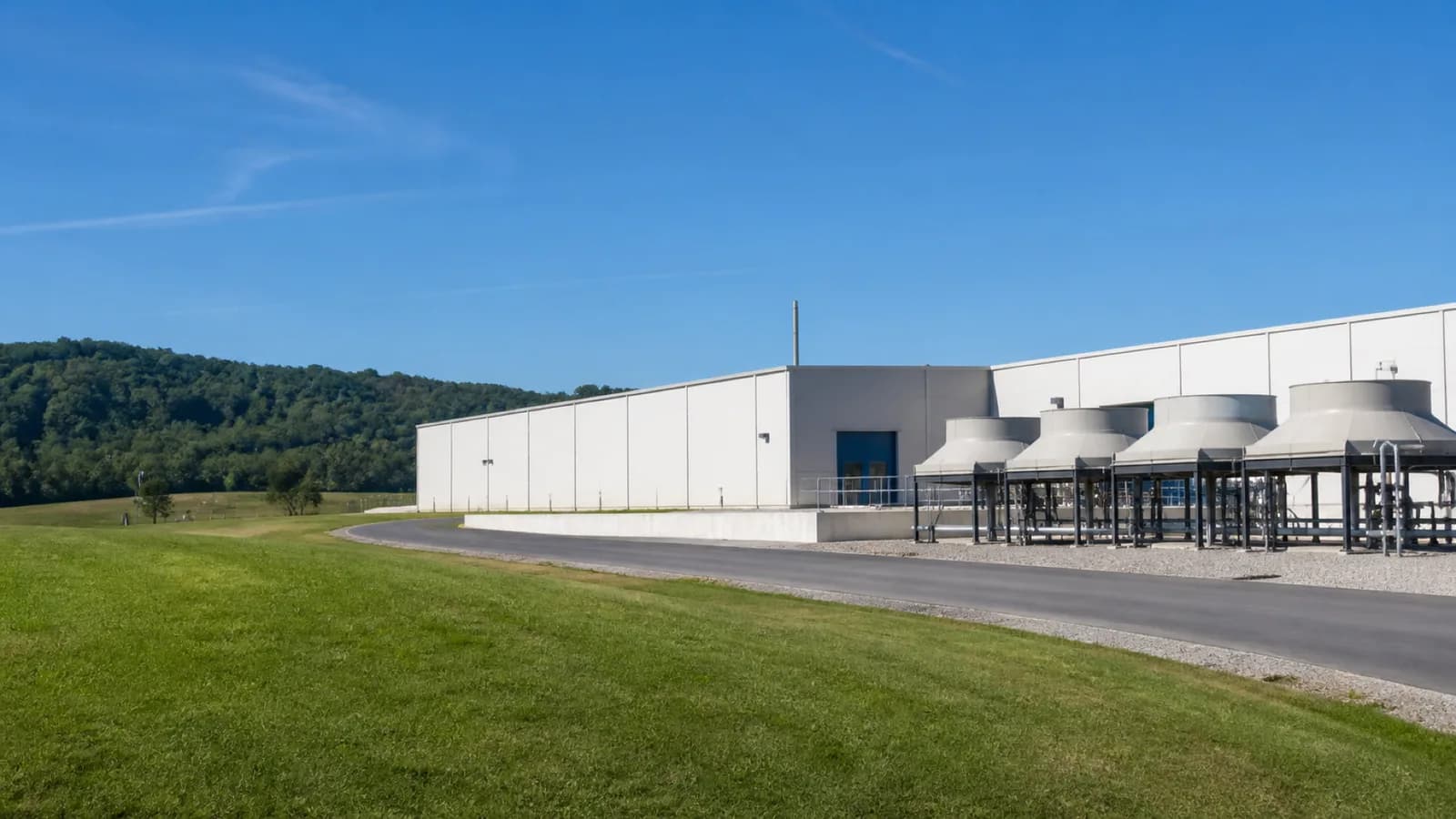
X-energy, Inc. and Centrus Energy Corp. signed a definitive agreement for LEU and HALEU enrichment services on Aug. 6, tying fuel supply to part of X-energy's planned Xe-100 reactor fleet. The deal matters because the company's commercial pipeline totals 11.5 gigawatts, while HALEU production remains a narrow industrial capability.
Key facts
- X-energy says the agreement can support initial fuel needs for a portion of its 11.5 GW commercial pipeline.
- Centrus will produce LEU and HALEU at its American Centrifuge Plant in Piketon, Ohio.
- X-energy says its TRISO-X fuel uses uranium enriched to about 15.5% uranium-235, compared with less than 5% for conventional LEU fuel.
- Centrus says the contract includes customer prepayments and builds on a $3 billion contingent LEU and HALEU backlog, of which $2.4 billion is definitized.
- DOE says X-energy's 215,000-square-foot TRISO-X facility is designed to produce up to 700,000 fuel pebbles a year.
What happened
The agreement covers enrichment services for both low-enriched uranium and high-assay low-enriched uranium. X-energy said the contract uses a phased approach, with commitments scaling as its commercial projects move forward. That wording matters. The announcement secures a route to material for initial Xe-100 projects, but it does not say that every reactor in the company's pipeline now has fuel reserved.
The physical chain is unusually clear. Centrus plans to enrich uranium at the American Centrifuge Plant in Piketon, Ohio. The material will then move to TRISO-X, X-energy's fuel subsidiary, for fabrication at its Oak Ridge, Tennessee, campus. The companies describe the arrangement as a domestic path from enrichment to coated-particle fuel rather than a simple reactor-company offtake agreement.
Centrus said X-energy will make prepayments under the contract to support its commercial enrichment-capacity program. The company said the agreement adds to a contingent backlog of $3 billion, including $2.4 billion that it calls definitized. Those figures describe Centrus's broader backlog, not the value of this X-energy contract.
X-energy said it had already secured the initial HALEU needed for its first Xe-100 project through Dow and the U.S. Department of Energy's HALEU Availability Program. The new Centrus agreement is aimed at later initial deployments and at a longer transition toward commercial supply.
Why it matters
Fuel is where advanced-reactor schedules meet industrial reality. A reactor design can be technically complete and still wait years for enrichment, conversion and fabrication capacity. X-energy's agreement addresses two links at once: Centrus supplies the enriched uranium, and TRISO-X is intended to turn it into the fuel form used by the Xe-100.
The Xe-100 is a high-temperature gas-cooled reactor that uses TRISO coated-particle fuel. X-energy says the fuel's uranium enrichment is about 15.5% U-235, inside the HALEU band. That is well above conventional commercial reactor fuel, which is generally below 5% U-235. The chemistry is not a footnote: without the right enrichment, the fuel factory cannot make the product the reactor requires.
The agreement also gives Centrus a customer-backed reason to expand. Its American Centrifuge Plant has been part of the U.S. effort to restore domestic enrichment capacity, while the company separately holds a $900 million DOE HALEU task order covered in earlier NNN reporting. The new deal links that supply-side buildout to an identifiable reactor developer and a stated fuel pathway.
Still, the announcement does not remove the hard parts. X-energy's 11.5 GW pipeline includes projects at different stages, and the release does not disclose the quantity of HALEU covered, the delivery schedule, or the contract's total value. It is a serious commercial commitment, not proof that 11.5 GW has reached construction.
Background
TRISO fuel places a uranium kernel inside multiple layers of carbon and silicon carbide. NNN's TRISO fuel explainer covers how those coatings retain fission products at high temperature and why the fuel is associated with advanced reactors and microreactors.
X-energy's fuel business is further along than a concept sketch. The U.S. Department of Energy says TRISO-X's TX-1 facility is under construction and is the first commercial-scale U.S. fuel-fabrication facility focused on HALEU fuel to receive NRC approval. DOE says the plant is designed for about 500 full-time staff, and that its projected output of 700,000 fuel pebbles per year could sustain 11 Xe-100 reactors. Those are design and company projections, not current production.
The supply-chain picture is broader than one pair of companies. NNN has also covered the NRC approval for Framatome's Richland plant to handle higher-enriched material and fabricate TRISO fuel. Each project helps answer a different question: who can enrich the uranium, who can fabricate the particles, and which reactor designs have customers willing to fund the chain.
What's next
The next useful disclosure will be a quantity and delivery schedule. Readers should watch for Centrus and X-energy to specify how much LEU and HALEU is committed, when enrichment begins at Piketon, and how the material will be qualified for TRISO-X fabrication.
The other watch is execution at Oak Ridge. DOE says TX-1 is intended to move toward commercial fuel production, but the company still has to complete construction, operate the facility under its license and demonstrate repeatable output. If those steps line up with the Centrus supply schedule, X-energy will have something many advanced-reactor developers still lack: a named domestic fuel chain attached to actual deployment plans.
Questions
- What did X-energy and Centrus sign?
- They signed a definitive agreement for Centrus to provide LEU and HALEU enrichment services for X-energy's Xe-100 reactors and TRISO-X fuel deployments. The commitments will scale in phases as projects advance.
- How much of X-energy's reactor pipeline does the deal cover?
- X-energy says the agreement would support a portion of the initial fuel needs for its 11.5 GW commercial pipeline. It does not mean the entire pipeline is fueled or financed.
- Where will the fuel material move?
- Centrus will produce LEU and HALEU at its American Centrifuge Plant in Piketon, Ohio. The enriched material will go to TRISO-X in Oak Ridge, Tennessee, for coated-particle fuel fabrication.
- Why does HALEU matter for the Xe-100?
- X-energy says its TRISO-X fuel uses uranium enriched to about 15.5% U-235. That is above the less-than-5% enrichment used in conventional light-water-reactor fuel and depends on a domestic HALEU supply chain.
- Does the agreement mean Xe-100 reactors are ready to operate?
- No. It is a fuel-supply agreement. Reactor licensing, construction, financing, fuel fabrication and commissioning remain separate steps.
Sources
- X-energy, Centrus Sign HALEU Supply Agreement for Xe-100 Advanced Small Modular Reactor Development — X-energy
- Centrus Energy Signs LEU and HALEU Supply Agreement with X-energy — Centrus Energy Corp.
- TRISO-X Receives NRC Special Nuclear Material License for Advanced Fuel Fabrication Facility — U.S. Department of Energy
About Nuclear News Network
Nuclear News Network (NNN) is an independent publication covering the global nuclear energy sector — reactor construction, SMRs, fuel supply, policy, operations and fusion. NNN publishes a daily brief, same-day analysis of major developments, and reference guides used across the industry. Articles are produced by the NNN Newsroom, an editorial automation system with human oversight, under the publication's editorial standards. Ruben Seoane is the founder and main editor of NNN.