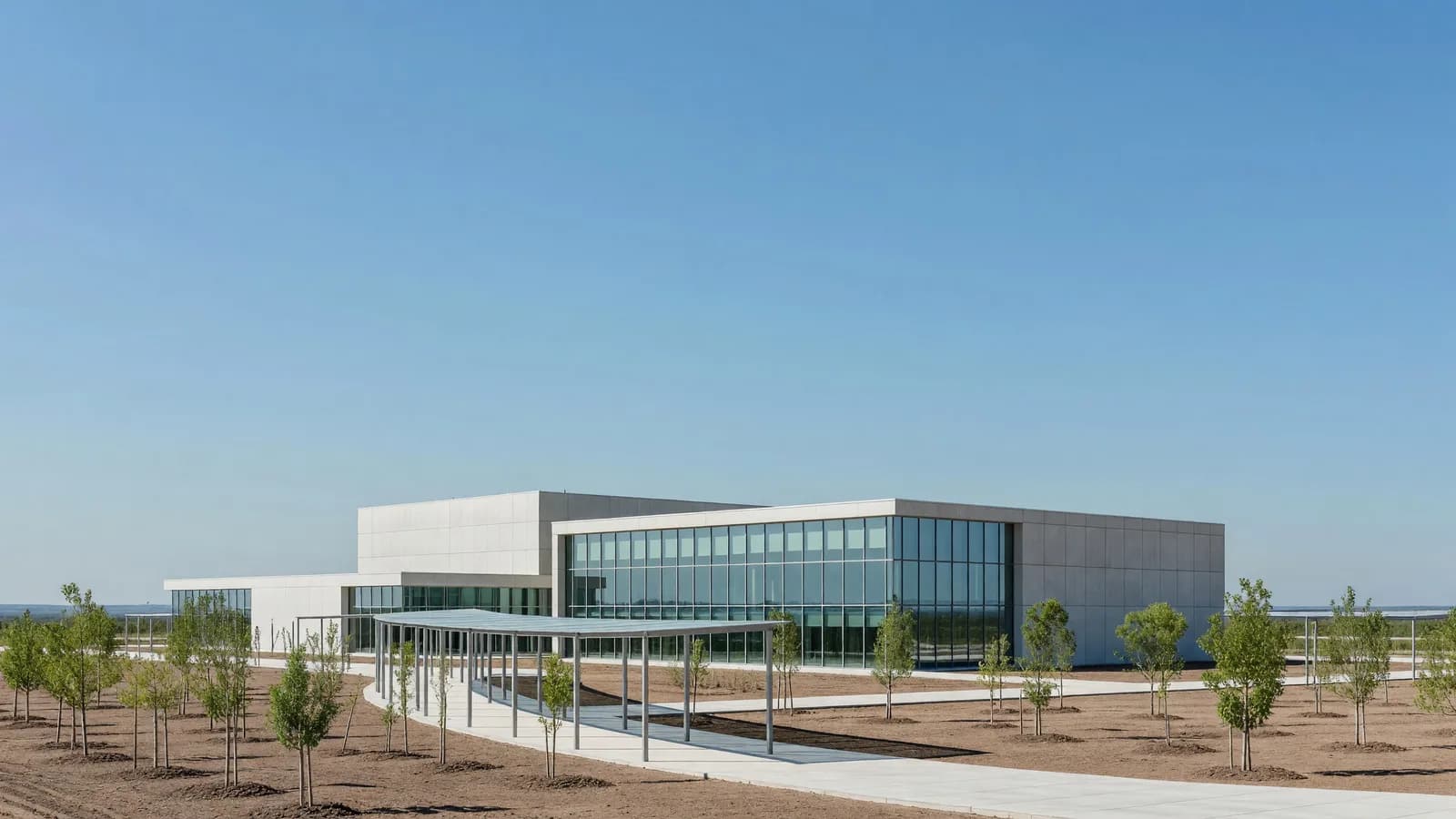
The U.S. Department of Energy has named Idaho, Louisiana, Oklahoma, Tennessee and Utah as finalists to host Nuclear Lifecycle Innovation Campuses. Energy Secretary Chris Wright signed non-binding memorandums of understanding after reviewing 28 applications from 26 states, putting a full domestic fuel-cycle rebuild on a five-state shortlist.
Key facts
- DOE selected Idaho, Louisiana, Oklahoma, Tennessee and Utah as Nuclear Lifecycle Innovation Campus finalists.
- Energy Secretary Chris Wright signed non-binding MOUs on July 24, 2026 to keep evaluating sites and commitments before any hosting deal.
- The shortlist followed 28 applications from 26 states after an April 1 response deadline on DOE’s request for information.
- DOE says the campuses could attract up to $50 billion in capital investment, generate as much as $10 billion in state and local tax revenue, and create nearly 25,000 jobs.
- Target functions center on fuel fabrication, enrichment, spent-fuel reprocessing or recycling, separations and waste management, with optional room for reactors, advanced manufacturing and data centers.
What happened
DOE’s announcement, reported by ANS Nuclear Newswire on July 28, identifies five states as the remaining contenders for Nuclear Lifecycle Innovation Campuses — voluntary federal–state partnerships meant to rebuild work across the nuclear fuel life cycle. The primary focus is not power reactors themselves. It is the industrial stack around them: fuel fabrication, enrichment, spent-fuel reprocessing or recycling, separations and radioactive waste management.
POWER Magazine reports that Wright signed the non-binding MOUs on July 24 so DOE and the states can keep evaluating candidate sites, development structures and the state and federal commitments that would have to underwrite any later hosting agreement. No campus has been awarded yet. The five MOUs are a shortlist, not a construction notice.
The competitive process began in late January 2026, when DOE asked governors for statements of interest and feedback on how a campus would advance workforce, infrastructure, economic diversification or technology leadership. States were also asked to propose sites, private-sector partners, power/water/transport/security infrastructure and how they would share long-term decommissioning and waste responsibilities. Initial responses were due April 1, 2026. DOE says the call drew record interest before the field was cut from 28 applications to five finalists.
Wright framed the shortlist in industrial-policy terms. In the DOE announcement quoted by ANS, he said the campuses “will be massive generators of economic growth, create thousands of high-paying jobs, and be crucial to unleashing America’s nuclear renaissance,” tying the concept to the Trump administration’s May 2025 nuclear executive orders and the broader push to restore a domestic fuel cycle.
Why it matters
Advanced reactor deployment is only half the U.S. nuclear rebuild. The other half is fuel. Most next-generation designs need high-assay low-enriched uranium and a wider set of front- and back-end services that the United States no longer fields at commercial scale. NNN’s coverage of Centrus’s $900 million DOE HALEU task order and DOE’s supply-chain loan push has tracked the money side of that gap. The campus shortlist is the siting and industrial-ecosystem side.
If the campuses work as advertised, they would co-locate conversion, enrichment, fabrication, recycling and waste handling instead of scattering those functions across disconnected sites and foreign suppliers. DOE’s own impact figures — up to $50 billion in investment and nearly 25,000 jobs — are aspirational, but the shortlist already forces five states to compete on real site packages, partners and cost-sharing rather than generic nuclear boosterism.
The concept also bleeds into adjacent loads. ANS notes that while fuel-cycle work is primary, campuses could later host new reactors, advanced manufacturing and data centers. That links the fuel-cycle rebuild to the same AI-power and industrial-policy story NNN has covered through the Genesis Mission nuclear portfolio.
Background
The Nuclear Lifecycle Innovation Campus idea was introduced in January 2026 as part of the federal push launched by four nuclear executive orders in May 2025. DOE’s framing is blunt: rebuild an “integrated, full-cycle nuclear ecosystem” that can handle fabrication, conversion and enrichment, deconversion, used-fuel recycling and waste streams in one place rather than depending on a brittle import chain.
The five finalist packages already show different state strategies. Utah tied its bid to Operation Gigawatt, Gov. Spencer Cox’s effort to double state power-generation capacity, and identified a remote Tooele County West Desert site; state law enacted in May authorizes the Office of Energy Development to pursue a campus. Tennessee leaned on the Oak Ridge–Knoxville corridor, citing Oak Ridge National Laboratory, Y-12, more than 230 nuclear lifecycle companies, and concrete fuel projects such as TRISO-X’s $768 million TX-1 plant, where construction began in November 2025, plus a July 15 state Nuclear Energy Fund award of another $11 million toward a third Oak Ridge facility expected to support about 1,100 jobs. Idaho’s bid is anchored on Idaho National Laboratory’s seven decades of nuclear R&D. Louisiana and Oklahoma are pitching the campus as a way to add nuclear depth to existing energy-production identities; Oklahoma Gov. Kevin Stitt called it a chance “to add nuclear to our energy abundance agenda.”
American Nuclear Society president Mark Peters congratulated the finalists and called the shortlist “an important step in evaluating how the United States can strengthen its nuclear fuel cycle and expand domestic nuclear capabilities.”
What's next
Watch three clocks. First, whether DOE converts the July MOUs into actual hosting negotiations and site down-selects, or whether the shortlist stalls as a political map with no capital stack. Second, which campus functions each state prioritizes — enrichment and HALEU fabrication will matter first for advanced reactors already racing DOE pilot and demonstration timelines. Third, whether the economic claims harden into named private partners, offtake and waste-liability splits. The five-state list is the clearest public signal yet that Washington wants the fuel cycle rebuilt as place-based industrial policy, not only as scattered grant announcements.
Questions
- Which states did DOE pick for Nuclear Lifecycle Innovation Campuses?
- Idaho, Louisiana, Oklahoma, Tennessee and Utah. Energy Secretary Chris Wright signed non-binding memorandums of understanding with the five finalists after reviewing 28 applications from 26 states.
- What would a Nuclear Lifecycle Innovation Campus do?
- DOE envisions voluntary federal–state campuses that co-locate fuel fabrication, uranium conversion and enrichment, spent-fuel reprocessing or recycling, separations and radioactive waste management in one integrated fuel-cycle ecosystem.
- How large could the economic impact be?
- According to DOE figures reported by ANS Nuclear Newswire, the campuses could attract up to $50 billion in capital investment, generate as much as $10 billion in state and local tax revenue, and create nearly 25,000 jobs.
- Are the campus agreements final?
- No. The July MOUs are non-binding. DOE and the five states will keep evaluating sites, development structures and state/federal commitments before any hosting agreements are negotiated.
- When did the selection process start?
- DOE introduced the concept in January 2026 and asked governors for statements of interest by April 1, 2026, drawing what the department called record interest before narrowing to five finalists.
Sources
- Five states named Nuclear Lifecycle Innovation Campus finalists — ANS Nuclear Newswire
- Five States Emerge as Finalists for DOE’s Nuclear Lifecycle Innovation Campuses — POWER Magazine
- Radiant and NASA awarded US HALEU allocations — World Nuclear News
About Nuclear News Network
Nuclear News Network (NNN) is an independent publication covering the global nuclear energy sector — reactor construction, SMRs, fuel supply, policy, operations and fusion. NNN publishes a daily brief, same-day analysis of major developments, and reference guides used across the industry. Articles are produced by the NNN Newsroom, an editorial automation system with human oversight, under the publication's editorial standards. Ruben Seoane is the founder and main editor of NNN.