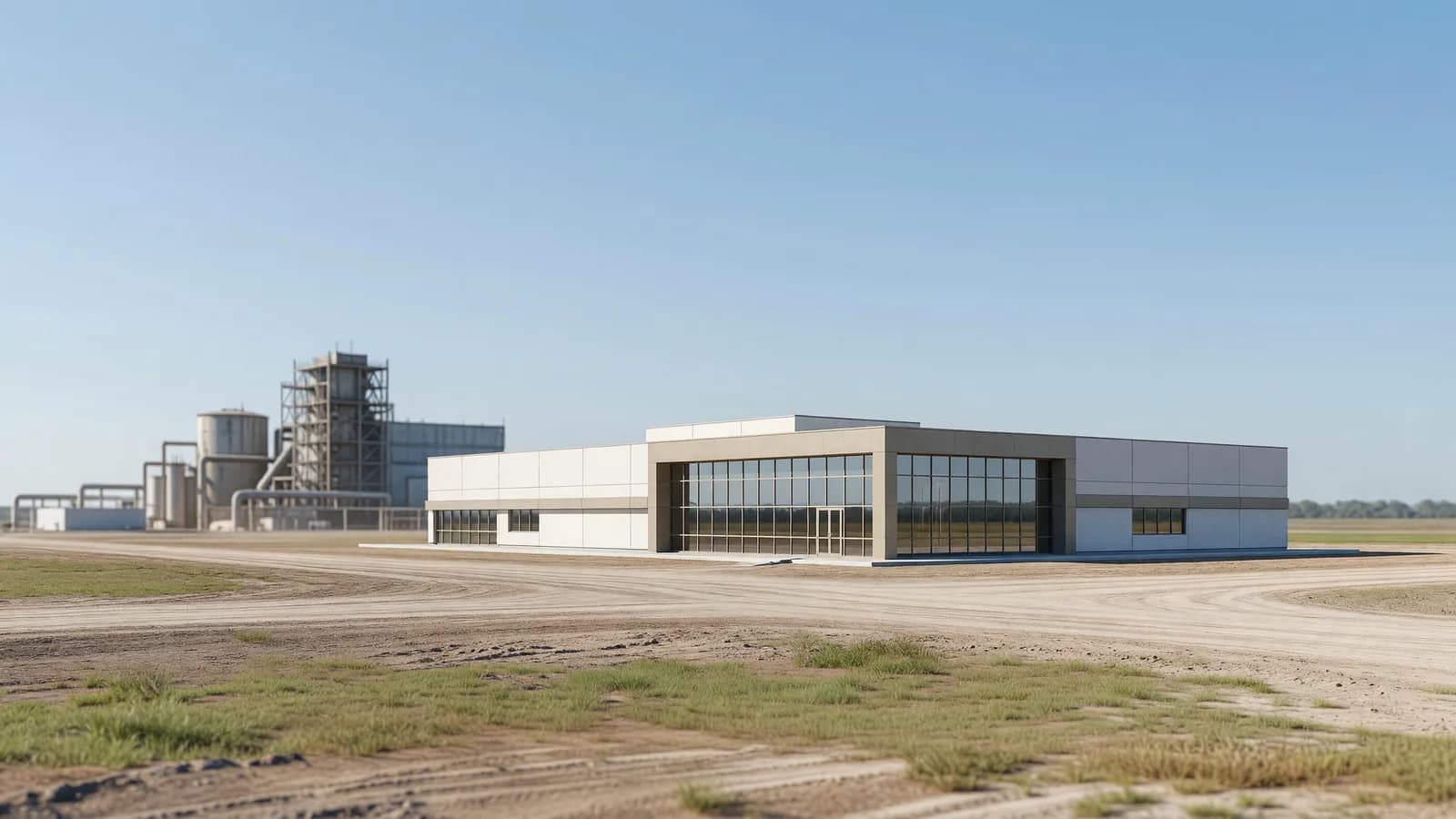
The U.S. Nuclear Regulatory Commission has issued a final environmental impact statement recommending a construction and operating license for Global Laser Enrichment’s proposed Paducah Laser Enrichment Facility in Kentucky. The recommendation moves the laser-enrichment project through one major review, but it does not authorize construction; safety and security evaluations and the final licensing decision remain ahead.
Key facts
- The NRC’s environmental statement recommends issuing GLE a construction and operating license for the proposed Paducah facility, according to GLE’s October 23 announcement.
- GLE submitted its environmental report in December 2024, beginning the environmental review described in the company’s release.
- The NRC page lists the application under Docket 70-7016.
- GLE said the NRC’s Final Safety Evaluation Report was expected before the end of 2026.
What happened
The environmental statement is a recommendation from the NRC staff about the environmental effects of the proposed facility. GLE’s October 23 release says staff recommended that the commission issue the construction and operating license. The NRC’s environmental review forms one part of a licensing process that also includes safety and security evaluations. An environmental recommendation should not be read as an authorization to build or operate.
The distinction matters because the project’s next regulatory steps remain active. GLE said the NRC will continue its safety and security evaluations and expects to issue a Final Safety Evaluation Report before the end of 2026. That report is another milestone, not necessarily the final license decision. In a separate account of the announcement, World Nuclear News reported Silex Systems’ expectation that the license could be finalized in early 2027. That is a company forecast, not a regulator commitment.
GLE proposes to use laser-based uranium enrichment at Paducah, where the company says the facility would process uranium material using the SILEX technology. The NRC identifies GLE as the applicant and maintains a project licensing page for the facility. The environmental review recommendation addresses whether the proposed project should proceed through the licensing framework; it does not establish that the project’s technology, financing, construction schedule or commercial output is assured.
Why it matters
The United States has an active commercial uranium-conversion facility but relies on enrichment capacity that has become a strategic concern for utilities and policymakers. A new U.S. enrichment project could broaden the available supply options if it clears licensing, financing, construction and commissioning. For fuel buyers, however, a staff recommendation is an early regulatory signal rather than a near-term source of enriched uranium.
Paducah is also a notable location because the project is tied to the former federal gaseous-diffusion complex and to depleted uranium tails. The NRC describes a Department of Energy agreement for the sale of depleted uranium hexafluoride to GLE. The proposal would seek additional value from material left by earlier enrichment operations, rather than relying solely on newly mined natural uranium. That makes the project relevant to both domestic enrichment capacity and long-term management of legacy uranium inventories.
The commercial case still depends on execution. GLE’s release says the company has an offtake agreement with Cameco for future enrichment production, but the statement does not disclose how much output is committed or when delivery would begin. The agreement can support a market case; it cannot substitute for an operating plant or demonstrate that the proposed facility will meet a particular production target.
Background
The NRC says federal law requires licensing for uranium-enrichment facilities and an environmental impact statement for construction and operation. The agency’s own GLE licensing page describes the project’s earlier phases, including a laser-enrichment test loop in Wilmington, North Carolina, and the proposed Paducah facility. The page also documents a prior GLE construction and operating license for a different commercial-scale facility in Wilmington; that is not the Paducah license now under review.
The Paducah proposal follows years of preparatory work. GLE submitted its environmental report in December 2024, and the NRC issued a draft environmental statement for public comment earlier in 2026. In its final statement announcement, GLE says the NRC considered comments received during the review. The outcome now narrows the remaining regulatory questions, but the company still needs the NRC’s safety and security findings and a final licensing decision before it can build and operate the proposed plant.
Readers can follow the wider domestic fuel-cycle context in NNN’s U.S. nuclear fuel supply chain explainer and earlier coverage of General Matter’s Paducah enrichment plans. The projects involve different companies and technologies, but both put the former Paducah site and the U.S. enrichment shortfall at the center of the discussion.
What's next
The next event to watch is the NRC’s Final Safety Evaluation Report. GLE’s announcement places it before the end of 2026; the eventual licensing decision could follow after that review and any remaining required proceedings. The commission has not granted a Paducah construction and operating license in the materials reviewed for this article.
For now, the defensible reading is narrow: NRC staff’s environmental recommendation is favorable to the proposed license, while the project remains unlicensed. Any assessment of construction timing, output or first deliveries should wait for the final regulatory decision and project-specific schedules.
Questions
- Has the NRC licensed Global Laser Enrichment’s Paducah plant?
- No. The final environmental impact statement recommends issuing a license, but it is not the license itself. The NRC’s remaining safety and security review and final licensing decision are still pending.
- What would the Paducah Laser Enrichment Facility do?
- GLE proposes using laser-based enrichment at the Kentucky site, including re-enrichment of depleted uranium tails under a Department of Energy agreement.
- When could the NRC make its licensing decision?
- GLE said the NRC’s Final Safety Evaluation Report was expected before the end of 2026. The company has said the final license decision could follow in early 2027.
Sources
- NRC Issues Final Environmental Impact Statement for the Paducah Laser Enrichment Facility — Global Laser Enrichment
- Global Laser Enrichment Facility Licensing — U.S. Nuclear Regulatory Commission
- Regulatory milestone for US laser enrichment plant — World Nuclear News
About Nuclear News Network
Nuclear News Network (NNN) is an independent publication covering the global nuclear energy sector — reactor construction, SMRs, fuel supply, policy, operations and fusion. NNN publishes a daily brief, same-day analysis of major developments, and reference guides used across the industry. Articles are produced by the NNN Newsroom, an editorial automation system with human oversight, under the publication's editorial standards. Ruben Seoane is the founder and main editor of NNN.