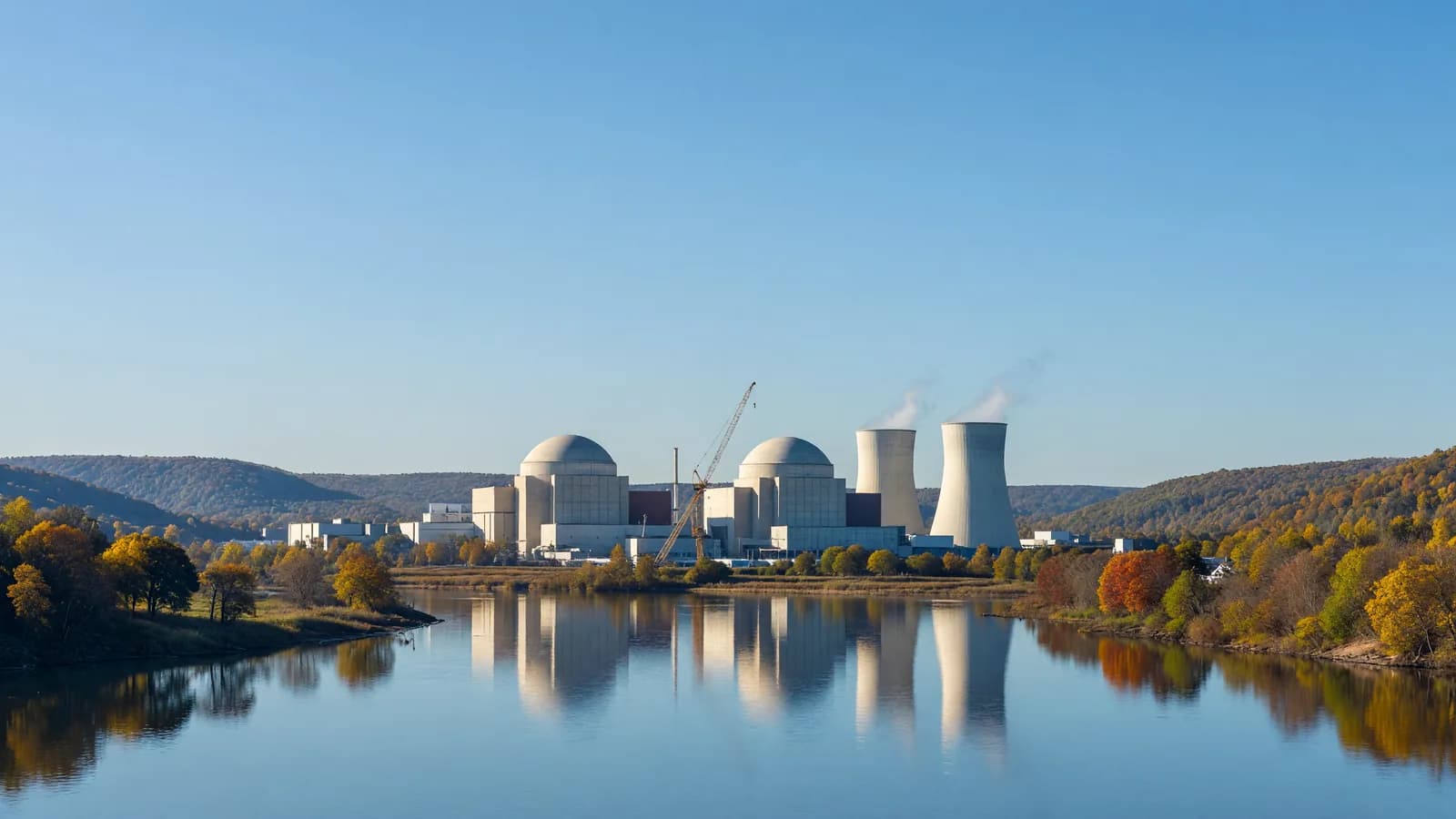
The US Department of Energy (DOE) has offered Vistra a conditional loan commitment of up to $4.2 billion for upgrades at its Beaver Valley, Davis-Besse and Perry nuclear plants. The work could add 433 megawatts while preserving nearly 4 gigawatts already on the grid, but the financing is not final and the projects still depend on conditions being met.
Key facts
- DOE's Office of Energy Dominance Financing announced a conditional commitment of up to $4.2 billion on October 5, 2026.
- The planned uprates could add 433 megawatts of nuclear capacity at three plants.
- DOE says the projects would preserve nearly 4 gigawatts of existing generation.
- The plants are Beaver Valley in Pennsylvania and Davis-Besse and Perry in Ohio; the proposed work would support operation 20 years beyond their existing licences.
What happened
DOE's Office of Energy Dominance Financing announced the conditional commitment on October 5. The proposed funding would back nuclear uprates and modernization at Beaver Valley in western Pennsylvania and at Davis-Besse and Perry in Ohio. An uprate increases a reactor's electrical output through equipment changes and other plant modifications; modernization can include replacing or updating systems needed to operate safely and reliably.
The headline figure is a ceiling, not a payment already made. DOE says Vistra must satisfy technical, legal, environmental and financial conditions before the department signs definitive financing documents and disburses funds. That distinction matters: the announcement is a financing commitment subject to review, not a closed loan and not evidence that construction or installation work has started.
DOE projects the three sites could add 433 MW and preserve nearly 4 GW of baseload generation. The department says the project-related work is expected to support about 3,000 jobs across engineering, construction and planned outage work. Those are agency estimates tied to the proposed work, not confirmed hiring totals.
The federal package also includes an option to finance possible future uprates at Vistra's Comanche Peak plant in Texas. DOE did not include Comanche Peak in the named Pennsylvania and Ohio upgrade program, and its release does not state a funding amount or schedule for any work there. The option should therefore be read as potential scope, not as an approved fourth plant project.
Why it matters
The proposal directs federal credit toward extracting more output from operating reactors rather than funding a new-build project. If the upgrades proceed, the additional capacity would come from plants that already supply the PJM grid, without requiring a new transmission corridor, according to DOE. This can be a quicker route to incremental generation than building a new station, although engineering, regulatory review, outage scheduling and final financing still have to line up.
The proposed uprates also sit inside a commercial arrangement announced earlier this year. Vistra said its 20-year power purchase agreements with Meta cover 2,176 MW of current generation from Perry and Davis-Besse, plus the planned 433 MW of added output across Perry, Davis-Besse and Beaver Valley. Vistra said the electricity would continue to go to the grid for all users. The uprate capacity is therefore tied to a larger deal that pairs long-term corporate demand with existing nuclear plants, rather than creating a dedicated direct wire from each plant to a data center.
For ratepayers and regional planners, added output from existing sites could help meet rising demand without waiting for a new plant to be built. But the commitment alone does not establish the final cost of the work, the precise timing of each upgrade, or the terms under which electricity will be sold. DOE's release gives no plant-by-plant breakdown of the proposed 433 MW or the loan allocation, leaving those details for later financing and project disclosures.
Background
The three plants differ in size and licence horizon. Vistra's January announcement listed Perry at 1,268 MW, Davis-Besse at 908 MW and Beaver Valley's two units at 1,872 MW combined. It also identified the uprate programme as a way to add generation while continuing operation at the sites. DOE's new announcement describes the additional federal financing layer and says the planned work would support operation for another 20 years beyond existing licences; it does not replace Nuclear Regulatory Commission licensing requirements.
Federal financing has recently appeared in other existing-plant projects. DOE closed a loan of up to $1.9 billion for NextEra Energy's Duane Arnold restart in Iowa, a different project involving a shut plant returning to service. NNN's report on the Duane Arnold loan explains how conditional federal credit can support a project tied to long-term electricity demand. The Vistra proposal differs because its plants are operating; the work is intended to increase output and modernize their equipment.
NNN's DOE nuclear funding explainer outlines the agency's financing tools, while its nuclear power and data centers analysis covers the corporate demand behind deals such as Vistra-Meta. Together, those links put this announcement in context: government credit can help fund work, but buyers, plant owners and regulators still determine whether projected megawatts become delivered power.
What's next
Vistra must meet the conditions DOE lists before the department can finalize and fund the loan. The public announcement does not give a closing date or a plant-by-plant construction schedule. Watch for definitive financing documents, detailed upgrade plans, and regulatory filings that specify the equipment changes and outage windows.
The clearest near-term test is whether Vistra can move from a conditional federal commitment to signed financing and a defined project schedule. Until then, the $4.2 billion remains a ceiling on possible support, and the 433 MW remains a projected capacity addition rather than power already available to the grid.
Questions
- What did DOE offer Vistra?
- The Department of Energy announced a conditional loan commitment of up to $4.2 billion for uprates and modernization at Beaver Valley, Davis-Besse and Perry. Vistra must satisfy technical, legal, environmental and financial conditions before the loan closes.
- How much new nuclear capacity could the projects add?
- DOE says planned uprates could add 433 megawatts across the three plants, alongside modernization intended to preserve nearly 4 gigawatts of existing generation.
- Is the $4.2 billion loan final?
- No. DOE called it a conditional commitment. Vistra must meet technical, legal, environmental and financial requirements before definitive financing documents are signed and funds are disbursed.
Sources
- Energy Department Announces $4.2 Billion Investment to Boost Nuclear Power and Help Lower Energy Costs in Pennsylvania and Ohio — US Department of Energy
- Vistra and Meta Announce Agreements to Support Nuclear Plants in PJM and Add New Nuclear Generation to the Grid — Vistra
- DOE closes $1.9B loan to restart NextEra's Duane Arnold plant — US Department of Energy
About Nuclear News Network
Nuclear News Network (NNN) is an independent publication covering the global nuclear energy sector — reactor construction, SMRs, fuel supply, policy, operations and fusion. NNN publishes a daily brief, same-day analysis of major developments, and reference guides used across the industry. Articles are produced by the NNN Newsroom, an editorial automation system with human oversight, under the publication's editorial standards. Ruben Seoane is the founder and main editor of NNN.