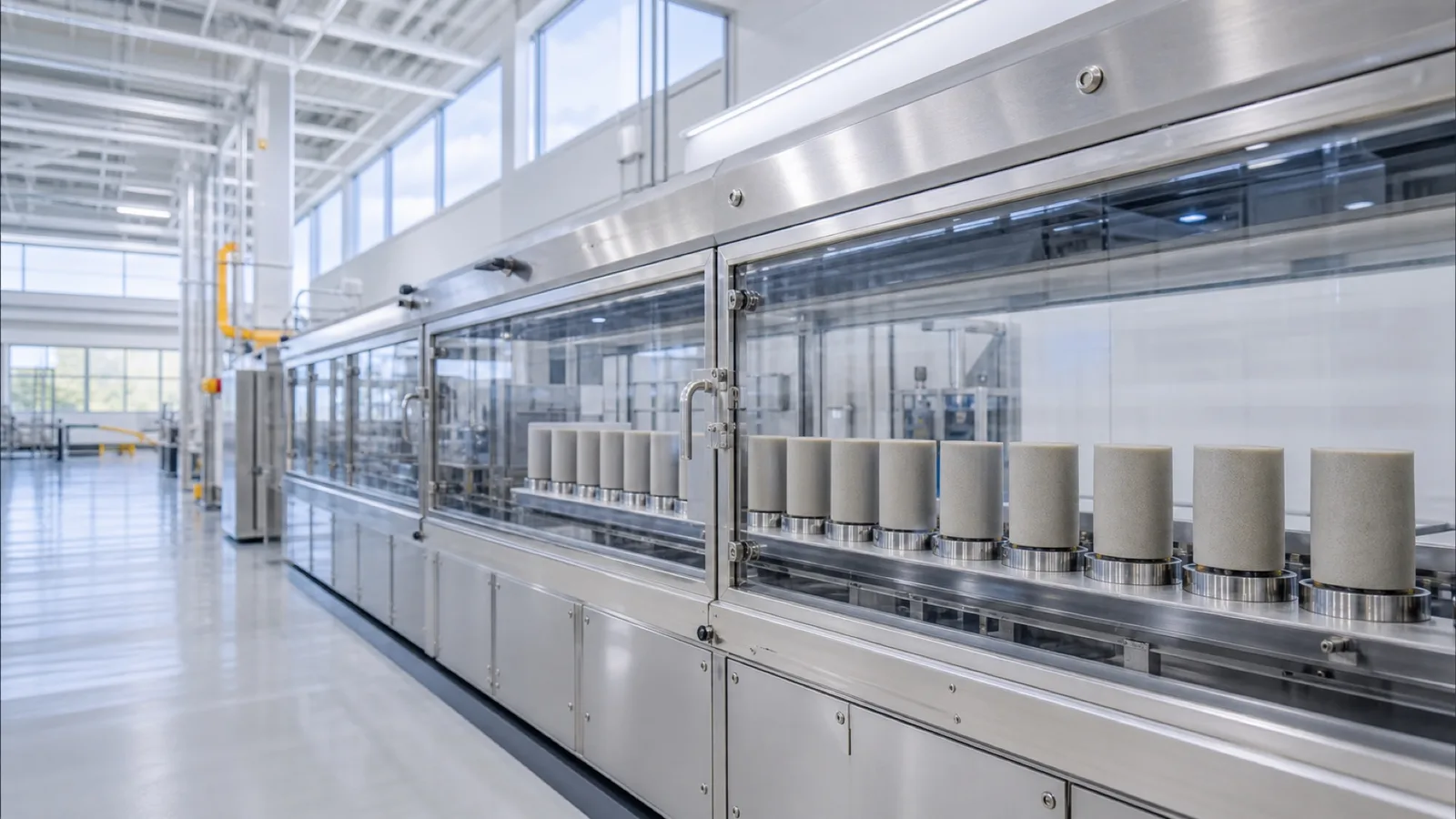
First American Nuclear Co. (FANCO) has told the US Nuclear Regulatory Commission it intends to build a Category II high-assay low-enriched uranium (HALEU) deconversion and fuel fabrication facility. The filing matters because FANCO is trying to pair its 240 MWe EAGL-1 reactor with an in-house fuel path before the reactor reaches commercial deployment.
Key facts
- FANCO is developing the 240 MWe EAGL-1 lead-bismuth-eutectic-cooled fast reactor.
- The NRC has docketed FANCO’s regulatory engagement plan for preapplication discussions.
- The planned facility would process HALEU uranium hexafluoride into other fuel forms.
- FANCO expects to submit a 10 CFR Part 70 license application in the fourth quarter of 2027.
- The proposed plant is intended to support EAGL-1 and other advanced-reactor customers.
What happened
FANCO filed an August 7 letter with the NRC Document Control Desk describing a regulatory engagement plan for a future Category II HALEU fuel fabrication facility. The NRC has docketed the plan for consideration. This is a preapplication step, not a construction or operating license.
The company says the future submittals will support preapplication engagement and a later 10 CFR Part 70 application. FANCO’s plan covers a facility that would deconvert HALEU uranium hexafluoride into other fuel forms and fabricate fuel for its own EAGL-1 reactor as well as potential third-party customers.
FANCO says the eventual application will address facility design, processes, equipment, management measures, safety controls, environmental considerations and safeguards programmes. Those are the subjects the NRC will need to understand before deciding whether the facility can be licensed.
The planned formal application date is the fourth quarter of 2027. That date is a company target, not an NRC approval deadline. The engagement plan is intended to create technical dialogue before the application is filed so that the licensing basis is more complete when the formal review begins.
Why it matters
Fuel is a deployment constraint for advanced reactors. A reactor company can complete a design and identify a site, but it still needs a qualified fuel form, a manufacturing process and an authorised facility. FANCO’s filing makes that connection explicit: its reactor programme and fuel programme are being developed together.
The approach also responds to the difference between enrichment and fuel fabrication. HALEU is an enriched uranium feedstock. A fabricator must convert it into the geometry and composition required by a specific reactor, then demonstrate quality, safety and safeguards controls. FANCO’s proposed facility would sit downstream of enrichment and deconversion rather than replace the enrichment plants being developed by other companies.
NNN’s coverage of Centrus’s $900 million DOE HALEU task order follows the enrichment side of that chain. FANCO’s plan shows the next step: turning enriched uranium into reactor fuel. The TRISO fuel explainer covers a different fuel architecture, but it makes the same broad point: fuel qualification and fabrication are central parts of an advanced-reactor schedule.
An integrated fuel strategy could give FANCO more control over its deployment timeline. It could also add regulatory and capital risk. A fabrication plant must be justified by a reactor pipeline and must be licensed for the materials and processes it intends to handle. If EAGL-1’s schedule changes, the economics of the fuel facility change with it.
Background
EAGL-1 is described by FANCO as a lead-bismuth-eutectic-cooled fast reactor. The company has been building a broader development platform around the design. In May, FANCO entered a strategic alliance with AtkinsRéalis to jointly develop, test and license the reactor, according to ANS. The company also has a partnership with Indiana to develop headquarters, manufacturing facilities and a nuclear energy park.
The new fuel announcement was not part of those earlier public plans, which makes the NRC filing a meaningful expansion of FANCO’s stated scope. It is no longer only a reactor developer seeking a licensing path; it is also proposing to become a fuel-cycle operator.
The Category II classification is part of the NRC’s materials-licensing framework. The classification does not mean the facility is approved. It identifies the type of fuel-cycle activity and the level of regulatory controls that will be addressed during licensing. FANCO’s letter says the planned application will include safety, environmental, safeguards and organizational responsibilities.
The proposal is entering a crowded US fuel rebuild. Urenco is expanding conventional enrichment in New Mexico, Centrus is scaling HALEU enrichment in Ohio, and multiple companies are developing advanced fuel forms. Each project solves a different part of the chain, and each has its own licensing and commissioning schedule.
What’s next
FANCO’s next milestone is sustained preapplication engagement with the NRC. The company will need to turn its high-level plan into a detailed facility design, process description and safety basis before submitting the Part 70 application targeted for late 2027.
Watch for the docketed technical questions, the scope of FANCO’s proposed fuel forms and any identified site or supply partners. The decisive point will be the formal license application. Until then, FANCO has declared the fuel strategy and opened the regulatory conversation; it has not yet received permission to build or operate the facility.
Questions
- What did FANCO submit to the NRC?
- FANCO submitted a regulatory engagement plan for preapplication discussions and a future 10 CFR Part 70 license application for a Category II HALEU fuel facility.
- What reactor would the facility support?
- The facility is intended to support FANCO’s 240 MWe EAGL-1 lead-bismuth-eutectic-cooled fast reactor and, over time, other advanced-reactor customers.
- When does FANCO plan to submit a license application?
- FANCO says it expects to submit the construction and operation license application in the fourth quarter of 2027.
Sources
- FANCO informs NRC of its intent to build HALEU fuel fabrication facility — ANS Nuclear Newswire
- FANCO regulatory engagement plan letter — US Nuclear Regulatory Commission
- Centrus signs $900 million DOE HALEU contract — Centrus Energy
About Nuclear News Network
Nuclear News Network (NNN) is an independent publication covering the global nuclear energy sector — reactor construction, SMRs, fuel supply, policy, operations and fusion. NNN publishes a daily brief, same-day analysis of major developments, and reference guides used across the industry. Articles are produced by the NNN Newsroom, an editorial automation system with human oversight, under the publication's editorial standards. Ruben Seoane is the founder and main editor of NNN.