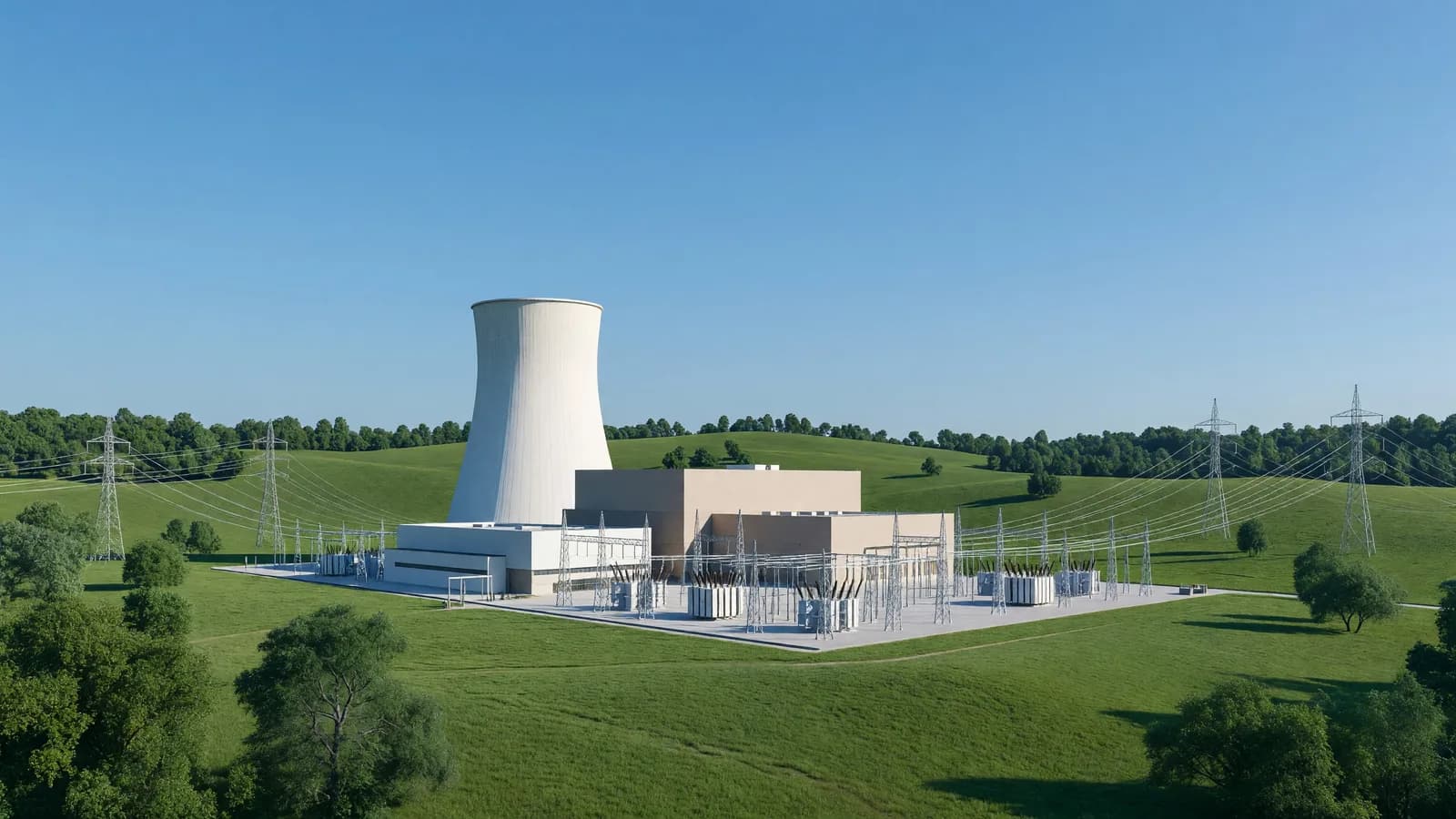
States procure new nuclear power through a sequence of decisions, not a single approval. The path usually starts with a utility resource plan or state law, then moves through site readiness, competitive proposals, financing, federal licensing and public review. New Jersey's 1,100 MW Power NJ Act is a useful live example because it puts dates and risk rules around the buying process.
Key facts
- New Jersey's Power NJ Act creates a competitive framework for at least 1,100 MW of new nuclear generation.
- The New Jersey Board of Public Utilities must open a request for expressions of interest within 180 days, followed by a 60-day proposal window.
- New Jersey's process includes 90 days for provisional qualification and up to 12 months of negotiations.
- The state requires a final board order before July 8, 2028, plus federal financing and a finding that the project benefits ratepayers.
- Indiana's nuclear coalition is organized around stakeholder coordination, permitting, and coordination with the U.S. Nuclear Regulatory Commission, showing why site and community preparation comes before a reactor order.
The first decision: make nuclear a planning need
A state usually does not begin by selecting a reactor. It first has to establish why it needs new firm generation and how that need fits the wider power system.
That work often appears in an integrated resource plan, a state energy strategy, or legislation directing a utility to study or procure nuclear. The Tennessee Valley Authority's resource-planning materials show the basic function: utilities compare future demand, existing resources, new supply options, environmental effects and system costs before they commit to a project.
This stage is easy to mistake for procurement because a plan can contain a nuclear option. It is not yet a purchase. A plan says nuclear belongs in the set of resources worth studying. Procurement begins when an institution defines what it wants to buy, when it wants it, and who bears the risk if the project slips.
The second decision: define the buyer and the product
The buyer can be a state agency, a regulated utility, a public power system or several utilities acting together. The product can be electricity, dependable capacity, ownership in a plant, or a package of those rights.
That choice shapes the rest of the deal. A utility buying power may seek a long-term contract. A state may create a capacity-credit mechanism or require utilities to sign agreements. A public utility may own the project and recover costs through rates. Each structure answers the same practical question: how will the plant earn revenue while it is being built and after it starts operating?
New Jersey's law is unusually clear about the buyer-side architecture. The New Jersey Board of Public Utilities and the New Jersey Economic Development Authority jointly evaluate proposals. The law targets at least 1,100 MW, requires a competitive process and directs the agencies to test whether a project is a net benefit to ratepayers.
The third decision: prepare a site and a community
A reactor proposal needs more than land. Developers and public officials have to address transmission, water, emergency planning, local services, workforce, environmental review and community consent.
Indiana's Nuclear Indiana Coalition report describes a state approach built around coordinated stakeholder engagement, streamlined permitting and contact with the NRC. That is a reminder that site readiness is not a ceremonial step. It is an attempt to resolve the local questions before a vendor spends years developing a project that cannot be licensed or supported.
A readiness program can also give a state a better basis for comparing sites. The strongest location is not necessarily the one with the most available land. It is the one that can connect to the grid, support construction and operations, meet regulatory requirements and keep a durable local process in place.
The fourth decision: compare proposals instead of slogans
A competitive request should force developers to answer the same questions. What reactor is being offered? What is the expected schedule? Which parts of the design are licensed or under review? What does the project cost? Who supplies the fuel? What happens if the project is late or more expensive than planned?
The proposal also has to show how the developer will finance the work. New nuclear is capital-intensive, so a state cannot evaluate a bid only by its advertised electricity price. It has to examine construction risk, contingencies, escalation, decommissioning obligations and the credibility of the delivery team.
New Jersey's timetable makes the logic visible. Developers get 60 days to submit regulatory, environmental, financial and workforce information. The board then gets 90 days to decide which proposals may enter negotiations. The state is not choosing a reactor from a brochure. It is filtering projects against a public set of requirements.
The fifth decision: allocate risk before construction
The most important contract terms are often the ones readers never see in a reactor announcement. Who pays if the schedule moves? Who absorbs a cost overrun? When can the developer recover money? What happens if the project loses its federal financing or misses a licensing milestone?
New Jersey's law says ratepayers do not bear costs until a project is built and supplying energy, and it requires federal financing before a final order. It also calls for public comment, a hearing in a proposed host municipality and independent assessments from the Division of Rate Counsel. Those rules do not remove project risk. They decide where it sits.
That distinction matters. A state can support nuclear while rejecting a contract that leaves customers exposed to an open-ended construction bill. Procurement is where that tension becomes specific enough to debate.
Federal licensing still controls the reactor
State procurement does not replace federal regulation. A selected project still has to pass the applicable NRC licensing process, complete environmental review and satisfy safety and security requirements. State agencies can decide whether a project fits their energy and economic rules, but they cannot waive the federal license.
This is why procurement, site readiness and licensing have to move together. A state that solicits proposals before it understands the licensing path may receive bids that look attractive but cannot meet the schedule. A developer that waits for every state decision before beginning licensing may lose years.
NNN's coverage of NRC licensing reform and TVA's nuclear planning follows the same chain from different points. The Power NJ Act explainer covers the New Jersey mechanism in detail, while the SMR explainer covers the reactor technologies that could eventually compete in a state process.
What to watch next
The cleanest sign that a state procurement is real is a dated request for proposals or expressions of interest. After that, watch the requirements: site control, NRC engagement, financing commitments, price protections and construction milestones.
New Jersey's next formal step is the request for expressions of interest, due by January 9, 2027. Developers then face qualification, negotiation and a final board decision by July 8, 2028.
That is the basic state procurement model: prove the need, define the product, prepare the site, compare deliverable projects, allocate risk and keep federal licensing on the critical path.
Questions
- How does a state buy new nuclear power?
- A state typically starts with a resource plan or law, defines the amount and risk rules, solicits proposals, reviews sites and vendors, arranges financing, and approves a contract or final order.
- Does a state nuclear procurement law guarantee a reactor will be built?
- No. A procurement law creates a process. A project still needs a viable site, a qualified developer, financing, a federal license, and a final decision that the cost and risks are acceptable.
- What is the buyer in a nuclear procurement?
- The buyer may be a state agency, a utility, or a group of utilities. The contract can involve power, capacity credits, ownership, or another arrangement that gives the project revenue.
- Why do states use competitive procurement?
- Competition lets a state compare reactor designs, schedules, prices, financing plans, workforce commitments, and risk allocation instead of choosing a project before those details are known.
Sources
- Governor Sherrill Signs Legislation Launching Procurement Process for New Nuclear Energy & Setting Strong Safeguards to Protect Ratepayers from Costs — Governor of New Jersey
- Nuclear Indiana Coalition – 2025 Year in Review — Indiana Office of Energy Development
- Draft 2025 Integrated Resource Plan — Tennessee Valley Authority
About Nuclear News Network
Nuclear News Network (NNN) is an independent publication covering the global nuclear energy sector — reactor construction, SMRs, fuel supply, policy, operations and fusion. NNN publishes a daily brief, same-day analysis of major developments, and reference guides used across the industry. Articles are produced by the NNN Newsroom, an editorial automation system with human oversight, under the publication's editorial standards. Ruben Seoane is the founder and main editor of NNN.