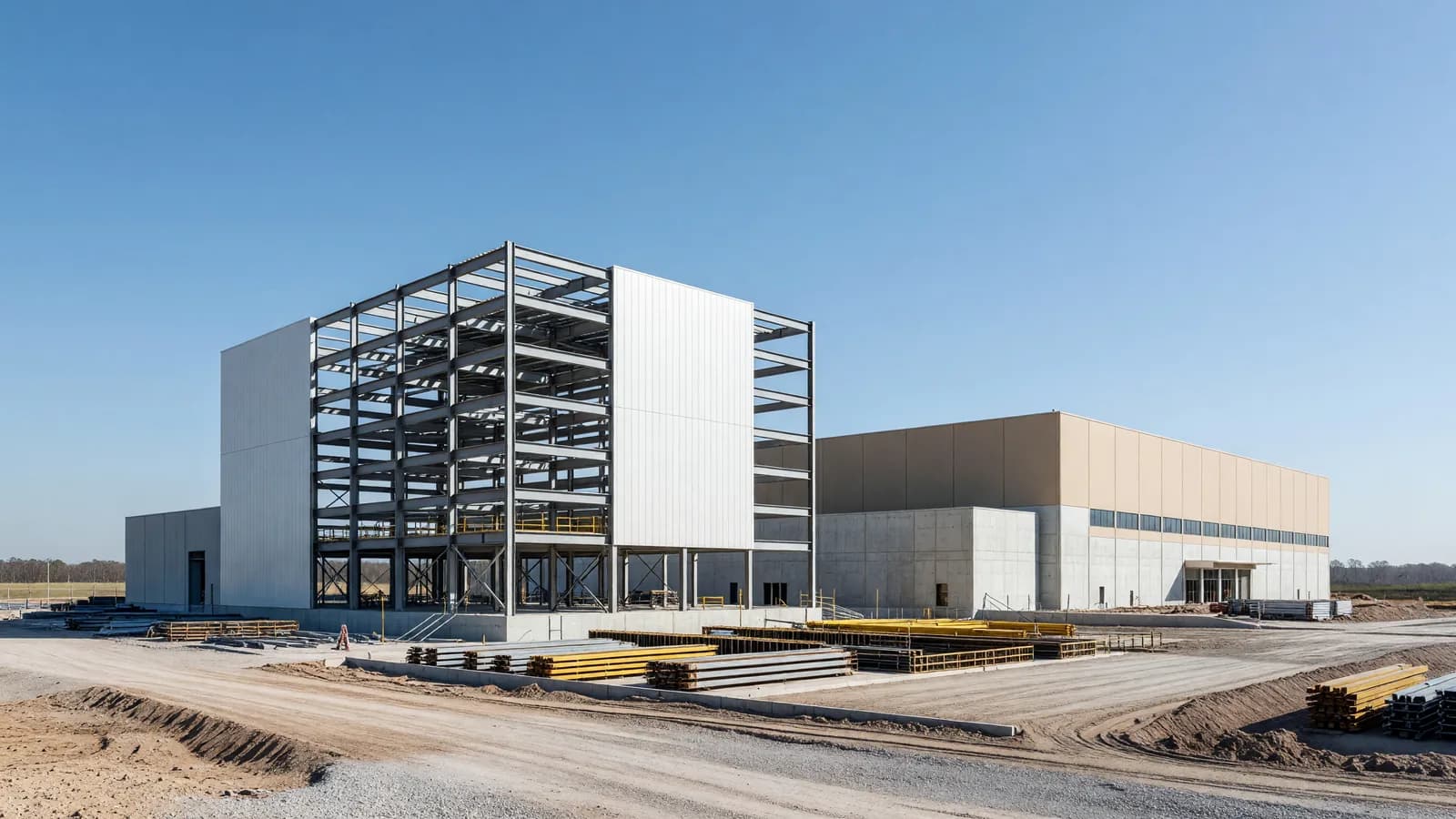
Ten NNN reports published October 18–24 capture a week in which US fuel manufacturing, reactor commissioning and licensing all moved forward—at different stages of maturity. Westinghouse has started construction on a major LEU+ fuel factory, while Mochovce 4 has already begun delivering electricity; proposed projects in Kentucky and Indiana remain at study or development stages. Here are the week's consequential NNN stories, with milestones distinguished from plans and approvals.
Key facts
- Westinghouse began construction on a roughly $1 billion LEU+ fuel factory in Hopkins, South Carolina; operations are targeted for 2030.
- Slovakia's Mochovce 4 delivered electricity to the grid for the first time at 20% reactor power.
- The NRC finalized a rule allowing commercial applicants to use relevant DOE or Department of War demonstration data while retaining independent safety review.
- The Nuclear Company proposed up to six AP1000 reactors in Kentucky, while Indiana partners agreed only to study a potential CANDU campus.
- Centrus acquired centrifuge-component supplier Westerman for about $116 million, and Quantum Leap Energy and Necsa advanced a proposed South African HALEU venture.
1. Westinghouse begins work on a $1 billion LEU+ fuel factory
Westinghouse says construction is under way on a new LEU+ fuel factory next to its Columbia Fuel Fabrication Facility in Hopkins, South Carolina. The approximately $1 billion expansion is intended to support commercial-scale production of fuel enriched above the conventional 5% threshold, with operations targeted for 2030. This is a manufacturing investment under construction—not capacity already available to utilities.
The factory could add a domestic conversion-to-fuel-fabrication capability for higher-assay fuel as reactor operators and advanced-reactor developers seek supply options. Read NNN's report on the Columbia LEU+ factory. This is the week's lead story and the subject shown in the hero.
2. NRC rule opens a path to use federal demonstration data in commercial licensing
The NRC finalized a rule allowing commercial reactor applicants to draw on relevant analyses and test data from DOE or Department of War demonstration programs. The change is intended to make useful evidence reusable rather than duplicated, but applicants still must meet NRC requirements and the agency retains its independent safety review.
The rule changes how evidence may enter a review; it does not certify a reactor or approve a commercial license. See NNN's coverage of the demonstration-data licensing rule.
3. Mochovce 4 connects to Slovakia's grid
Slovenské elektrárne synchronised one of Mochovce 4's turbine generators with the grid on October 15, with the 471-MW unit at 20% reactor power. The connection is an operating milestone, but the unit still faces staged power-ascension testing and further commissioning before routine commercial service.
The event adds a new source of generation to Slovakia's system while underscoring that first grid connection is not the same as full-power operation. Read NNN's Mochovce 4 grid-connection report.
4. Centrus brings a centrifuge-component supplier in-house
Centrus Energy acquired Westerman Holdings for approximately $116 million. Westerman supplies centrifuge casings and other components, and the purchase brings a key part of the enrichment equipment supply chain under Centrus ownership while diversifying the supplier's manufacturing capacity.
The transaction is a corporate and supply-chain move; it does not itself represent new enrichment capacity or a change to a production schedule. NNN explains the Centrus–Westerman acquisition.
5. The Nuclear Company proposes a six-reactor Kentucky campus
The Nuclear Company proposed Prosperity One, a potential campus of up to six Westinghouse AP1000 reactors in Lewis County, Kentucky, with approximately 6.6 GW of planned capacity. The company is targeting construction in 2028, but the proposal remains at an early development stage, with site studies, approvals, financing and other project steps still ahead.
The scale is notable, but a proposal and target schedule should not be mistaken for a licensed project or a construction commitment. Read NNN's report on the Kentucky AP1000 proposal.
6. OPG affiliate and SGE plan a UK BWRX-300 operating venture
Origin Nuclear, an Ontario Power Generation subsidiary, and SGE SMR UK signed a letter of intent to prepare for operations at a proposed 14-unit UK BWRX-300 fleet. The arrangement focuses on developing operating capability; the fleet itself remains a proposal, not an authorised build.
Early operator planning can help shape staffing, maintenance and operational readiness, but a letter of intent is not a final investment decision or construction approval. See NNN's coverage of the planned operating joint venture.
7. Indiana partners agree to study a potential CANDU fleet
The State of Indiana, Hoosier Energy and AtkinsRéalis agreed to evaluate a potential campus of up to eight CANDU reactors, with a stated potential capacity of 6 GW. The agreement begins a study and development discussion; it does not commit the parties to construct the plant.
The proposal reflects continued state and utility interest in large-scale nuclear options, while the next decisions depend on feasibility, site, commercial and regulatory work. NNN's report on the Indiana CANDU study details what the agreement does—and does not—establish.
8. AEP and X-energy examine an Indiana Xe-100 project
American Electric Power and X-energy will study a 960-MW, 12-unit Xe-100 plant at a retired coal site in Sullivan County, Indiana. Amazon is funding development and intends to buy the electricity. The project remains a study, with no construction decision established by the agreement.
The proposal links a former energy site and prospective large-load demand to a possible advanced-reactor project, but commercial and regulatory milestones remain. Read NNN's coverage of the AEP, Amazon and X-energy study.
9. IAEA review urges Kenya to complete radioactive-waste planning
An IAEA ARTEMIS mission urged Kenya to complete radioactive-waste policies, strengthen regulator independence and build institutional capacity. The review followed a nine-day mission that ended October 19, as Kenya continues developing its nuclear-power programme.
Waste policy and an adequately independent regulator are foundational capabilities for any nuclear programme, well before a reactor project can operate. NNN summarises the IAEA recommendations for Kenya.
10. Quantum Leap Energy and Necsa advance a proposed South African HALEU venture
Quantum Leap Energy and South Africa's Nuclear Energy Corporation (Necsa) signed a binding framework to develop a joint venture for high-assay low-enriched uranium production at Pelindaba. The framework advances planning and proposed ownership arrangements; it does not mean a production plant is built, licensed or operating.
If developed, the venture would add another proposed fuel-cycle pathway to a market where enrichment, conversion and fabrication capacity remain important constraints. Read NNN's report on the QLE–Necsa HALEU plan.
Questions
- What was the biggest nuclear story this week?
- Westinghouse began construction on an approximately $1 billion LEU+ fuel factory at its Columbia Fuel Fabrication Facility in South Carolina. Operations are targeted for 2030, so the project does not yet add fuel production capacity.
- How many NNN reports are included in this roundup?
- Ten NNN reports published from October 18 through October 24, 2026, selected for material steps in fuel supply, reactor operations, licensing, project development and waste planning.
- Did the NRC's new rule approve any specific reactor?
- No. The finalized rule allows commercial applicants to use relevant federal demonstration-program analyses and test data, while preserving NRC's independent safety review. It is a licensing-process change, not a project approval.
Sources
- Westinghouse Announces Landmark Expansion in South Carolina to Advance Next-Generation Nuclear Fuel — Westinghouse Electric Company
- NRC rule lets DOE-tested reactor data support commercial licenses — U.S. Nuclear Regulatory Commission
- Centrus Acquires Westerman Holdings — Centrus Energy
- IAEA ARTEMIS review in Kenya — International Atomic Energy Agency
About Nuclear News Network
Nuclear News Network (NNN) is an independent publication covering the global nuclear energy sector — reactor construction, SMRs, fuel supply, policy, operations and fusion. NNN publishes a daily brief, same-day analysis of major developments, and reference guides used across the industry. Articles are produced by the NNN Newsroom, an editorial automation system with human oversight, under the publication's editorial standards. Ruben Seoane is the founder and main editor of NNN.