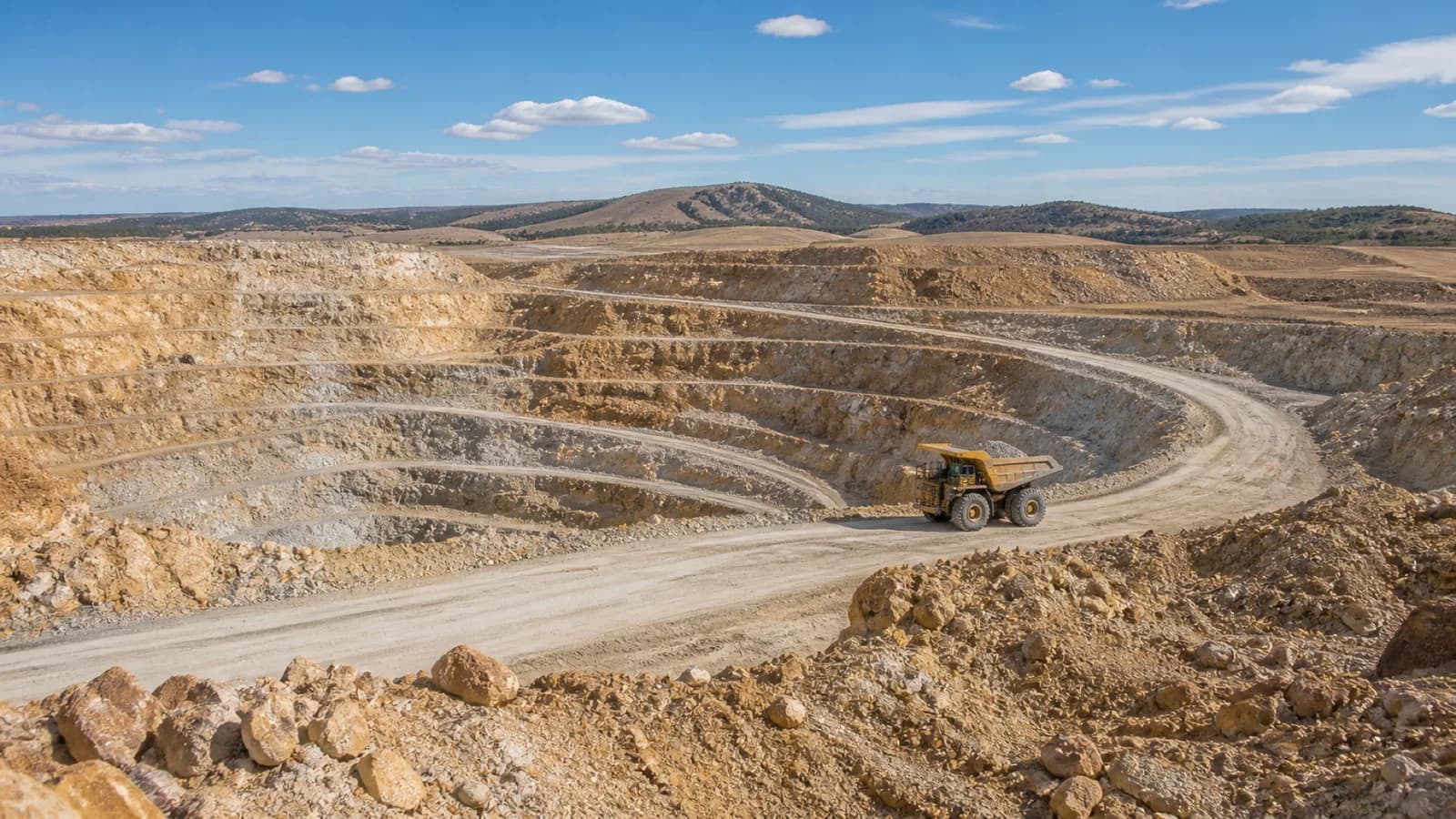
US uranium concentrate production more than tripled in 2025, reaching about 2.1 million pounds of U3O8 from 657,000 pounds the year before. The increase gives the domestic fuel cycle a measurable lift, but mining is only the opening step before uranium can become reactor fuel.
Key facts
- US facilities produced about 2.1 million pounds of U3O8 concentrate in 2025, up from 657,000 pounds in 2024 and the highest annual total since 2017.
- Exploration drilling reached 1,824 holes covering 1.016 million feet in 2025, compared with 1,324 holes and 613,000 feet in 2024.
- Development drilling totaled 3,708 holes and 1.302 million feet in 2025.
- Industry employment rose to 711 full-time person-years, up from 506 in 2024.
- Land, exploration, drilling, production and reclamation spending reached $234.7 million in 2025, versus $160 million in 2024.
What happened
The US Energy Information Administration's annual Domestic Uranium Production Report, released with 2025 data and re-released on August 27, shows a production sector moving off its recent floor. The headline number is concentrate output: 2.1 million pounds of U3O8, compared with 0.7 million pounds in 2024 and 0.2 million pounds in 2023.
The jump is not just a price chart or a company forecast. EIA's summary table records 1.4 million pounds of mine production in 2025, while concentrate production reached 2.1 million pounds. The distinction matters because mined uranium can be processed through mills or in-situ recovery plants, and the two measures describe different points in the production chain.
The industry also drilled more aggressively. Exploration drilling, used to locate and evaluate deposits, reached 1,824 holes and more than 1 million feet in 2025. Development drilling, which helps define the size and shape of known deposits, rose to 3,708 holes. EIA said the exploration-hole count was the highest in years, while the footage was the highest since 2013.
That activity showed up in the workforce and spending figures. Employment increased from 506 to 711 full-time person-years, the highest total since 2014. Expenditures rose from $160 million to $234.7 million, also the largest total since 2014.
Why it matters
The numbers arrive as the US tries to rebuild a nuclear fuel system that has been exposed to geopolitical and industrial bottlenecks. More domestic uranium can reduce dependence on imported feedstock, but it does not by itself supply a reactor with fuel. U3O8 still needs conversion to uranium hexafluoride, enrichment, reconversion and fabrication.
That sequence is easy to flatten in a headline. It should not be. NNN's HALEU explainer tracks the higher-assay material needed by many advanced reactors, while the Centrus task-order story follows a US effort to expand enrichment. Those are downstream problems. The EIA figures describe the upstream mining and processing base that feeds the chain.
There is a second reason to separate the stages: domestic mining gains can coexist with continued reliance on foreign conversion and enrichment. The American nuclear fleet needs a dependable flow through the entire chain, not just more yellowcake at the mine gate. A stronger mine sector helps, but it does not remove the need for capacity at every later step.
The report also shows how far the recovery still has to run. The EIA's 2011-2025 table records 4.7 million pounds of concentrate production in 2013 and 4.9 million pounds in 2014. The 2025 result is a recovery from the low-output years, not a return to the industry's earlier peak.
Background
US uranium production includes conventional mines, mills, heap-leach facilities and in-situ recovery operations. In-situ recovery, or ISR, dissolves uranium underground and pumps the solution to a processing plant. The annual EIA report says five ISR facilities were operating at the end of 2025 with combined capacity of 13.3 million pounds of U3O8 per year. Capacity is not the same as output, so the figure should be read as an industrial ceiling rather than a production total.
EIA also recorded facilities on standby and projects in development. Two facilities, the Shootaring Canyon Uranium Mill in Utah and the Sweetwater Uranium Project in Wyoming, were on standby with combined capacity of 3,750 short tons of material per day. Seven ISR plants were planned across South Dakota, Texas and Wyoming, with combined annual capacity of 10.5 million pounds.
Those figures point to a sector with more than one path to growth. Existing plants can restart or increase output; developers can advance new ISR projects; and exploration can add deposits to the future pipeline. None of those outcomes is automatic. Permitting, prices, reclamation obligations, workforce availability and access to downstream processing all shape whether capacity becomes pounds actually produced.
The broader fuel-cycle buildout is visible in adjacent projects. Urenco's New Mexico expansion adds commercial enrichment capacity, while advanced-reactor developers are trying to secure HALEU and fuel fabrication. The supply chain is being rebuilt in pieces, and each piece has its own schedule.
What's next
The next data points to watch are quarterly output, the restart or expansion of facilities now on standby, and whether the drilling increase produces sustained mine production rather than a one-year spike. EIA's next annual report is scheduled for May 2027.
The cleanest reading of the 2025 data is modest but meaningful: US uranium mining and processing are growing from a depressed base. The test now is whether the increase can persist long enough to support the conversion, enrichment and fabrication projects that sit downstream of the mine.
Questions
- How much uranium did the US produce in 2025?
- US uranium production facilities produced about 2.1 million pounds of triuranium octoxide, or U3O8, concentrate in 2025, compared with 657,000 pounds in 2024.
- Does uranium concentrate become reactor fuel immediately?
- No. U3O8 must be converted to uranium hexafluoride, enriched, converted again and fabricated into fuel pellets or other reactor fuel forms before use.
- What else grew in the US uranium industry?
- Exploration drilling reached 1,824 holes, employment rose to 711 full-time person-years and industry expenditures reached $234.7 million in 2025, according to EIA.
Sources
- Domestic Uranium Production Report - Annual — US Energy Information Administration
- Summary production statistics of the US uranium industry, 2011-2025 — US Energy Information Administration
- EIA details 2025 gains in US uranium production — American Nuclear Society
About Nuclear News Network
Nuclear News Network (NNN) is an independent publication covering the global nuclear energy sector — reactor construction, SMRs, fuel supply, policy, operations and fusion. NNN publishes a daily brief, same-day analysis of major developments, and reference guides used across the industry. Articles are produced by the NNN Newsroom, an editorial automation system with human oversight, under the publication's editorial standards. Ruben Seoane is the founder and main editor of NNN.