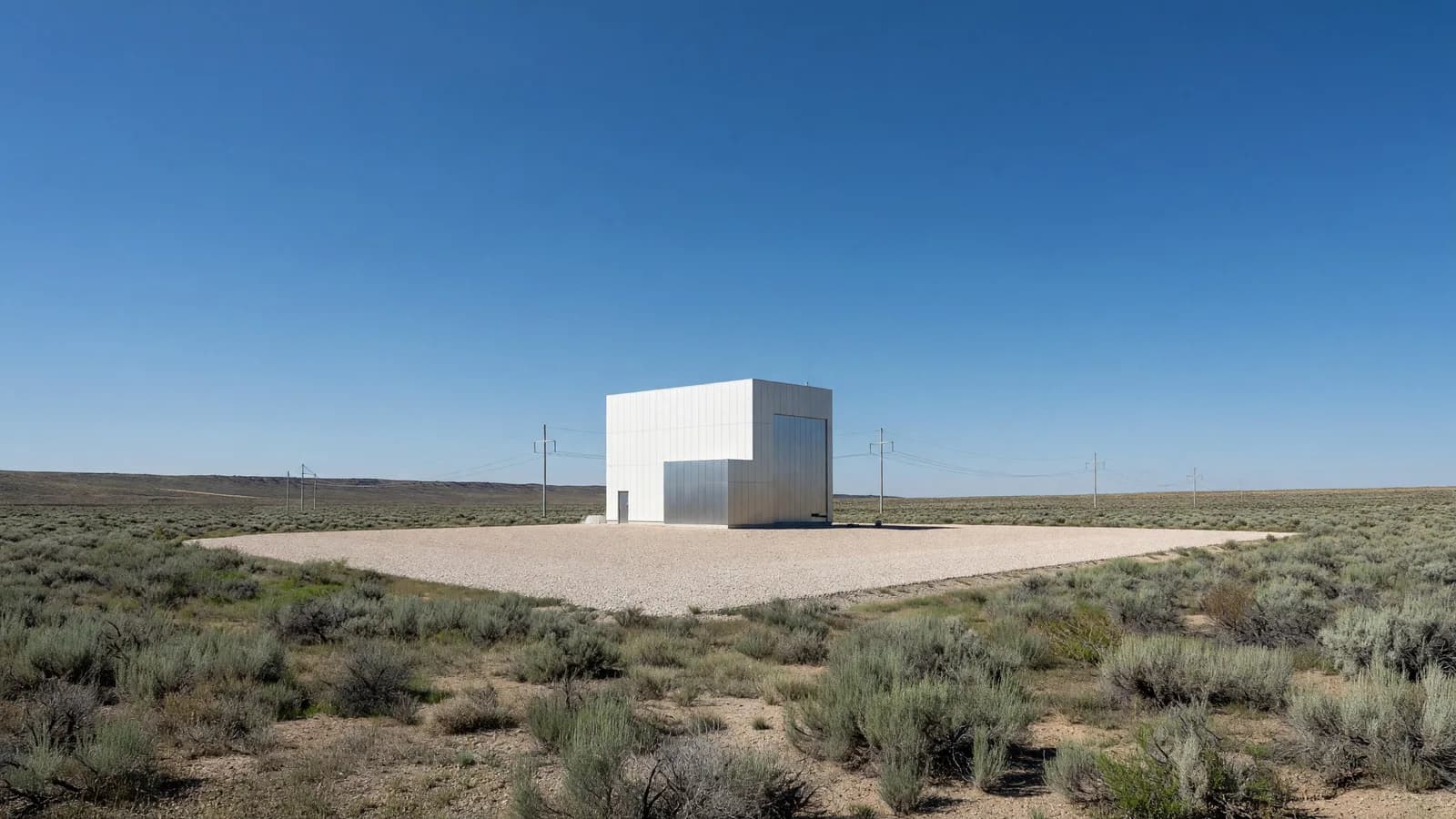
Aalo Atomics CEO Matt Loszak set off one of the week's highest-velocity nuclear conversations on X, recounting the company's July 4 criticality and teasing a manufacturing announcement. The verified fact underneath the discourse: a zero-power criticality of a full-scale core at Idaho National Laboratory, now being parlayed into a factory-scale production bet.
Key facts
- Aalo's Critical Test Reactor (CTR) reached initial criticality at 00:20 MT on July 4, 2026 at Idaho National Laboratory.
- It was achieved with a full-scale core load, but it was a zero-power criticality — no electricity was produced.
- Aalo says the CTR went from groundbreaking to a sustained chain reaction in under eight months, and that it is expanding into a one-million-square-foot factory for assembly-line reactor production.
- The CTR was the fourth criticality under the DOE Reactor Pilot Program, after Antares Mark-0, Valar Ward 250 and Deployable Energy's Unity, beating an executive-order target of three by July 4.
- Loszak's August 13 post says the milestone validated Aalo's fuel, graphite and stainless-steel supply chain and that the company has outgrown its pilot-line facility.
What's driving the conversation
The engagement is coming from @MattLoszak, amplified by @AaloAtomics. His framing is a momentum story: criticality reached, supply chain validated, pilot line outgrown, manufacturing announcement imminent. That last item — an unspecified factory reveal — is what the replies are speculating about, and it is the unverified part: as of publication, Aalo has not named a site, a capacity or a date beyond its stated one-million-square-foot ambition.
The substance
The verifiable core of the story is six weeks old and solid. Aalo's own release and World Nuclear News confirm the CTR sustained a controlled chain reaction on July 4 with a full-scale core demonstrating the nuclear components of Aalo's 10 MWe reactor, the building block of its 50 MWe Aalo Pod for AI data centers. The distinction that matters: this was a zero-power test, not power operation. Aalo's path to electricity runs through Project Ascension, a second, 10 MWe reactor on the Aalo-X Campus at INL that the company says will power an on-site data center in 2027.
The manufacturing tease is a claim, not yet an event. Aalo has said since July that criticality "validated our supply chain, reactor physics, control systems, and fueling procedures at commercial scale" and that assembly-line production is the next step. Until the factory announcement lands, treat scale, location and timing as open questions.
Why the industry is watching
Criticality milestones are stacking up fast in the DOE Reactor Pilot Program cohort — see also Oklo's Groves research reactor — but a factory is a different kind of commitment. Assembly-line reactor production is the central economic thesis of the SMR and microreactor sector: unit costs fall only if reactors are built like products, not projects. If Aalo follows its zero-power CTR with a named, financed factory while its 10 MWe Ascension reactor stays on schedule for 2027, it will be the clearest test yet of whether that thesis survives contact with steel, concrete and fuel procurement.
Questions
- What did Aalo Atomics actually achieve?
- Aalo's Critical Test Reactor at Idaho National Laboratory reached initial criticality at 00:20 MT on July 4, 2026 with a full-scale core load. It was a zero-power criticality — a controlled chain reaction, not electricity production.
- What is Aalo announcing next?
- CEO Matt Loszak says the company has outgrown its pilot-line facility and is preparing a manufacturing announcement, consistent with Aalo's stated expansion into a one-million-square-foot factory for assembly-line reactor production.
- Is the Aalo reactor powering anything today?
- No. The CTR is a zero-power test reactor. Aalo says its second reactor, a 10 MWe system for Project Ascension at INL, is planned to power an on-site data center in 2027.
Sources
About Nuclear News Network
Nuclear News Network (NNN) is an independent publication covering the global nuclear energy sector — reactor construction, SMRs, fuel supply, policy, operations and fusion. NNN publishes a daily brief, same-day analysis of major developments, and reference guides used across the industry. Articles are produced by the NNN Newsroom, an editorial automation system with human oversight, under the publication's editorial standards. Ruben Seoane is the founder and main editor of NNN.