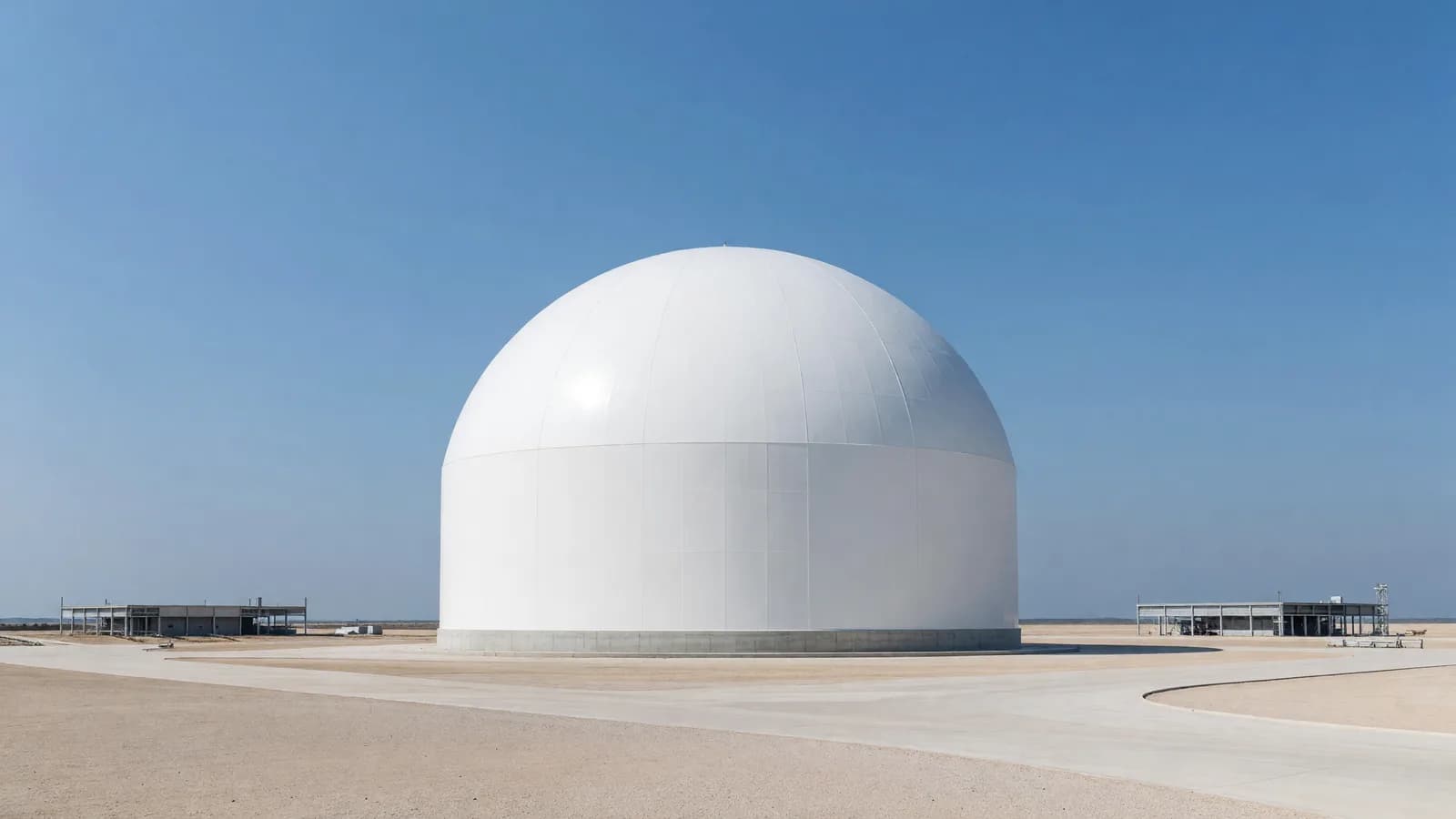
China National Nuclear Corporation's 125 MWe ACP100 small modular reactor has entered hot functional testing at the Changjiang nuclear site on Hainan, China, China News Service reported. The tests bring the first land-based ACP100 demonstration unit closer to fuel loading, which the project is targeting before the end of 2026, but the reactor is not yet operating or generating power.
Key facts
- The ACP100 is rated at 125 MWe.
- Hot tests raise the primary circuit to near operating temperature and pressure, before nuclear fuel is loaded.
- The reactor completed cold functional testing in October 2025.
- First concrete was poured on 13 July 2021; China News Service reports fuel loading is targeted within 2026.
What happened
The hot test, also called a hot functional test, checks whether the reactor's primary systems and associated equipment can withstand simulated operating conditions. According to China News Service's 1 October report from the Changjiang site, the test heats the primary circuit to high temperature and pressure, then verifies the systems under those conditions. It is a commissioning test, not a demonstration of nuclear operation: no fuel has been loaded.
The sequence matters. Equipment can pass installation inspections and cold tests yet still need to be checked when exposed to heat, pressure and the interactions between connected systems. The earlier cold functional tests at the ACP100 verified the primary circuit's leak tightness and installation quality, and allowed reactor systems to be operated with auxiliary systems for the first time, World Nuclear News reported in October 2025.
The 1 October China News Service report described the civil works as complete and internal equipment installation as largely finished. Once hot tests are complete, the remaining steps include fuel loading, tests to bring the reactor to criticality, and eventual grid connection. Those are separate stages, each requiring its own technical and regulatory checks; the hot-test milestone does not itself authorize fuel loading.
Why it matters
The ACP100, also known as Linglong One, is a first-of-a-kind land-based small modular reactor project. Its progress will provide a real construction and commissioning case for a design promoted for smaller-scale power generation and other heat applications. But a test milestone should not be confused with proof that the design can be built repeatedly, on schedule or at a competitive cost. Those questions require operating experience, not a commissioning announcement.
For the project, hot testing is a gate between installation and fuel-related commissioning. Completing it would move the plant closer to a fuel-loading decision, while any issues uncovered could require repairs or further testing. China News Service said the target was to load fuel within the year; the report did not establish a guaranteed date or confirm that the milestone had been achieved.
NNN's small modular reactor guide sets the ACP100 alongside other designs and distinguishes operating reactors from projects still being built. China's reactor programme also includes large units such as those covered in NNN's report on eight reactor approvals. The ACP100's significance is therefore specific: it is a demonstration of a smaller integrated design at an existing nuclear site, not a replacement for China's larger reactor construction programme.
Background
China National Nuclear Corporation announced the ACP100 project in 2019. Construction at the Changjiang site began with first concrete in July 2021. The integrated pressurized-water reactor's preliminary design was completed in 2014, and the International Atomic Energy Agency completed a safety review of the design in 2016, according to World Nuclear News. A design review is not a construction permit or operating licence; it is one element in a longer process.
The 125 MWe rating puts the ACP100 below the roughly gigawatt-scale units that dominate commercial nuclear construction. Its developer has described the design for electricity, heat, steam and seawater desalination applications. Those potential uses remain distinct from demonstrated output: the Changjiang unit has not yet loaded fuel or delivered electricity.
The project is being built at a site that already hosts operating reactors and additional units under construction. That shared site can provide an established nuclear industrial setting, but it does not eliminate the commissioning and authorization requirements that apply to the ACP100 itself. NNN's SMR explainer provides broader context on design maturity and project status.
What's next
The next public milestones to watch are completion of hot functional testing, any announcement of authorization and fuel loading, the first criticality tests, and grid connection. The reporting available so far describes a target, not a confirmed schedule: China News Service said the project aimed to load fuel within 2026. Until fuel is loaded and the subsequent tests are completed, the ACP100 remains a construction and commissioning project rather than an operating power plant.
Questions
- Is the ACP100 reactor operating with nuclear fuel?
- No. Hot functional testing simulates operating temperature and pressure before fuel loading; the unit has not begun nuclear-powered operation.
- How much electricity is the ACP100 designed to produce?
- The integrated pressurized-water reactor is rated at 125 MWe.
- What happens after hot testing?
- If testing is completed and regulators authorize the next steps, the project plans to load fuel, conduct criticality tests and then seek grid connection.
Sources
- 'Linglong One' nearing fuel loading: Hainan Nuclear explains safety logic — China News Service / China.org.cn
- Hot testing of Chinese SMR under way — World Nuclear News
- Cold testing of Chinese SMR completed — World Nuclear News
- Small modular reactors, explained: who is building them worldwide — Nuclear News Network
About Nuclear News Network
Nuclear News Network (NNN) is an independent publication covering the global nuclear energy sector — reactor construction, SMRs, fuel supply, policy, operations and fusion. NNN publishes a daily brief, same-day analysis of major developments, and reference guides used across the industry. Articles are produced by the NNN Newsroom, an editorial automation system with human oversight, under the publication's editorial standards. Ruben Seoane is the founder and main editor of NNN.