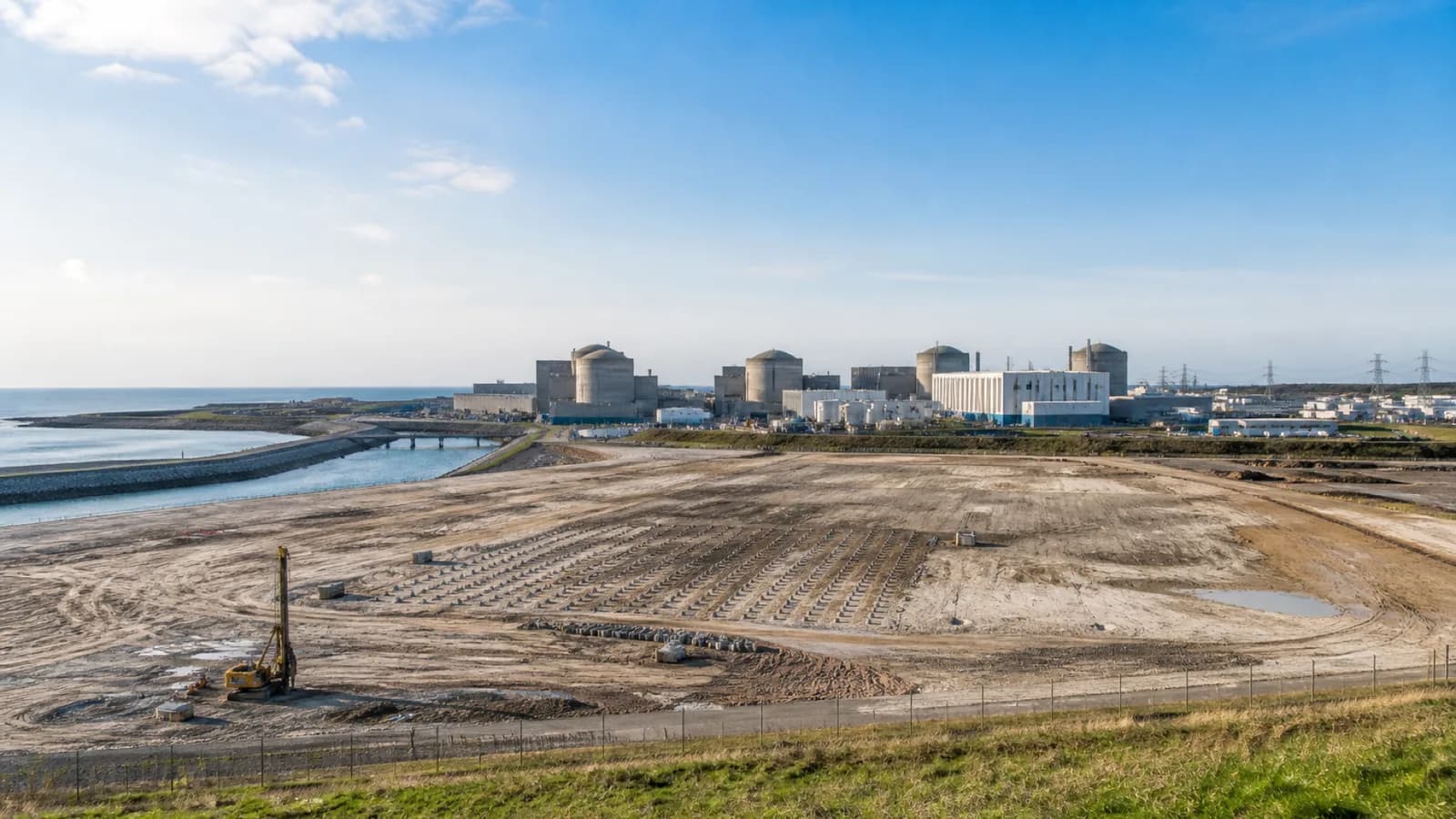
France has authorised Électricité de France (EDF) to begin environmental and civil works for two future EPR2 reactors at Gravelines, moving the project from planning into physical site preparation. The approval covers one pair in a six-reactor programme; it is not yet permission to build the nuclear units.
Key facts
- Decree No. 2026-807, dated 20 August 2026, authorises preparatory work for one pair of EPR2 reactors at Gravelines
- France's first EPR2 programme covers six reactors at three sites: Penly, Gravelines and Bugey
- The public inquiry ran from 14 April to 15 May 2026
- EDF's environmental measures include 13 compensation sites covering 102.4 hectares
- The decree does not authorise the reactor buildings; EDF says a separate creation decree remains necessary
What happened
The French government published Decree No. 2026-807 in the Official Journal on 22 August. The decree, signed on 20 August, grants EDF an environmental authorisation for work needed to establish a pair of EPR2 nuclear production units in Gravelines, Craywick, Loon-Plage and Bourbourg in the Nord department.
The authorised work is the stuff that turns a drawing into a construction site. It includes site facilities, access roads and a car park, relocation of the existing plant's railway terminal, earthworks, soil reinforcement, an intake channel and a watertight enclosure beneath the footprint of a future factory block. EDF can also establish a public information centre and carry out biodiversity relocations during suitable periods.
The order is unusually specific about what it does not do. Article 2 authorises operations associated with the future pair, but the project still requires the separate legal and regulatory steps attached to nuclear basic installations. EDF's own project platform says it filed the application for that creation decree on 30 June 2026. The technical review is being conducted by the French Nuclear Safety and Radiation Protection Authority, known as ASNR.
That distinction matters. Heavy equipment and reinforced ground can appear before a reactor has a construction licence. The environmental authorisation is a meaningful project milestone, but it is not a green light to pour the nuclear island or install safety-related equipment.
Why it matters
Gravelines is the second site in France's EPR2 sequence to move into preparatory work. Penly, the pilot site in Normandy, began site preparation in 2024. The programme calls for a pair at Penly, a pair at Gravelines and a pair at Bugey, all beside existing nuclear stations. Construction is pencilled in to start in 2027, according to World Nuclear News' account of the programme.
The choice of existing nuclear sites is practical. Grid connections, industrial land and an experienced nuclear workforce already exist. It also concentrates the new-build effort where France has operating infrastructure instead of creating three entirely new nuclear locations. The trade-off is that each site brings its own environmental, water-management and local-planning constraints.
The Gravelines decree shows those constraints in detail. It records three avoidance measures and 30 reduction measures, then authorises 13 compensation measures for protected species and wetlands. The decree identifies impacts involving 61 protected species, including 47 bird species, six amphibian species, two reptiles and six plant species. Those figures describe the scope of the environmental case; they do not mean the project has cleared the rest of its licensing path.
The water provisions are equally concrete. The project involves groundwater extraction from the Flandrian Sands, Tertiary formations and Senonian chalk aquifers, and the decree sets monitoring and pollution-prevention requirements. For a coastal station, the future intake channel also links the new project to the marine environment. NNN's earlier coverage of jellyfish-related cooling disruption at Gravelines dealt with the existing plant's seawater systems. The EPR2 project now has to build new infrastructure without losing sight of that operating reality.
Background
The EPR2 is EDF and Framatome's updated pressurised-water reactor design. The companies say it incorporates experience from the original EPR's design, construction and commissioning, along with lessons from France's operating fleet. France's nuclear buildout therefore has two tracks: keep the existing reactors available, and create a repeatable route for new units.
The scale is large even before the first concrete. The initial six-reactor programme was estimated at EUR51.7 billion before being revised to EUR67.4 billion in 2023. That estimate covers a national programme, not just the Gravelines pair. It is also a reminder that early site work is only one cost and schedule marker in a project that will run through design review, procurement, construction and commissioning.
For readers tracking the wider reactor market, NNN's SMR guide explains why developers are trying to standardise smaller designs and repeat them across sites. The EPR2 effort is a different proposition: large reactors at established nuclear locations, with repetition used to reduce the risk of building each project as a one-off. France's experience will be watched closely because the same question hangs over both models: can the second unit be delivered more predictably than the first?
What's next
The immediate watchpoint is EDF's creation-decree application for the Gravelines nuclear installations. ASNR's technical review must precede the authorisation needed for reactor construction. In parallel, EDF can begin the authorised environmental and civil works, subject to the conditions and monitoring requirements in Decree No. 2026-807.
The next visible milestones should be site access, soil treatment, water works and the start of major civil construction. The clean reading of the August decision is narrow: France has approved the ground work for the second EPR2 pair, while the reactor construction decision is still ahead.
Questions
- What did France authorise at Gravelines?
- Decree No. 2026-807 authorises EDF to carry out environmental, water, civil engineering and site-preparation work for a pair of EPR2 units near the existing Gravelines nuclear plant.
- Does the authorisation let EDF build the reactors?
- No. EDF says it still needs a separate decree authorising the creation of the nuclear basic installations before it can begin construction of the reactor units.
- How many EPR2 reactors does France plan to build first?
- France's first EPR2 programme covers six reactors in three pairs at Penly, Gravelines and Bugey. The Gravelines authorisation concerns one pair.
Sources
About Nuclear News Network
Nuclear News Network (NNN) is an independent publication covering the global nuclear energy sector — reactor construction, SMRs, fuel supply, policy, operations and fusion. NNN publishes a daily brief, same-day analysis of major developments, and reference guides used across the industry. Articles are produced by the NNN Newsroom, an editorial automation system with human oversight, under the publication's editorial standards. Ruben Seoane is the founder and main editor of NNN.