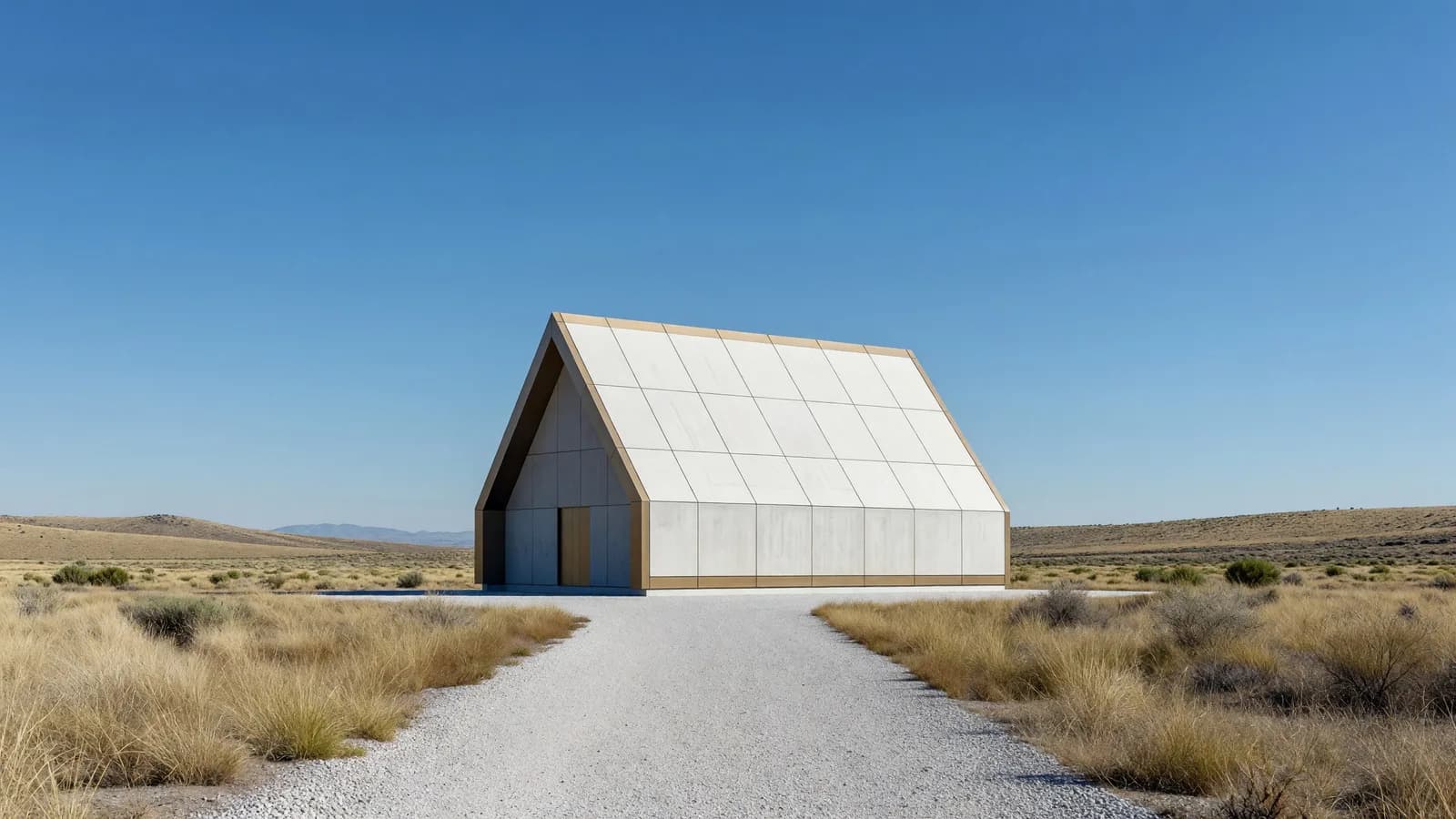
Oklo Inc. has received U.S. Department of Energy startup authorization for its Groves Isotope Test Reactor near Lockhart, Texas, clearing the path to load nuclear fuel, run startup tests and move toward first criticality. The company says the privately financed facility reached that gate in just over 10 months from groundbreaking.
Key facts
- DOE startup authorization under the Reactor Pilot Program completes DOE's authorization process for Groves and clears fuel loading, startup testing and reactor operations
- Oklo says the project moved from groundbreaking to startup authorization in just over 10 months
- Groves is a low-power isotope test reactor on private land, built to demonstrate design, construction and operations for future commercial isotope facilities
- Oklo says fuel and major equipment were commercially procured or manufactured in-house, with full-scale civil excavation and construction on a greenfield private site
- Principal Deputy Assistant Secretary for Nuclear Energy Mike Goff said DOE is excited to see another Reactor Pilot Program participant receive authorization
What happened
In a July 23, 2026 company release, Oklo announced that the Department of Energy had granted startup authorization for the Groves Isotope Test Reactor. The company frames the decision as the end of DOE's authorization process under the Reactor Pilot Program and the start of the nuclear-operations sequence: bring fuel on site, complete startup testing, and proceed toward first criticality.
Groves is not an Aurora powerhouse and not a grid-connected commercial plant. Oklo describes it as a low-power test reactor whose job is to prove reactor design, build and operations experience that can support commercial-scale domestic isotope production — material aimed at cancer care, manufacturing, scientific research, space exploration and national security uses the company lists in the same release.
The deployment model is the second half of the story. Oklo says Groves was privately financed, built on private land, and assembled with full-scale systems, with civil excavation and construction completed on a greenfield site and fuel plus major components either bought commercially or made by Oklo. During the same window the company says it stood up the operating organization, qualified personnel, and implemented nuclear programs and procedures — including safety management programs developed in-house rather than borrowed from an existing national-laboratory operating envelope.
That last point is load-bearing for how DOE reviewed the project. Oklo says startup authorization followed a readiness review in which a multidisciplinary DOE team checked whether procedures and training were adequate, the facility matched the approved design, safety equipment functioned, and required safety management programs were in place. Co-founder and CEO Jacob DeWitte called the schedule "the fastest time that we are aware of to go from greenfield to substantial completion for a full-scale, privately funded and sited reactor in history". Co-founder and COO Caroline DeWitte cast the same work as enterprise muscle-building: operating procedures, training, security, environment, health and safety, and quality assurance programs that Oklo intends to reuse on later projects.
Why it matters
Most advanced-reactor milestones still live on federal campuses, inside shared test beds, or in paper licensing. Groves is Oklo arguing the opposite case in hardware: a commercial-path reactor authorized for nuclear operations on private land, on a schedule measured in months rather than the multi-year crawl the industry has treated as normal.
If the company's 10-month greenfield-to-authorization claim holds up under the remaining fuel-load and criticality steps, it becomes a reference data point for every developer pitching hyperscalers, utilities and isotope buyers on deployment speed. The repeatability pitch is explicit. Oklo says Groves is a commercial-scale facility in the sense that the company can reuse the siting, build, commissioning and operating experience — and the actual cost and schedule memory — on future isotope production reactors and other business lines.
The authorization also tests the DOE Reactor Pilot Program as more than a press-release pathway. Goff's quote in the Oklo release ties the result to an "enabling environment" that let Oklo accelerate while DOE kept a readiness-review gate in front of fuel. That is a different posture from waiting for a completed facility before any meaningful federal engagement, and it is the posture other Pilot Program participants will be measured against.
For the broader U.S. advanced-reactor map, Groves sits beside — not instead of — lab infrastructure such as the DOME microreactor test bed at Idaho National Laboratory and first-of-a-kind private construction moves like TerraPower's excavation start at Kemmerer Unit 1. Lab beds compress experiment cost; private greenfield builds compress the commercial learning curve. The industry needs both, and Groves is one of the clearest private-side markers in 2026.
Background
Oklo is building three related businesses: fast-fission Aurora powerhouses, nuclear fuel recycling, and domestic critical-isotope production. Groves is the isotope path's hardware proof point. The company says the reactor will demonstrate operations that support commercial-scale isotope facilities, while the operating programs, supplier qualifications and authorization experience transfer into Aurora and fuel-cycle projects already in the pipeline.
That transfer story only works if the authorization pathway is real and reusable. The Reactor Pilot Program is designed to let construction and organizational readiness proceed in parallel with DOE review rather than in strict series. Groves is one of the first projects to show what "parallel" looks like at the moment DOE says the plant may receive fuel.
Fuel itself remains a system constraint for the wider advanced-reactor cohort. Many designs depend on high-assay low-enriched uranium and other specialized feedstocks; NNN has tracked that bottleneck through moves such as Centrus's $900 million DOE HALEU task order. Oklo's release stresses commercial procurement of Groves fuel and equipment without publishing enrichment assay or supplier detail in the startup-authorization notice — a reporting gap to close as fuel loading approaches.
Federally, the same week layered AI-for-nuclear money on top of hardware milestones. DOE's Genesis Mission selections put Prometheus — an Idaho National Laboratory-led, 32-organization project that includes Oklo among industry partners — at the center of a push to cut reactor development and operating timelines with AI tools under human oversight. Groves is the opposite end of the stack: steel, procedures and a readiness review, not a model. The two only matter together if the software layer eventually shortens the kind of authorization path Groves just finished the hard way.
For design context across the small and advanced reactor field, see NNN's SMR explainer hub.
What's next
The immediate sequence is operational, not ceremonial. Watch for three public markers: fuel arrival and loading at Groves, completion of startup testing, and first criticality. Oklo has not published dates for those steps in the authorization release.
Second, watch whether Oklo converts the Groves operating envelope into a second private-land isotope or power project on a comparable schedule. The company's claim is that systems, suppliers and approved programs now exist to be reused; the next groundbreaking is the test of that claim.
Third, watch the rest of the DOE Reactor Pilot Program. If other participants clear the same readiness-review gate on private sites, Groves stops being an Oklo story and becomes evidence that the pathway itself works. If they do not, the 10-month clock remains a company-specific data point rather than a sector template.
Background
Oklo's Groves Isotope Test Reactor is a low-power fast reactor built on private land in Texas under DOE's Reactor Pilot Program to demonstrate design, construction and operations for future commercial isotope-production facilities. Groves went from groundbreaking to DOE startup authorization in just over ten months and reached first criticality in under a year — the first Reactor Pilot Program reactor to do so on private land. (As of August 2026.)
Questions
- What did the DOE authorize at Oklo's Groves reactor?
- Startup authorization under the DOE Reactor Pilot Program. Oklo says that completes DOE's authorization process and clears fuel loading, startup testing and reactor operations toward first criticality.
- What is the Groves Isotope Test Reactor?
- A low-power test reactor Oklo built on private land near Lockhart, Texas to demonstrate design, construction and operations experience for future commercial isotope production facilities and other Oklo deployments.
- How long did Oklo say the Groves build took?
- Just over 10 months from groundbreaking to DOE startup authorization, including facility construction, operating organization setup, personnel qualification, nuclear programs and commercial fuel and equipment procurement.
- Why does private-land siting matter here?
- Oklo built Groves as a full-scale commercial-path project on private land with commercially sourced systems and fuel, not inside a pre-existing national-lab operating framework — a template it wants to repeat.
Sources
About Nuclear News Network
Nuclear News Network (NNN) is an independent publication covering the global nuclear energy sector — reactor construction, SMRs, fuel supply, policy, operations and fusion. NNN publishes a daily brief, same-day analysis of major developments, and reference guides used across the industry. Articles are produced by the NNN Newsroom, an editorial automation system with human oversight, under the publication's editorial standards. Ruben Seoane is the founder and main editor of NNN.