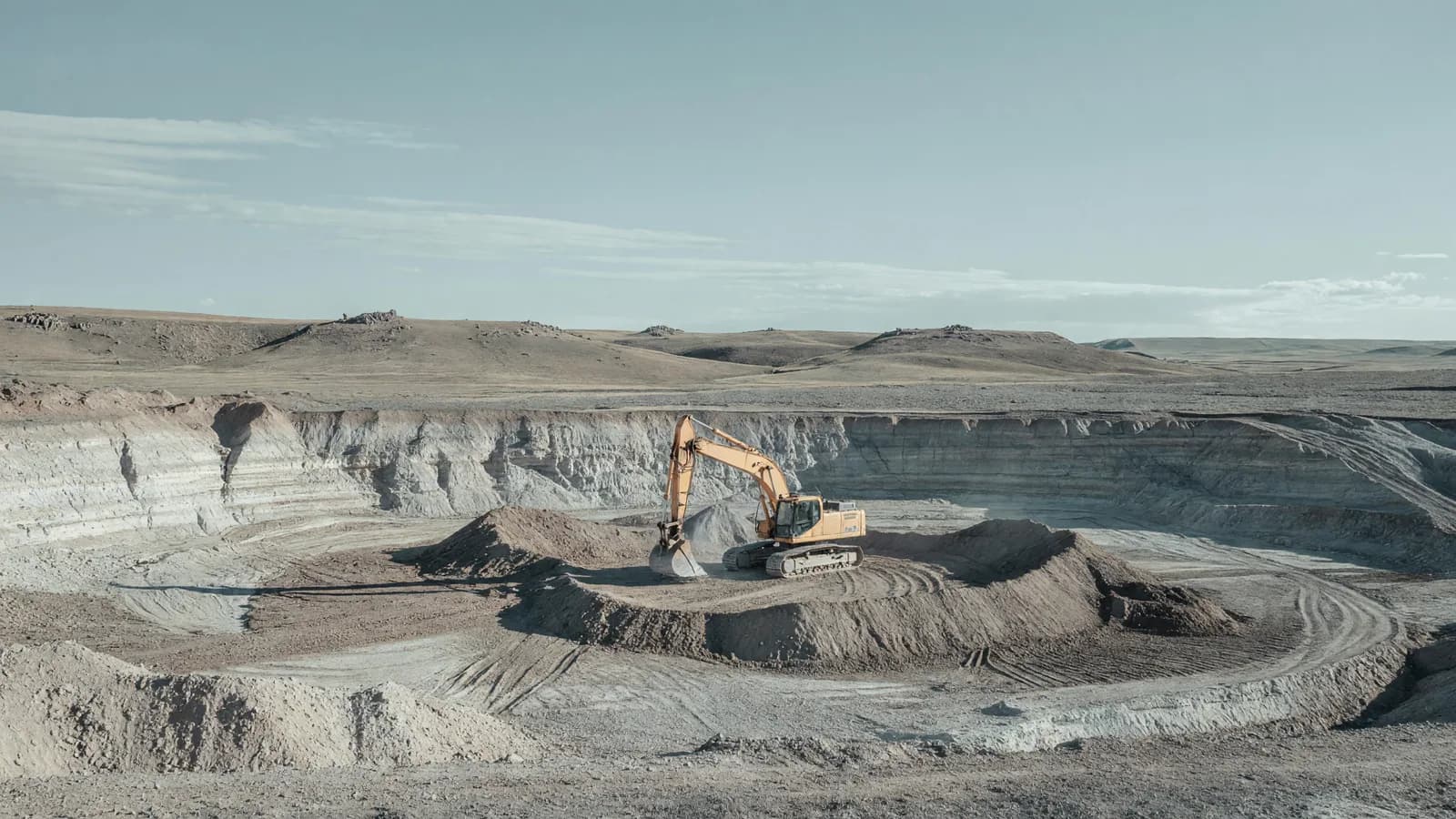
TerraPower says construction crews have begun site excavation at Kemmerer Unit 1 in Wyoming, moving the Natrium project into visible civil work ahead of foundation pouring. The step matters because the company's 345-megawatt sodium fast reactor paired with molten-salt storage is now a construction story as well as a licensing story.
Key facts
- TerraPower's construction page for Wyoming says the company is beginning non-nuclear construction at the Natrium project site.
- TerraPower's project page describes Natrium as a 345-megawatt sodium fast reactor coupled with a molten-salt energy storage system.
- The company says Natrium is designed to be emissions-free, competitive, and flexible, with storage built into the plant concept.
- NNN's earlier TerraPower Natrium coverage and SMR comparison piece explain why this project remains one of the industry's most closely watched advanced-reactor tests.
What happened
TerraPower used a public construction update to show what a lot of nuclear projects struggle to prove in public: a visible construction step. The company says construction has begun at Kemmerer Unit 1 in Wyoming, the first Natrium reactor and energy storage system. That language matters because excavation is the start of civil work, not just more engineering slides. It is the point where a project begins to leave the world of filings, renderings, and milestone charts and start to interact with soil, equipment, labor, and weather.
The site imagery also makes the project visually legible. The early earthmoving that precedes foundation work is exactly the kind of milestone that gives investors, policymakers, local stakeholders, and the wider nuclear industry something tangible to point to. For a project that has spent years living in the licensing-and-design phase, the shift to excavation is valuable because it marks the moment when the plant stops being an abstract promise and starts becoming a build.
The project's technical story has always been part of the appeal. TerraPower's Natrium page describes the system as a 345-megawatt sodium fast reactor paired with molten-salt energy storage. That pairing is what sets Natrium apart from a standard light-water reactor pitch. The reactor generates firm power; the storage system gives the plant a way to respond to grid conditions more flexibly than a purely baseload design.
Why it matters
For the nuclear sector, construction progress is more than optics. It is a signal that the project is surviving the transition from regulatory theory to actual site execution. Many advanced-reactor companies can produce a slick licensing narrative. Far fewer can show earthmoving, concrete work, and a visible schedule that survives contact with reality. TerraPower's excavation milestone therefore matters not because it is the finish line, but because it shows the project is still moving forward in the real world.
That is especially important in the advanced-reactor market, where credibility is cumulative. Every physical milestone helps answer the question that utilities, lenders, regulators, and potential customers keep asking: can this technology be built on time, on budget, and at a scale that matters? TerraPower has long been one of the best-known names in that category, and Natrium has become one of the sector's reference projects for a reason.
The excavation also reinforces a wider NNN theme: the market is increasingly about execution quality, not just conceptual elegance. A reactor that can clear the first visible construction hurdle becomes easier to explain, easier to finance, and easier to compare with competitors. That is why our earlier Natrium explainer and Natrium comparison story keep coming back to the same conclusion — the companies that win are the ones that turn regulatory progress into repeatable project delivery.
Background
Natrium sits in an unusual place in the nuclear conversation. It is an advanced-reactor design, but it is also a grid-flexibility story. The 345-megawatt reactor is coupled to molten-salt storage so the plant can present a different operating profile than a conventional light-water unit. That combination is one of the reasons TerraPower has remained at the center of SMR debate: the project is trying to solve both clean firm power and grid flexibility in the same package.
The Wyoming site matters too. Kemmerer is the kind of place where nuclear's broader industrial story becomes visible. The project has become a test case for whether advanced nuclear can move into regions that want new economic activity, reliable power, and long-lived industrial jobs. Every shovel of dirt therefore carries more weight than it would at an ordinary construction site, because it is also a statement about where the future of the industry might be built.
NNN's earlier coverage of Natrium framed the design as more than a one-off demonstration. The project has always been a stand-in for a bigger question: can a next-generation reactor move from paper to productive civil work without losing schedule discipline? Excavation is not the answer, but it is the first serious proof point.
What's next
The next visible step is foundation work, followed by the broader civil construction sequence that turns an excavation into an actual plant site. TerraPower will likely keep using public milestones to show that the project is advancing, and the industry will keep reading those milestones as a proxy for advanced-reactor maturity.
If Natrium keeps moving through the build sequence, it will remain one of the most important reference projects in the U.S. advanced-reactor pipeline. If it stalls, the industry will notice that too. For now, the important fact is simple: the site is no longer just a plan.
Background
Natrium is TerraPower's advanced plant design: a 345 MWe sodium-cooled fast reactor coupled to molten-salt thermal storage that can boost output to 500 MWe for more than five hours. Its March 2026 NRC construction permit was the first for a commercial non-light-water US power reactor in more than 40 years, and construction of the first unit began in April 2026 at Kemmerer, Wyoming, on the site of a retiring coal plant, with completion expected by early 2031. The announced pipeline beyond Kemmerer includes agreements covering up to eight plants for Meta's data centers, further PacifiCorp units, and UK deployment through the Generic Design Assessment. (As of August 2026.) Read the Natrium explainer.
Questions
- What did TerraPower announce?
- Crews have begun site excavation at Kemmerer Unit 1, the first Natrium reactor and energy storage system.
- Why does excavation matter?
- It means the project has moved from regulatory and design work into visible civil construction ahead of the foundation phase.
- What is Natrium?
- TerraPower's Natrium system is a 345-megawatt sodium fast reactor paired with a molten-salt energy storage system.
Sources
About Nuclear News Network
Nuclear News Network (NNN) is an independent publication covering the global nuclear energy sector — reactor construction, SMRs, fuel supply, policy, operations and fusion. NNN publishes a daily brief, same-day analysis of major developments, and reference guides used across the industry. Articles are produced by the NNN Newsroom, an editorial automation system with human oversight, under the publication's editorial standards. Ruben Seoane is the founder and main editor of NNN.