Quantum Leap Energy and the Nuclear Energy Corporation of South Africa (Necsa) have signed a binding framework to develop a joint venture for high-assay low-enriched uranium (HALEU) production at Pelindaba. The proposed venture would give Quantum Leap Energy (QLE) about 80% ownership and a route toward commercial-scale output, but neither the test bench nor commercial production is operating yet.
Key facts
- QLE is expected to own approximately 80% of the joint venture, while Necsa would hold about 20%.
- The partners plan to develop a test bench and commercial-scale HALEU facility at Necsa's Pelindaba site in South Africa.
- QLE received South African Ministry of Electricity and Energy approval in July 2026 to acquire, possess, use, dispose of and transport source material and nuclear-related equipment and technology for enrichment activities at Pelindaba, according to ASP Isotopes.
- ASP Isotopes says QLE has offtake agreements with TerraPower; the announcement gives no volumes or delivery dates.
What happened
ASP Isotopes, QLE's parent company, announced on October 15 that a QLE subsidiary had signed a Heads of Agreement with Necsa, South Africa's statutory nuclear energy institution. The agreement sets a binding commercial framework for a joint venture that would develop, finance, build, commission, own and operate a test bench and a commercial-scale HALEU facility at Pelindaba.
The ownership split gives QLE the lead role. ASP Isotopes says QLE would hold approximately 80% and lead operations and capital arrangements. Necsa would hold about 20% and contribute access to the site, safeguards support, and help with licensing and regulatory matters. The parties also intend for Necsa to enter an engineering, procurement and construction arrangement with QLE.
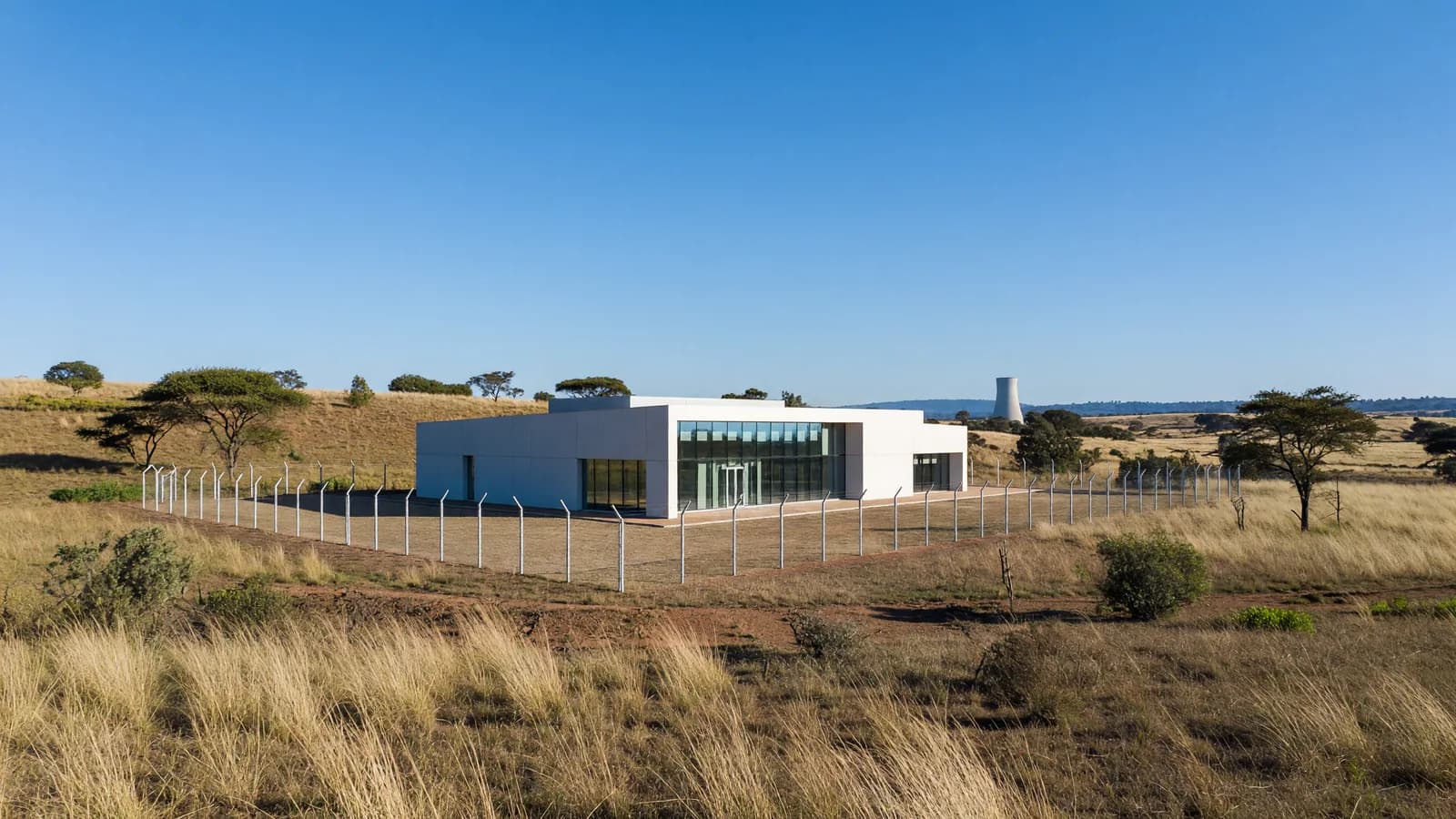
There is some site work already, but it is not production. ASP Isotopes says a test-bench facility was previously constructed and that refurbishment of the building housing it is under way. The company also says regulatory engagement has started. Its announcement does not set a construction schedule, name a target production date, or disclose the planned facility's annual capacity.
The agreement follows a memorandum of understanding signed in November 2024 and a pre-implementation services contract from February 2026, according to the parent company's release. ASP Isotopes also reported that QLE obtained a South African ministerial approval in July 2026 covering specified activities with source material and nuclear-related equipment and technology. That approval is not described as an authorization to operate a commercial uranium-enrichment plant.
Why it matters
HALEU is uranium enriched above 5% and below 20% uranium-235. Several advanced reactor designs require fuel in that range, but having a reactor customer does not remove the need for enrichment, conversion and fuel fabrication capacity. NNN's HALEU explainer maps those separate steps and the difference between demonstration output and commercial supply.
The South African project would add a potential supplier outside the United States and Europe. That could widen the pool of projects seeking to supply advanced-reactor developers, although this agreement is still an early development milestone. QLE and Necsa have laid out ownership and intended roles; they have not reported an operating plant, a licensing decision for commercial output, or a first shipment.
The offtake reference is relevant but incomplete. ASP Isotopes says QLE has supply agreements with TerraPower, a developer of the Natrium reactor. The release does not identify the contracted quantity, product specifications, delivery timing or conditions attached to those agreements. Those details will determine whether the planned South African output can support a particular reactor schedule, rather than simply appear as prospective capacity on a company pipeline.
This distinction is familiar across the HALEU market. NNN reported on X-energy and Centrus's supply agreement, which connects an enrichment supplier to a fuel fabricator and a named reactor program, while the Centrus–Antares contract illustrates how supply announcements can be tied to a specific customer. Even there, an agreement is not the same as completed fuel deliveries. For the Pelindaba venture, the route is longer: the partners must establish the project company, finance and build the facilities, secure the required authorizations, demonstrate the enrichment process and qualify output for customers.
Background
Pelindaba is South Africa's main nuclear research center and the home of the 20-megawatt SAFARI-1 research reactor, according to ASP Isotopes. Necsa brings an operating nuclear site and safeguards experience to the proposed venture. That is useful infrastructure, but an existing research complex does not by itself establish that the proposed enrichment process or commercial plant is licensed and ready.
QLE is a development-stage nuclear fuels company owned by ASP Isotopes. Its parent says the company holds rights to aerodynamic separation and laser-based quantum enrichment technologies. The October announcement does not disclose which process the joint venture will deploy at Pelindaba, its expected throughput, or the detailed design of the test bench. Those omissions leave important technical and commercial questions open.
South Africa has a long nuclear history, but the proposed project should not be confused with existing reactor fuel operations or with the SAFARI-1 research reactor. HALEU production involves uranium enrichment; the facility would need appropriate nuclear-material controls, safeguards, security and licensing. The parent company's release describes Necsa's intended contribution in these areas, but the final regulatory pathway and approvals have not been detailed publicly in that announcement.
The project also fits a broader supply-chain push as advanced reactor companies seek fuel beyond early government-backed allocations and limited demonstration production. NNN's X-energy–Centrus coverage describes one commercial pathway in the United States. Pelindaba would be a different geography and partnership model, with a national nuclear institution as a minority joint-venture partner and prospective site and regulatory support.
What's next
The next milestones are formation and financing of the joint venture, completion of the test-bench refurbishment, disclosure of the enrichment technology and design basis, and the necessary regulatory approvals. The parties have not published dates for those steps or a target for first commercial output.
Readers should also watch for the missing commercial details: planned annual capacity, capital requirements, HALEU specifications, and the volume and timing covered by TerraPower offtake. Until those are public and the facility is licensed and commissioned, South Africa's project remains a proposed addition to the HALEU pipeline, not a producing source of reactor fuel.
Questions
- What did Quantum Leap Energy and Necsa agree to?
- They signed a binding Heads of Agreement establishing a commercial framework for a joint venture to develop a HALEU test bench and commercial-scale production facility at Pelindaba in South Africa.
- Has South Africa started producing HALEU?
- No. The agreement concerns development of a test bench and a planned commercial facility. Refurbishment of existing infrastructure is under way, but the release does not report HALEU production.
- Who will own the proposed joint venture?
- Quantum Leap Energy is expected to hold approximately 80% and lead operations and capital arrangements. Necsa is expected to hold approximately 20% and provide site access and nuclear safeguards, licensing and regulatory support.
- Who has agreed to buy the planned HALEU?
- ASP Isotopes says Quantum Leap Energy has supply agreements with TerraPower. Its October 15 release does not disclose quantities, delivery dates or the commercial terms.
Sources
About Nuclear News Network
Nuclear News Network (NNN) is an independent publication covering the global nuclear energy sector — reactor construction, SMRs, fuel supply, policy, operations and fusion. NNN publishes a daily brief, same-day analysis of major developments, and reference guides used across the industry. Articles are produced by the NNN Newsroom, an editorial automation system with human oversight, under the publication's editorial standards. Ruben Seoane is the founder and main editor of NNN.