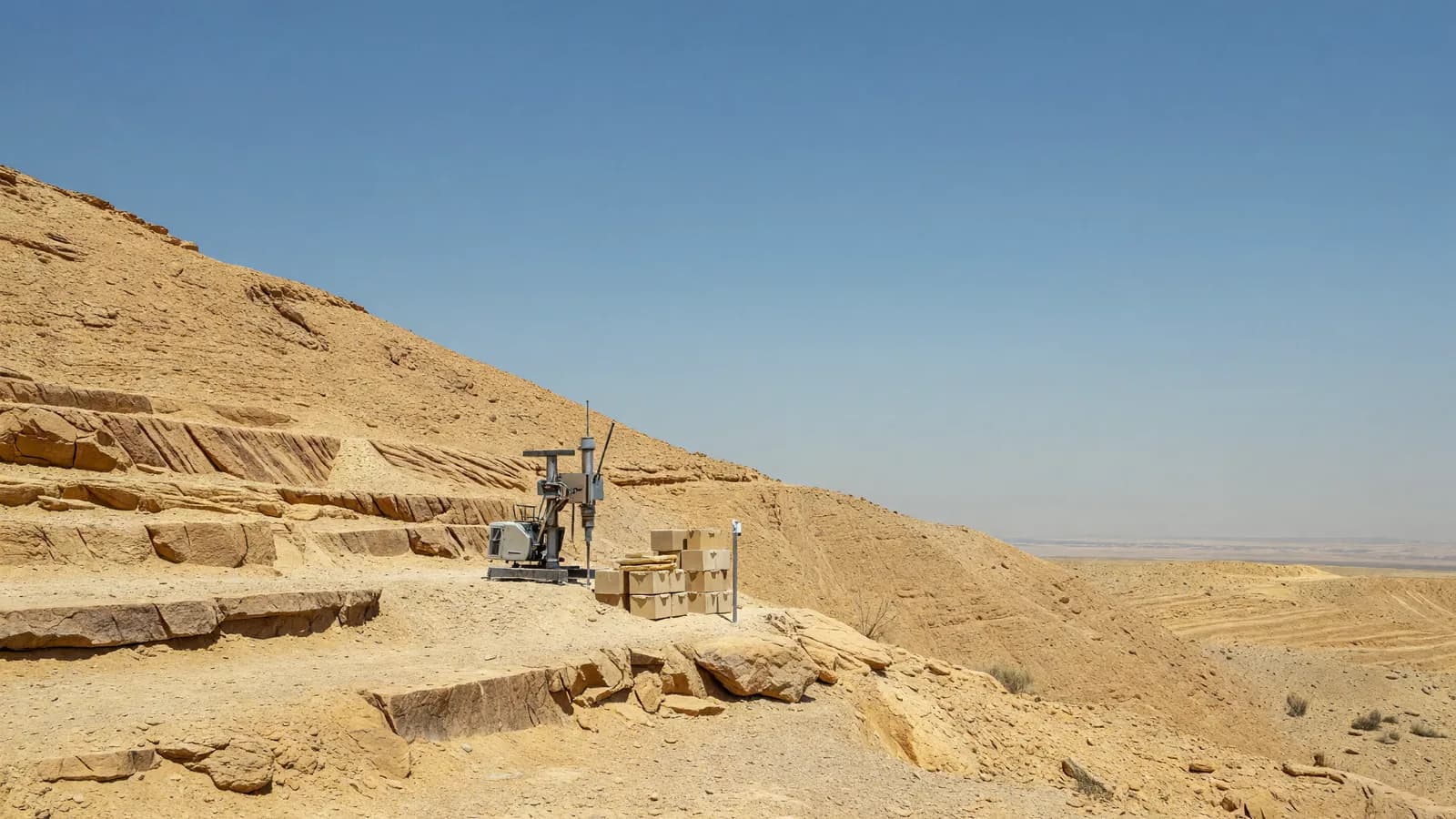
Saudi Arabia dropped the biggest uranium-headline of IAEA General Conference week on Tuesday: Energy Minister Prince Abdulaziz bin Salman announced roughly 110 million tonnes of uranium-bearing raw material at the Jabal Sayid project in the Madinah region, with high concentrations of heavy rare earth elements alongside it. The claim spread across energy and geopolitics accounts on X within hours.
Key facts
- Prince Abdulaziz announced the Jabal Sayid find from the stage of the IAEA's 70th General Conference in Vienna, carried by Saudi state TV on Monday.
- The figure is about 110 million tonnes of raw material containing uranium concentrations, plus heavy rare earth elements — not a reserve or contained-metal estimate.
- The announcement follows the July 2026 US-Saudi civilian nuclear pact, which US Energy Secretary Chris Wright framed as a "decades-long, multibillion-dollar partnership."
- Saudi mining company Ma'aden has partnered with US-based MP Materials on rare earth processing and uranium production capability.
What's driving the conversation
The Saudi energy ministry's official account carried the announcement to a large audience within hours of the minister's IAEA stage appearance, and regional and non-proliferation accounts picked it up almost immediately. The sharpest exchanges are not about the geology — they are about what the claim means for the US-Saudi 123 Agreement debate: does a domestic resource strengthen Riyadh's case for enrichment on its own soil, or does it make a US-supplied fuel arrangement easier to sell? Commentary on both sides is running well ahead of the disclosed data.
The substance
What is verified: the minister said it, on an official stage, and multiple independent wires carried the same figures. What is not verified: grade, contained uranium tonnage, economics, or a timeline to production. "110 million tonnes of uranium-bearing ore" is an exploration statement, not a reserve. The heavy rare earth co-announcement matters on its own terms — Jabal Sayid is being framed as one of the most significant rare earth resource sites under development globally, which is the part of the story with near-term industrial value.
Why the industry is watching
Fuel security is the connective tissue. Western supply chains are racing to convert resources into mined supply — US uranium production tripled in 2025 off a historically low base, and new bilateral arrangements like the India-Australia uranium deal are tightening the market's geography. A credible Saudi resource claim adds a new swing player to that map, and the enrichment question it raises will follow every US-Saudi nuclear conversation from here. Expect the first serious test at the technical level: whether Jabal Sayid data appears in a recognized resource statement, and at what grade.
Questions
- What actually happened?
- Saudi Energy Minister Prince Abdulaziz bin Salman said exploration at Jabal Sayid in the Madinah region revealed about 110 million tonnes of raw material with promising uranium concentrations and high levels of heavy rare earth elements, speaking at the IAEA General Conference in Vienna.
- Is the 110 million tonnes a reserve figure?
- No. The figure describes tonnes of uranium-bearing raw material, not recoverable uranium metal or a reserve estimate under standard reporting codes. No grade, tonnage of contained uranium, or economics were disclosed.
- Why is the industry watching?
- Saudi Arabia signed a civilian nuclear cooperation pact with the US in July 2026 and has sought enrichment capability. A domestic uranium resource claim strengthens its negotiating position on fuel supply and the 123 Agreement debate.
Sources
About Nuclear News Network
Nuclear News Network (NNN) is an independent publication covering the global nuclear energy sector — reactor construction, SMRs, fuel supply, policy, operations and fusion. NNN publishes a daily brief, same-day analysis of major developments, and reference guides used across the industry. Articles are produced by the NNN Newsroom, an editorial automation system with human oversight, under the publication's editorial standards. Ruben Seoane is the founder and main editor of NNN.