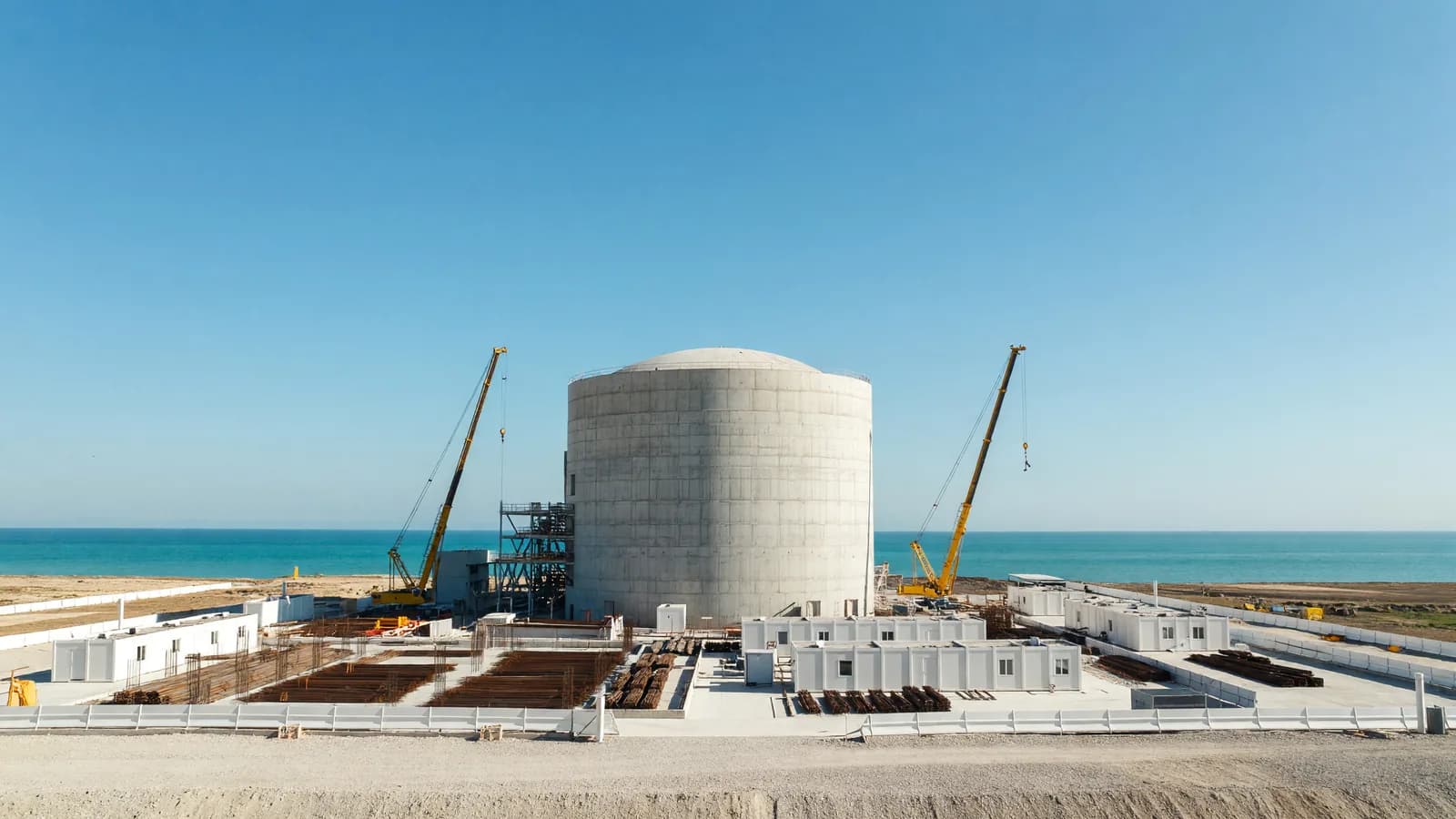
Akkuyu Unit 1 has completed hydraulic testing of its primary circuit, a prerequisite for hot functional tests at Turkey's first nuclear power plant. The circuit reached a reported test pressure of 24.5 megapascals, but the milestone is not an operating licence, fuel loading or a start of electricity generation.
Key facts
- The primary-circuit test reached 24.5 MPa, compared with roughly 16 MPa in normal operation.
- Water in the circuit reached 135°C during the initial test stage.
- Hot functional tests will check the four main circulation pumps at at least 260°C.
- Akkuyu is planned as a four-unit VVER-1200 plant with 4,800 MWe total capacity.
What happened
The pressure test covered the primary circuit, the connected system that includes the reactor, main circulation pumps, steam generators, pressurizer and the pipes linking those components. Operators filled it with chemically demineralized water, then used the main circulation pump units to raise pressure and temperature. The aim was to verify that the circuit and its components hold pressure and to clean the main circulation pipes, according to World Nuclear News.
The test pressure of 24.5 MPa exceeded the roughly 16 MPa cited for normal operation. That difference is deliberate: a pressure test checks the integrity of the assembled boundary before the system enters the hotter, more demanding conditions of operation. The reported 135°C was the water temperature at an initial stage, not the final operating temperature.
The site’s automated process-control system was also put into operation during the test. Personnel in the control room monitored the status of equipment and pipelines through that system. Rosatom chief executive Alexey Likhachev described the completed test as a check on the installation, welding and commissioning work, while saying the primary circuit’s reliability is central to safe operation.
Completion of the hydraulic test clears one part of the commissioning sequence. The next phase is hot functional testing, which checks whether systems can work under operating conditions. That campaign is expected to include operation of all four main circulation pumps with circuit temperatures of at least 260°C, according to World Nuclear News.
Why it matters
This is an important engineering gate because the primary circuit connects the major components that remove heat from a pressurized-water reactor. A pressure boundary that leaks or contains debris would have to be addressed before operators could move to hot testing. The completed cold test is evidence that the system has entered an integrated commissioning phase; it is not proof that every system has passed every remaining check.
The sequence also matters for reading project schedules. Cold hydraulic tests, hot functional tests, nuclear fuel loading and initial power operation are distinct steps. A report that one has finished should not be read as confirmation of the next. Akkuyu Unit 1 still has tests and regulatory milestones ahead before it can produce commercial electricity.
For Turkey, the unit is the first of four planned reactors at Akkuyu on the Mediterranean coast. Rosatom is constructing the plant under a build-own-operate model. The project’s wider contribution depends on completing all the intervening work, not on a single commissioning announcement. A test result narrows the distance between construction and startup, but it does not erase the remaining technical and regulatory sequence.
Background
Akkuyu is in southern Turkey’s Mersin province. The project comprises four Russian-designed VVER-1200 pressurized-water reactors, with a planned total capacity of 4,800 MWe. The World Nuclear Association’s Turkey country profile describes the country’s nuclear power plans and the Akkuyu project’s place in them.
Unit 1 has progressed through preparatory milestones before this test. Dummy fuel was loaded earlier in the commissioning process, and cold hydraulic testing began in June, according to the latest report. Dummy assemblies are used for commissioning checks and are not nuclear fuel. The hydraulic test itself tested water-filled systems under pressure; it did not bring the reactor to criticality.
NNN has previously covered the construction sequence at the same site in its report on Akkuyu Unit 2’s primary-circuit welding. That work concerned a different unit and a construction milestone. The commissioning ladder at another VVER project can be seen in NNN’s coverage of Haiyang 3’s hot functional testing. These comparisons help put the current update in context, but they do not establish that schedules or licensing decisions will be identical between plants.
The planned 4,800 MWe capacity is the combined rating of all four units, not the output now available from Akkuyu. The distinction is especially relevant while Unit 1 remains in commissioning. Even after hot tests, further preparation and regulatory authorization must precede nuclear fuel loading and startup.
What's next
The immediate milestone to watch is the start and reported outcome of hot functional tests. Those tests are intended to confirm equipment performance at elevated temperatures and to check the main circulation pumps under conditions closer to operation. Subsequent announcements should be assessed for what they actually document: a completed test, a regulator’s authorization, fuel loading or a grid connection are different events.
For now, Akkuyu Unit 1 has passed a pressure test of its primary circuit. The reported 24.5 MPa result marks progress toward the next commissioning phase, while leaving the most visible milestones, nuclear startup and electricity generation, ahead.
Questions
- What did Akkuyu Unit 1 complete?
- The unit completed hydraulic tests of its primary circuit, which check leak-tightness and help clean the main circulation pipes before hot functional testing.
- What pressure did the test reach?
- World Nuclear News reported a peak test pressure of 24.5 MPa, compared with about 16 MPa during normal operation.
- Can Akkuyu Unit 1 generate electricity now?
- No. Hot functional tests, further commissioning steps, nuclear fuel loading, startup and regulatory authorization remain separate milestones.
- What reactors are being built at Akkuyu?
- Rosatom is building four VVER-1200 pressurized-water reactors at Akkuyu in Turkey's Mersin province.
Sources
- Hydraulic tests completed at Turkey's Akkuyu 1 — World Nuclear News
About Nuclear News Network
Nuclear News Network (NNN) is an independent publication covering the global nuclear energy sector — reactor construction, SMRs, fuel supply, policy, operations and fusion. NNN publishes a daily brief, same-day analysis of major developments, and reference guides used across the industry. Articles are produced by the NNN Newsroom, an editorial automation system with human oversight, under the publication's editorial standards. Ruben Seoane is the founder and main editor of NNN.