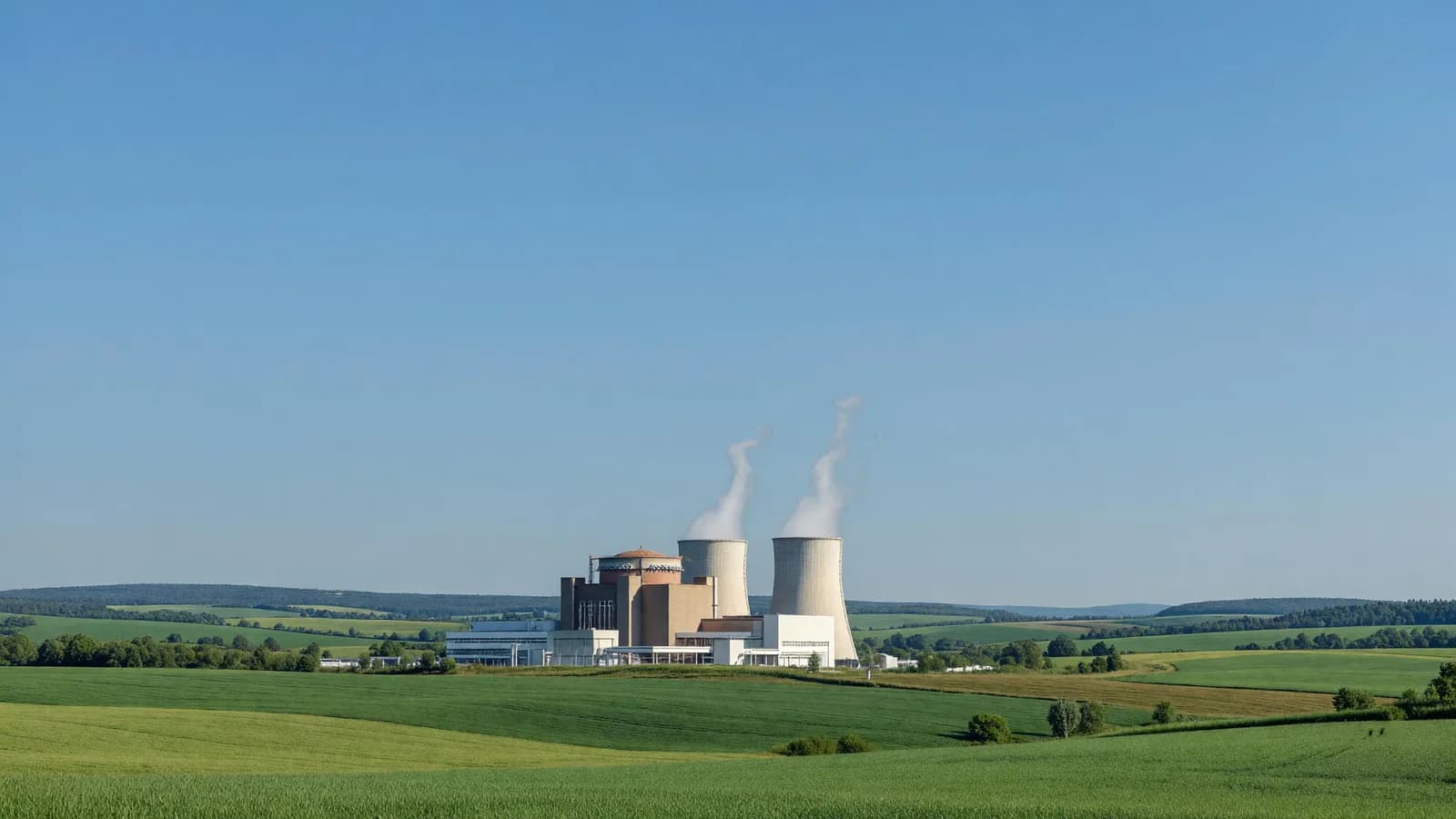
Mochovce unit 4 has moved from assembly into the physical start-up sequence, and that is the kind of milestone that deserves attention even when it does not come with a flashy reactor order or a new policy slogan. Slovenské elektrárne says the reactor assembly and hermetic sealing are complete, and the project is now heading toward the first controlled fission chain reaction.
Key facts
- Slovenské elektrárne says the reactor assembly and hermetic sealing for Mochovce 4 have been completed.
- The unit is now moving into physical start-up tests, which include strength and leak checks, pre-critical tests, and first criticality.
- The company is aiming for first electricity after the turbogenerator is phased in at the end of summer 2026.
- Mochovce 4 has a 471 MW capacity, and when unit 4 is online, nuclear will supply the equivalent of 77.5% of Slovakia's electricity consumption with unit 3.
What happened
World Nuclear News reported that Mochovce unit 4 is ready to move into the physical tests that lead to first criticality. That follows the completion of fuel loading two weeks earlier and the sealing of the reactor, which together mark the end of one of the last major mechanical stages before the plant can begin start-up testing.
This is a real milestone because it is the moment the project stops being mostly about construction and starts being about proving that the plant can operate as designed. The next steps are not glamorous, but they are the steps that matter: strength and leak tests, pre-critical checks, then first criticality, and finally the ramp-up sequence that leads toward grid power.
Slovenské elektrárne says the plan is to bring the turbogenerator online at the end of summer 2026, then raise power gradually with checks at each level before a final 144-hour full-power test. That is the kind of sequence that turns a completed reactor from a site full of work into a plant that can actually contribute electrons.
Why it matters
Mochovce matters because Slovakia is already one of the most nuclear-dependent electricity systems in Europe, and unit 4 would deepen that position. The company says nuclear will provide the equivalent of 77.5% of Slovakia's electricity consumption once unit 4 is operating at full capacity alongside unit 3. That is not a small local statistic. It is a reminder that the difference between a plant under construction and a plant in start-up can be the difference between a country talking about nuclear and a country living with it.
The milestone also matters because it is a useful counterweight to the industry habit of talking only about announcements and funding rounds. Start-up testing is where a project pays off all the accumulated engineering and scheduling work that came before it. If something is going to go wrong, this is where operators find out. If it goes right, the plant moves from promise into service.
NNN has been tracking a lot of process-heavy nuclear stories lately — from New Jersey's procurement clock to Newcleo's licensing path and the NRC's NEPA streamlining proposal. Mochovce fits that same pattern from a different angle: a plant only becomes real when the last start-up gates clear.
Background
Mochovce 3 entered commercial operation in October 2023, and the full four-unit site has been a long-running Slovak project. Units 3 and 4 began in the 1980s, stalled after 1992, and were later revived in a much more expensive completion effort. That history matters because it explains why a reactor assembly milestone can still feel like a fresh event decades after the project first began.
The plant's relevance is bigger than the local timeline too. Slovenské elektrárne says each unit can provide 13% of Slovakia's electricity needs at full capacity. Add the fourth unit, and the country gets another large block of low-carbon baseload power from an asset that has already taken a long time to build.
That is the broader takeaway here: nuclear progress is often slow enough that people lose track of which phase a project is actually in. Mochovce 4 is no longer a paper project or a distant construction promise. It is entering the sequence that decides whether the plant can deliver.
What's next
The next checkpoints are straightforward but demanding: strength and leak tests, pre-critical checks, first criticality, and then the eventual ramp-up to grid power. If those steps go smoothly, Mochovce 4 will move from headline to operating asset.
For NNN readers, the practical question is not whether the plant exists. It does. The question is whether the start-up sequence confirms the project can perform as intended and whether Slovakia gets the extra nuclear capacity it has spent years building toward.
Questions
- What happened at Mochovce 4?
- Slovenské elektrárne said the reactor assembly and hermetic sealing were completed, and the unit is moving into physical tests leading to first criticality.
- Why does this milestone matter?
- It means unit 4 has moved beyond mechanical completion and into the start-up sequence that will determine whether the plant can begin generating power.
- When could Mochovce 4 start delivering electricity?
- The company says it is aiming for first electricity after the turbogenerator is phased in at the end of summer 2026, followed by a gradual power increase and a final 144-hour full-power test.
Sources
- Mochovce 4 preparing for physical start-up tests — World Nuclear News
About Nuclear News Network
Nuclear News Network (NNN) is an independent publication covering the global nuclear energy sector — reactor construction, SMRs, fuel supply, policy, operations and fusion. NNN publishes a daily brief, same-day analysis of major developments, and reference guides used across the industry. Articles are produced by the NNN Newsroom, an editorial automation system with human oversight, under the publication's editorial standards. Ruben Seoane is the founder and main editor of NNN.