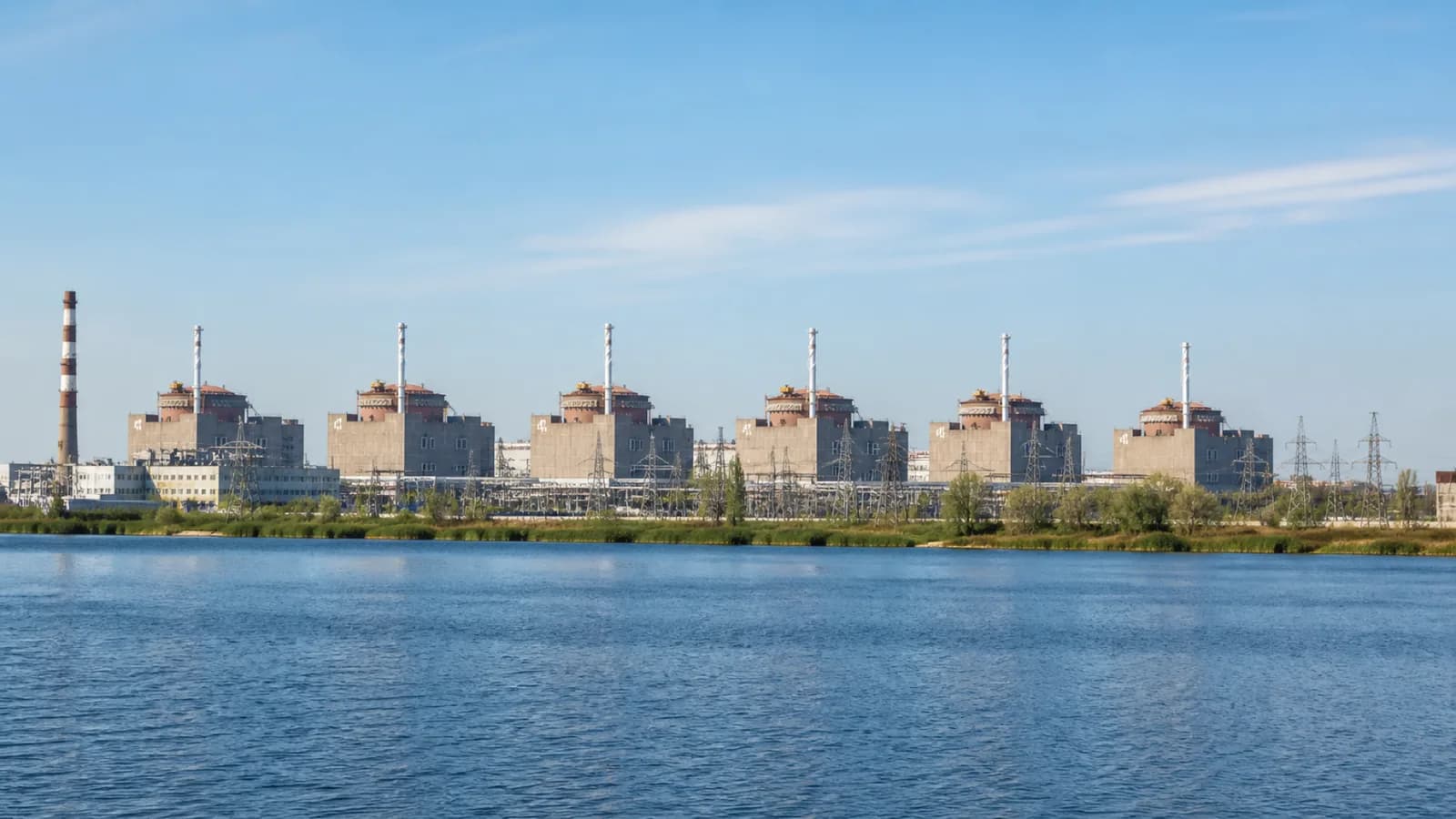
This week's nuclear news was a tour of the full delivery chain. Capital markets put a value on Westinghouse's AP1000 pipeline, states kept working out how to buy new nuclear, China approved eight more reactors, and the NRC's licensing path remained the bridge between a design and a plant. By Thursday and Friday, the story had moved from plans to physical milestones: Oklo reported first criticality at Groves, while X-energy and Centrus tied an advanced-reactor pipeline to a domestic HALEU supply chain. At the same time, Zaporizhzhia showed why nuclear execution still includes protecting a shut-down plant from a damaged grid.
Key facts
- Seven NNN articles published from 1–8 August covered capital, procurement, regulation, new build, startup, fuel and operations safety.
- China approved eight reactors across four projects: six Hualong One units and two Guohe One units.
- Westinghouse disclosed a potential AP1000 pipeline of up to 91 reactors, or about 105 GWe, alongside a confidential IPO filing.
- Oklo said its Groves Isotope Test Reactor reached first criticality in under a year, but the low-power test reactor is not a commercial power plant.
- X-energy and Centrus signed a phased LEU and HALEU enrichment agreement connected to part of X-energy's stated 11.5 GW pipeline.
- Zaporizhzhia's operators raised spent-fuel pool water levels after repeated off-site power losses, a precaution to create more cooling time if diesel supplies were constrained.
1. Westinghouse took the nuclear revival to public markets
Westinghouse files for an IPO as Cameco touts its AP1000 pipeline was the week's clearest capital-markets story. Cameco and Brookfield confidentially submitted a draft registration for a possible offering, while Cameco described up to 91 potential AP1000 units totaling roughly 105 GWe across global markets.
The number is a pipeline, not an order book. The filing is confidential, with no public share count, price or timetable, and the reactor opportunities sit at different stages of development. Still, the disclosure matters because it frames a licensed, operating reactor design as a long-duration equipment and services business rather than a single-project bet. The question for investors is whether repeat construction can turn that pipeline into firm orders and lower costs.
2. States are learning how to become nuclear buyers
NNN's guide to how states procure new nuclear power explains the buyer-side work that usually disappears behind a reactor announcement. A state or utility first establishes a planning need, prepares a site and community, defines the product it wants to buy, compares proposals, allocates construction risk and then sends the selected project through federal licensing.
New Jersey's 1,100 MW procurement framework makes the sequence concrete: expressions of interest, a proposal window, provisional qualification, negotiations and a final ratepayer-focused decision. A procurement law is therefore a process, not a guarantee that a reactor will be built. It has to produce a credible buyer, contract and risk allocation before the project can become financeable.
3. China approved eight more reactors — and two design tracks
China's approval of eight reactors across four projects combined fleet expansion with design development. Six units will use Hualong One, including Hualong One 2.0 demonstration units at Jinqimen and Taipingling. Two units at Laiyang will be the first standardized and batch-built Guohe One project approved by the authorities.
The unit count is important, but the industrial pattern matters more. China's model depends on serial construction, domestic supply chains and multiple state-owned developers building recognizable platforms. Hualong One is already on a repeat-build learning curve; Laiyang will test whether SPIC can make the Guohe One's batch-built claim real. The next signal is physical execution, not another approval headline.
4. The NRC licensing route remains part of the product
The NRC reactor licensing explainer put this week's project announcements in regulatory context. Developers can use the two-step Part 50 route, with a construction permit followed by an operating license, or the Part 52 combined-license route, which still requires inspections, tests, analyses and acceptance criteria before operation. Part 53 remains a developing optional framework, not today's general shortcut.
That distinction is commercially significant. A design certification is not a plant license, a construction permit is not permission to generate electricity, and state procurement does not replace federal review. For advanced-reactor companies, the licensing path is part of the product they are selling to utilities, investors and host communities.
5. Oklo moved from pilot authorization to first criticality
Oklo's Groves reactor reached first criticality in Texas, which is the week's most tangible startup milestone. The company says its low-power Groves Isotope Test Reactor achieved a controlled, self-sustaining chain reaction less than a year after groundbreaking on private land under the DOE Reactor Pilot Program.
First criticality is a real operating step, but it is not grid connection, commercial power operation or proof that isotope production has begun. Startup testing and sustained operation remain ahead. The significance is the pathway: a privately sited, greenfield test reactor has moved from construction and authorization into controlled operation. Other pilot projects will show whether that schedule is repeatable or unusually specific to Groves.
6. HALEU supply became a named reactor-to-fuel chain
X-energy and Centrus signed a HALEU supply agreement that links enrichment at Centrus's American Centrifuge Plant in Ohio to X-energy's TRISO-X fuel fabrication work in Tennessee. The phased agreement covers LEU and HALEU services for part of X-energy's initial Xe-100 needs and is tied to a stated commercial pipeline of 11.5 GW.
The contract does not fuel the entire pipeline or remove the remaining licensing, construction, financing and fabrication steps. It does, however, address a constraint that can quietly determine advanced-reactor schedules: the reactor design needs fuel with about 15.5% U-235, while conventional commercial fuel is generally below 5%. A named domestic path from enrichment to coated-particle fabrication is more useful than another generic promise that fuel will be available.
7. Zaporizhzhia showed the safety cost of a damaged grid
At Zaporizhzhia, operators raised spent-fuel pool water levels after the site experienced repeated off-site power losses. The IAEA said the precaution would extend the time before boiling could begin if a prolonged outage outlasted the plant's diesel supplies. It did not report a loss of pool cooling or a radioactive release.
The story is a reminder that a shut-down reactor is still an operating nuclear site. Zaporizhzhia's six reactors remain shut down, but spent fuel, pumps, electrical equipment and emergency generators still require protection. The IAEA has counted 24 external-power losses since the conflict began, and the plant's main 750 kV line remains unavailable. Nuclear safety therefore includes the grid, fuel logistics and access to a site — not only the reactor's chain reaction.
Why it matters
Taken together, these stories describe a sector trying to make the whole stack repeatable. A reactor vendor needs capital and customers. A state buyer needs a procurement process that assigns risk. A developer needs a license that can survive technical and public review. A project then needs construction, startup and a fuel chain that exists outside a slide deck. Finally, every plant needs resilient power and safety systems through its operating and shutdown life.
The week's progress is real, but so are the qualifiers. A potential pipeline is not a firm order. A procurement law is not a final investment decision. First criticality is not commercial power. A fuel agreement is not fuel production at scale. And a higher spent-fuel pool level is a precaution, not evidence that the underlying power risk has gone away.
What's next
Watch for Westinghouse's public S-1 and conversions from potential AP1000 projects to firm orders; the first deadlines and proposals in state procurement processes; construction starts at China's newly approved sites; and formal NRC applications that turn pre-application engagement into docketed review. On the deployment side, Groves' startup testing and the Centrus–X-energy delivery schedule will show whether this week's milestones can become repeatable capability. At Zaporizhzhia, the key watchpoint remains restoration of reliable off-site power and the damaged substation behind it.
Questions
- What was the main theme of this week's nuclear news?
- Execution across the whole nuclear stack. The stories covered capital, procurement, licensing, construction approvals, startup, fuel supply and the safety systems that remain essential after a plant shuts down.
- Which story was the clearest operating milestone?
- Oklo's Groves Isotope Test Reactor reaching first criticality was the clearest physical milestone, although it is a low-power test reactor and not commercial power operation.
- Did this week's announcements prove that the nuclear buildout is on schedule?
- No. They show meaningful progress and expanding activity, but most announcements still leave work ahead: financing, licensing, construction, fuel qualification, commissioning or reliable off-site power.
Sources
- China approves construction of eight more reactors — World Nuclear News
- Cameco announces IPO plan for Westinghouse — World Nuclear News
- How We Regulate New Reactors — U.S. Nuclear Regulatory Commission
- Update 361 – IAEA Director General Statement on Situation in Ukraine — International Atomic Energy Agency
- X-energy, Centrus Sign HALEU Supply Agreement for Xe-100 Advanced Small Modular Reactor Development — X-energy
About Nuclear News Network
Nuclear News Network (NNN) is an independent publication covering the global nuclear energy sector — reactor construction, SMRs, fuel supply, policy, operations and fusion. NNN publishes a daily brief, same-day analysis of major developments, and reference guides used across the industry. Articles are produced by the NNN Newsroom, an editorial automation system with human oversight, under the publication's editorial standards. Ruben Seoane is the founder and main editor of NNN.